

Hu Bo 胡波 is Director of the South China Sea Strategic Situation Probing Initiative (SCSPI), and Research Professor and Director of the Center for Maritime Strategy Studies, Peking University.

In a recent article, Hu argues that the Philippines and Japan have both misread the nature of China-U.S. strategic competition, though in different ways. The Philippines, he writes, has exaggerated the intensity of the rivalry and sought to advance its own interests by aligning more closely with Washington, while Japan has interpreted signs of U.S. retrenchment as an opportunity to strengthen its strategic role and pursue greater political and military normalization.
More broadly, Hu contends that both countries underestimate China's national strength and resolve, and that their miscalculations have become a growing source of instability in the Asia-Pacific as China-U.S. relations themselves become relatively more stable and predictable.
The article first appeared in Issue No. 7, 2026 of 现代舰船 Modern Ships, a magazine run by China State Shipbuilding Corporation Limited (CSSC)'s in-house think tank. It was also published on Mingkun Technology's official WeChat blog on July 19.
With Dr. Hu's permission, this newsletter shares the full article below.
菲律宾日本误判中美战略竞争
How the Philippines and Japan Misjudge China-U.S. Strategic Competition
Since the San Francisco summit in November 2023, China-U.S. strategic competition has gradually moved toward greater stability. This has been especially evident in the military and security sphere, where both sides have explicitly stressed the need to avoid war and conflict. During President Donald Trump's visit to China from May 13 to 15, 2026, the two countries announced the establishment of a "constructive relationship of strategic stability," further underscoring this trend. For both sides, competition persists, but stability has become increasingly important.
In fact, this is not merely a policy choice by the two countries but also an inevitable consequence of present-day realities. China-U.S. strategic competition differs significantly from every historical case of great-power rivalry in at least three respects.
First, China and the United States are not neighboring countries. Despite major technological advances, geography remains highly important in great-power rivalry, particularly military competition. The fact that the two countries are not neighbors leaves greater room for compromise and accommodation in their strategic competition. As President Xi Jinping has repeatedly noted, "The Pacific Ocean is vast enough to accommodate both China and the United States." By contrast, the great powers involved in historical rivalries were generally neighbors.
Second, today's military and technological conditions are fundamentally different. Since the end of World War II, the advent of nuclear weapons and the development of nuclear deterrence have imposed constraints on both the intensity and the limits of competition among major powers. Since the 21st century, the global proliferation of anti-access and area-denial platforms and technologies has greatly constrained major powers' ability to project and employ military force overseas. Broadly speaking, current and future technological conditions are more conducive to the diffusion of power than to its concentration, making historical models of hegemonic transition increasingly unsustainable.
Third, international institutions and norms have undergone transformative changes. After World War II, countries across the Third World gained independence, while the nation-state system and nationalism spread worldwide. This trend grew still stronger after the end of the Cold War. When confronted with external aggression, Venezuela represents an exception, while Iran is more typical of how modern nation-states respond. The expansion and exercise of great-power influence are coming under increasing pressure from institutional frameworks and international norms. Earlier modes of competition based on overseas expansion or the establishment of geopolitical spheres of influence have therefore become increasingly difficult to sustain.
There are also other differences, including those arising from strategic culture and the distinctive features of the present era. Together, these factors account for the unique nature and complexity of China-U.S. strategic competition. Neither the experience of the U.S.-Soviet Cold War nor the theories and historical cases associated with the "Thucydides Trap" can adequately explain this competition, much less predict its trajectory with any precision.
In recent years, third countries have frequently misjudged China-U.S. strategic competition by viewing it through the lens of historical analogies and past experience. The Philippines and Japan are two particularly notable examples.
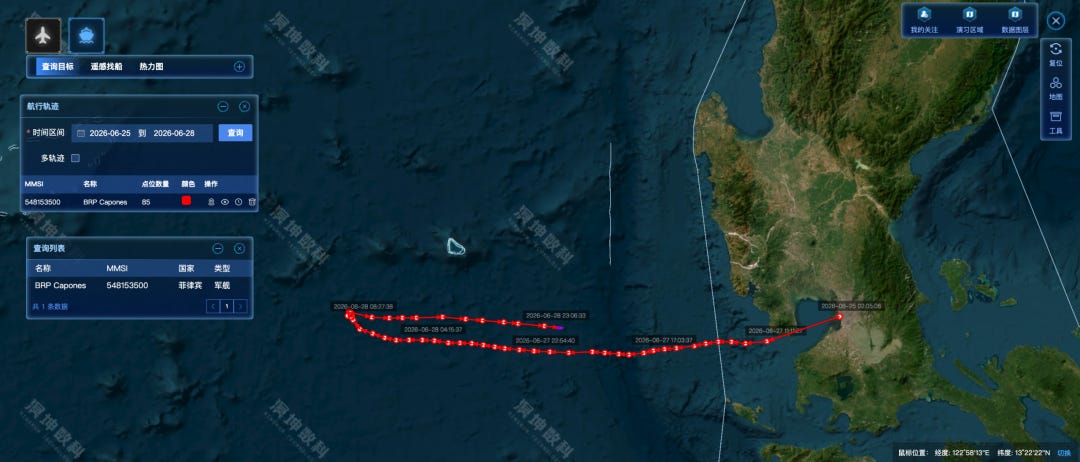
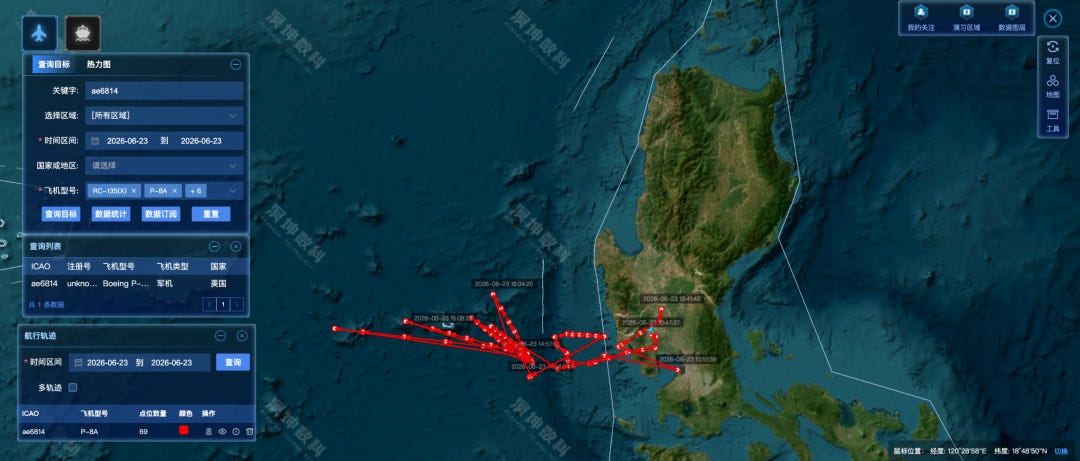
Since the administration of Ferdinand Marcos Jr. took office, the Philippines has exaggerated the intensity of China-U.S. competition. It believes that by aligning itself with the U.S., it can secure a range of its own interests, including its claims to sovereignty and maritime rights in the so-called "West Philippine Sea." It has therefore repeatedly provoked China over the South China Sea and the Taiwan question. Yet the frictions between China and the Philippines since 2023 have shown that although the U.S. hopes to exploit the Philippines and its disputes with China, it does not want those disputes to escalate excessively, still less to take risks on the Philippines' behalf.
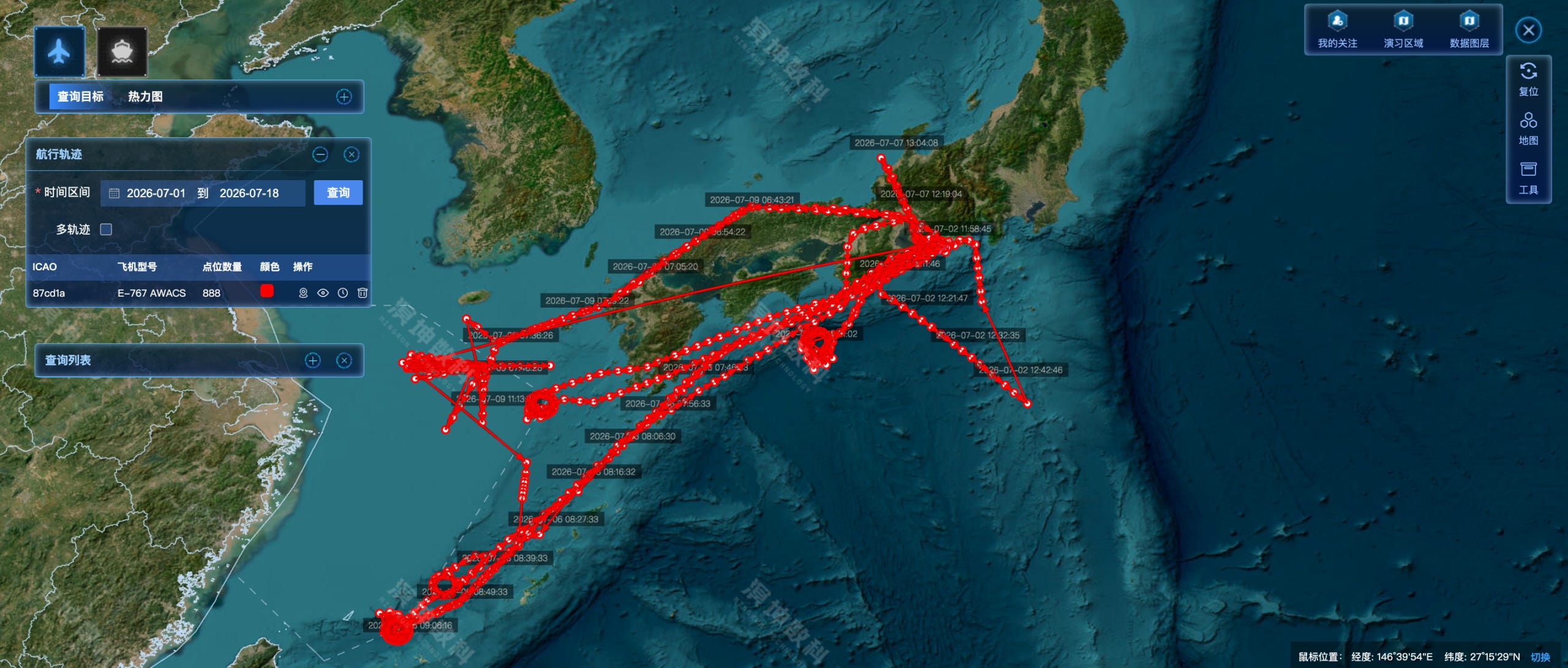
Japan represents the opposite extreme of misjudgment. It believes that the U.S. is showing signs of retreat and retrenchment, and that Japan therefore needs to highlight its own value while seizing the opportunity to achieve political and military normalization. It has consequently strengthened its alignment with the U.S. and repeatedly sought to court attention through its positions on historical issues such as Taiwan question.
These misjudgments of China-U.S. strategic competition have been accompanied by a misreading of China's strength. Unlike the U.S. and other countries, which have relatively objective assessments of China's capabilities, the Philippines and Japan share a tendency to seriously underestimate both China's national power and its resolve.
The Philippines believes that it can "deter" China by arming itself and recruiting more allies and partners. Japan, meanwhile, believes that it can go toe-to-toe with China even without the U.S. As a result, both countries have shown little hesitation in crossing China's red lines. One to China’s south and the other to its north, they have become the two countries in the world most willing to openly defy China.
In recent months, these misjudgments by the Philippines and Japan have become the greatest source of instability in Asia-Pacific security. At a time when the overall China-U.S. relationship has become relatively stable and predictable, the actions of the Philippines and Japan deserve even greater attention and vigilance from countries in the region. For China, it is necessary to assess objectively the impact of intervention by the U.S. and other external actors, while treating the Philippines and Japan as independent actors rather than merely as "U.S. followers." China should strengthen its countermeasures against provocations by the two countries and ultimately compel them to "return to reality."
And what if the Philippines has not misjudged China at all—and China has misjudged the Philippines?
Hu Bo argues that Manila is overestimating U.S. support and underestimating the enormous maritime power gap between China and the Philippines. I think this gets the problem backwards.
The Philippines knows perfectly well that it cannot change the maritime balance of power by itself. Its political and security establishment also understands that Washington has little desire to fight a major war with China over every Philippine maritime confrontation.
Yet Manila keeps pushing.
That makes sense if confrontation itself generates political returns. The Philippines does not need to defeat China. It only needs to keep China occupied, internationalize every maritime incident, deepen U.S.-Philippine military integration and continuously raise the political cost of Chinese control in the South China Sea.
For parts of the Philippine political and security elite, the value of the Philippines to Washington is precisely its ability to constrain China. Their institutional incentives, alliance relationships and political careers do not necessarily map perfectly onto the long-term national interest of the Philippines.
This is why assuming that Manila is simply “miscalculating” may itself be dangerous.
China may believe that demonstrating overwhelming superiority will eventually convince the Philippines to stop. But what if Philippine strategy does not depend on winning?
Every additional Chinese coast-guard deployment, every larger confrontation and every diplomatic crisis can also strengthen the argument for more U.S. access, more military cooperation and deeper Philippine dependence on Washington.
The Philippines may understand China's restraint and China's superiority perfectly well.
The real miscalculation would be for Beijing to assume that a weaker opponent must eventually behave like a weaker opponent.
What if Japan has not misjudged China—and China is misjudging Japan?
Hu Bo argues that Tokyo risks interpreting China's restraint as weakness: Japan keeps pushing boundaries because it underestimates China's willingness or ability to escalate.
I think the opposite possibility deserves much more attention.
Japan knows China can escalate. It also knows Beijing has powerful reasons to avoid allowing individual maritime incidents to become uncontrolled military crises.
That predictability may be precisely what makes incremental Japanese risk-taking attractive.
Japan has spent more than a decade gradually loosening the military constraints created by the postwar order: collective self-defense, rapidly rising defense spending, long-range stand-off weapons, counterstrike capabilities and a much stronger military posture around the southwestern islands.
Every new confrontation with China makes the next step easier to justify domestically.
Japan therefore does not necessarily need China to remain completely passive. It needs China to react—but in a controlled way.
A sufficiently visible Chinese response strengthens the political case for military normalization. A war would be catastrophic. But persistent, manageable tension can help Japan expand capabilities that would have been politically much harder to justify under a permanently peaceful regional environment.
This is why describing Japanese behavior as a “misjudgment” may miss the incentive entirely.
Japan may be using Sino-American rivalry to remove, step by step, the institutional constraints placed on Japanese military power after 1945. In the short term this strengthens the U.S.-Japan alliance. Over the longer term, it also gives Japan substantially greater strategic autonomy.
Japan may therefore need a crisis more than it needs a victory.
If Beijing assumes that demonstrating greater military power will eventually make Tokyo retreat, China may be reading the game incorrectly.
Japan may not have misjudged China's restraint. It may be counting on it—and hoping that China misjudges what Japan ultimately wants.