

The essay translated below apparently emerged from the wave of discussion and reflection on the Chinese internet after Hong Wang and Yu Deng received the 2026 Fields Medal.
Awarded every four years by the International Mathematical Union, the Fields Medal is widely regarded as mathematics' highest honor. Wang and Deng were two of the four recipients in 2026, becoming the first Chinese nationals in history to win the medal.
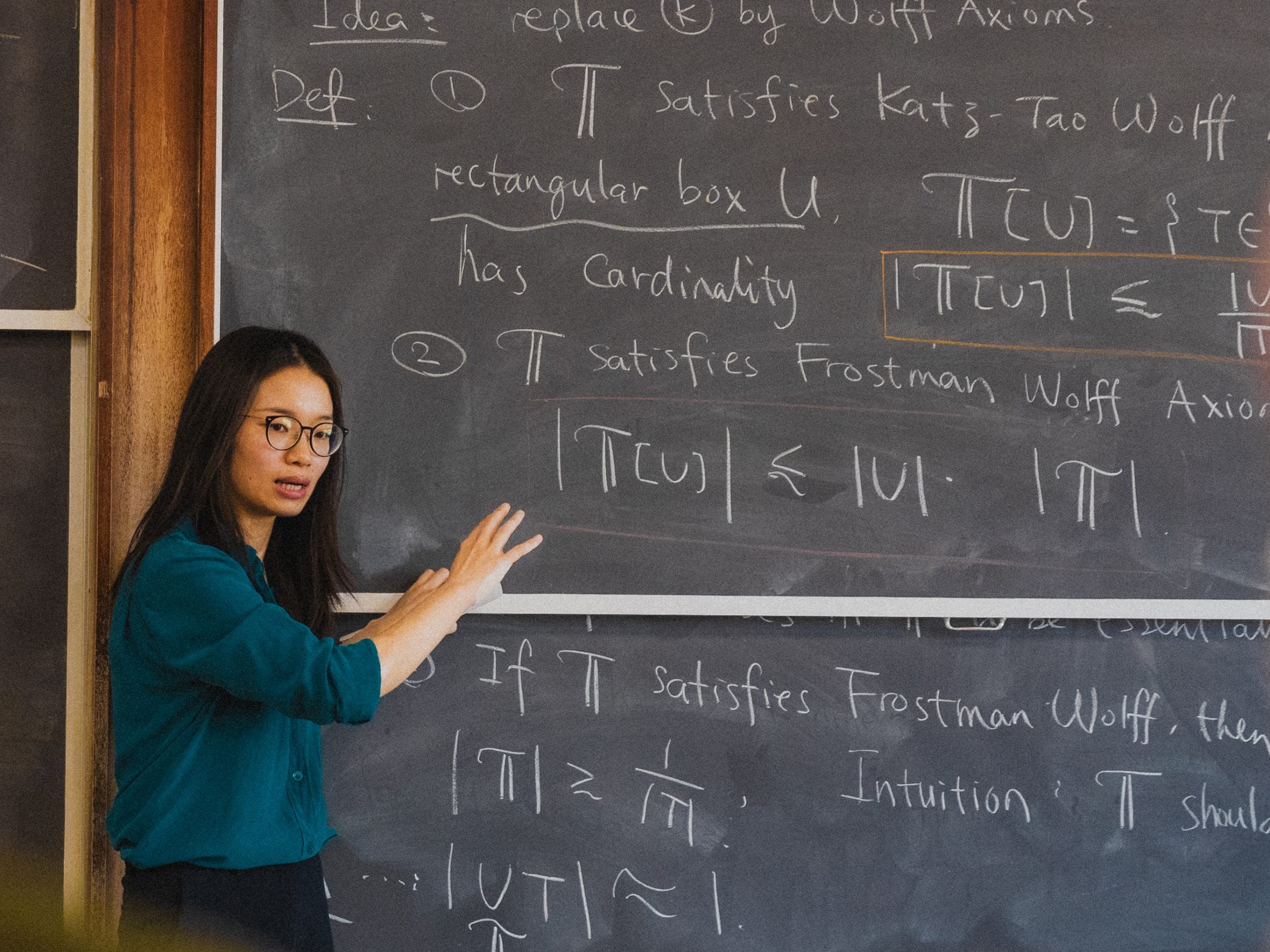
Both of them began their university education at Peking University in 2007, and their subsequent paths became markedly international. Wang completed her undergraduate degree in mathematics at Peking University in 2011, continued her studies at École Polytechnique and Université Paris-Saclay, and earned her PhD from the Massachusetts Institute of Technology (MIT).
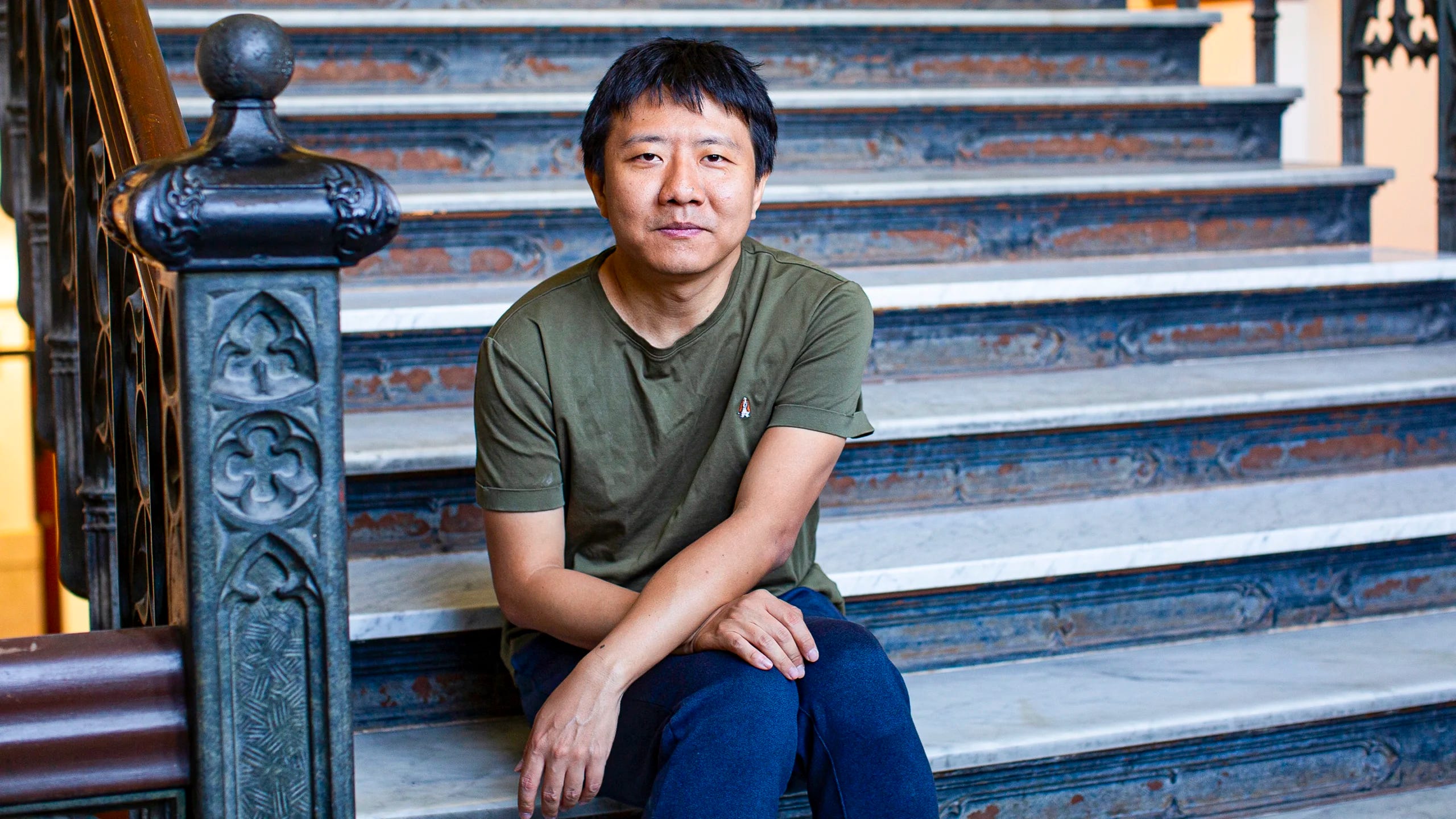
Deng entered Peking University before transferring to MIT, where he received his bachelor's degree in 2011. He later earned a PhD in mathematics from Princeton University and held positions at the Courant Institute and the University of Southern California before becoming a professor at the University of Chicago.
Their victories were naturally greeted with enormous pride in China. Much of the domestic coverage highlighted the Chinese foundations of their education: both had received rigorous schooling in China, both had studied at Peking University, and had developed their mathematical abilities within a system that places considerable emphasis on mastery of fundamental knowledge and technique.
This soon became part of a broader debate over how their achievements should be understood. One view held that their success demonstrated the strength of Chinese basic education and undergraduate training: the solid foundations laid in China made their later breakthroughs possible.
Another noted that the work for which they were honored was developed largely at institutions overseas, arguing that a more flexible research environment, greater tolerance for uncertain and long-term exploration, and a lower professional cost of failure may have given them more room to pursue difficult problems without an assured return. These positions were not necessarily mutually exclusive, but online discussion often placed them in direct competition.
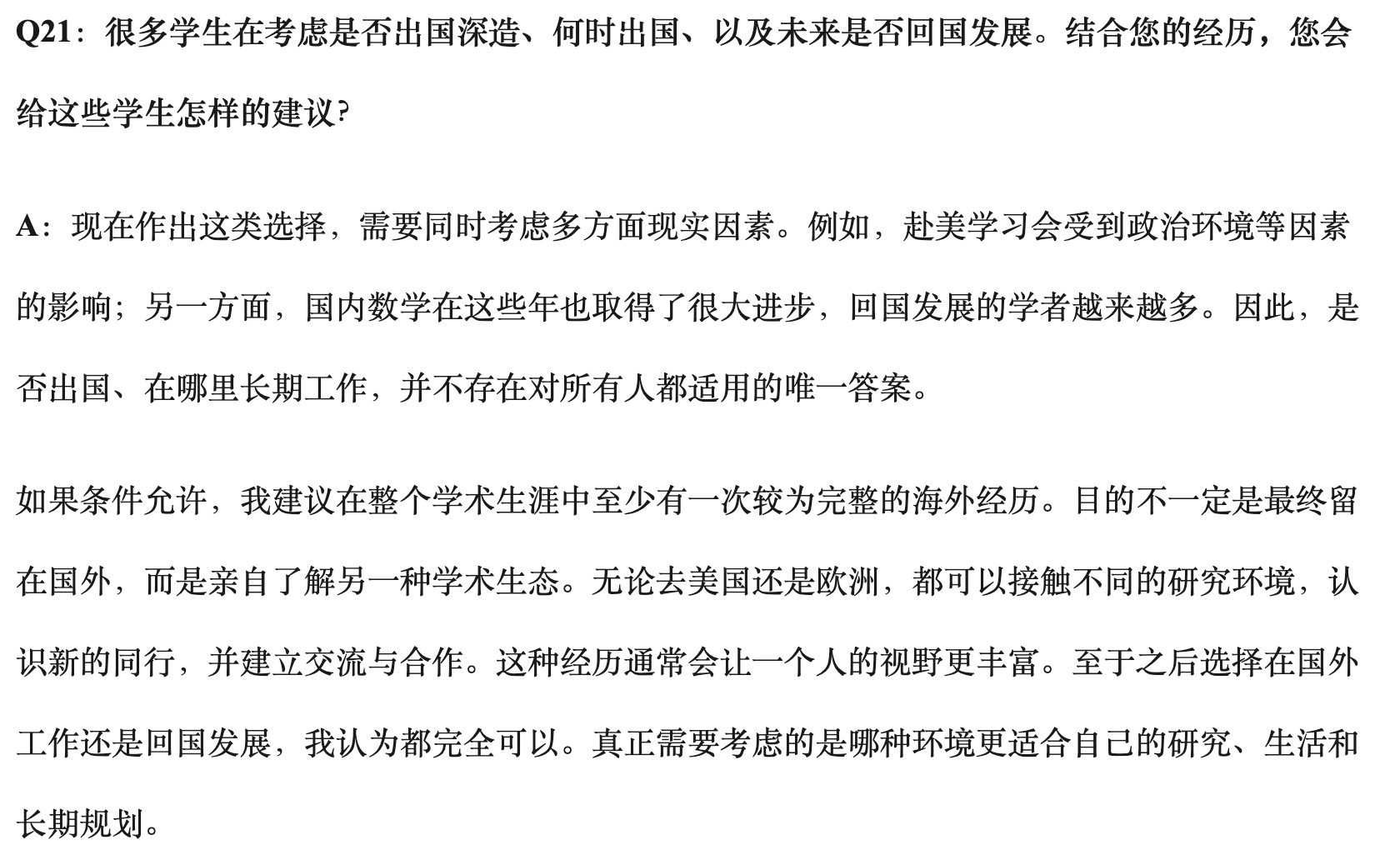
A separate episode added another layer to the controversy. An interview with Deng was first published by the Beijing International Center for Mathematical Research. When Peking University's official account later republished it, readers noticed that one complete Q&A had been omitted.
Deng had been asked what advice he would give students considering whether and when to study abroad, and whether eventually to return to China. He replied cautiously that there was no single answer that applied to everyone, but recommended, circumstances permitting, that a scholar spend at least one substantial period abroad—not necessarily to remain there, but to experience another academic ecosystem, meet new colleagues and develop new forms of collaboration. The reason for the omission is not publicly known, but the missing passage apparently attracted attention in the context of the wider debate.
It was amid these arguments that I came across and translated the following essay. Its question is broader than whether China or overseas institutions deserve more credit for two Fields Medals. It asks where "the collective" should stand before a researcher has produced anything that others can celebrate. I have been unable to identify its author and just found it thought-provoking enough to share with you.
—Yuzhe
Where Should "the Collective" Stand Before the Flowers and Applause Arrive?
鲜花和掌声尚未出现时,集体应在哪里?
When word arrives from another time zone that a researcher has won a major international academic prize, several of the schools they once attended may, within days, hold alumni gatherings. Principals who have never met the researcher appear before the cameras and reminisce about the child who would keep asking questions in class and continue the discussion after the bell. The universities they attended are equally quick to publish lightly polished recollections of past conversations, together with messages of congratulations.
A résumé that had once attracted little notice is spread out again. At every stage, people eagerly look for some connection to themselves, carefully placing the researcher and the achievement within a narrative in which they appear as the product of collective cultivation.
These connections are genuine, and the congratulations are entirely understandable. It is only natural for an achievement to cast reflected glory on the people and places once associated with the person behind it. Yet after several rounds of retelling, the subject of the story gradually changes.
The focus quickly shifts away from "what problem the researcher actually solved and how they reached ground no predecessor had reached", toward "what we gave them and how much of the credit belongs to the education, environment and resources we provided." "They once grew up here" becomes "this place made them who they are." The difference may appear to be merely one of wording, but the causal claim has quietly changed.
Compared with these broad narratives of collective cultivation, the researcher's own acknowledgments are usually far more specific. They thank the person who introduced them to the right problem at the right moment, the colleagues willing to share their intuitions and doubts, and the environment that allowed them to concentrate on their work. An acknowledgment may not provide a complete inventory of contributions, but it at least breaks the vague notion of "the collective" down into identifiable people and actions.
Here, "the collective" is not abstract. The participants have names, and the course of collaboration can be traced. It is possible to identify who actually posed the questions, provided methods or materials, developed the arguments and revised the judgments. Who offered education and support, and who made a creative contribution to the particular achievement, can be explained separately and clearly.
Some will say that early education matters—a true but empty statement. Researchers, of course, do not simply materialize out of nowhere. The basic language with which people make sense of the world comes from compulsory schooling; mathematical notation and foundational methods are inherited from earlier generations. From childhood to adulthood, human development also depends on stable living conditions and public resources. To deny any of this would be to deny the starting point that society provides for the individual.
The problem is that necessary conditions are not sufficient to produce a particular achievement. Those who provide such conditions certainly deserve recognition for their support, but that does not make them the creators of the resulting achievement. These conditions may explain why a researcher had the opportunity to set out, but they cannot, on their own, explain why the researcher reached a particular destination.
If "without the former, there could be no latter" were accepted as a basis for assigning credit, the chain could be traced endlessly backward. The ancestors of Homo sapiens, ancient fish, the Earth and eventually even the Big Bang could all be placed on the list of contributors. The longer the chain becomes, the less useful it is in answering who posed the question, who changed the direction of inquiry and who completed the argument. Once everything is subsumed into a sufficiently grand "collective," authorship itself disappears from view.
One important function of universities and research institutions is to bring people to the edge of what is already known. Standardized, large-scale training can indeed help people master established knowledge and methods more efficiently. But once that edge has been reached, the next step cannot be inferred from the size of an institution's budget, the length of its history or its bureaucratic rank. A timetable can set a deadline for submitting a paper, and performance metrics can tally completed work, but neither can reliably tell us where an apparently obscure line of inquiry may lead.
Progress along an established path can be supported by quasi-industrial forms of training. But when basic research confronts genuinely unknown questions, exploration itself can no longer easily be organized according to a uniform process or measured by a simple input-output ratio.
A new line of research often begins without enough evidence to support it. Nor can researchers necessarily explain, in the language already available, what a given investment will yield or how long it will take. They must make the case in grant applications that a path with no guaranteed outcome is still worth pursuing. When the results remain elusive, they must decide whether to withstand the pressure and continue.
When researchers are required to promise results in advance and are evaluated against fixed targets, the uncertainty inherent in basic research is turned into their personal responsibility. They consequently learn to choose the safest topics—the ones most likely to produce publishable papers—while becoming less willing to explore extremely difficult, unfinished ideas that might nevertheless open up entirely new territory.
Years later, once an achievement becomes sufficiently impressive, the courses the researcher took, the institutions they worked in, the funding they received and the positions they held are linked together retrospectively, as though success had always been the inevitable outcome of this established trajectory and therefore further proved its correctness. Meanwhile, lines of inquiry that never received comparable support, never led to a prize or have yet to produce conspicuous results are selectively forgotten.
Some argue that research institutions must bear the cost of every project and therefore have no choice but to weigh many practical factors. Investments may come to nothing, and choices may prove mistaken. Yet within a funding system or research institution of sufficient scale, the risk of any one project's failure is indirectly spread across society. However, what the researcher personally puts at stake—a crucial window in their career, their academic reputation and their time—cannot be distributed in the same way.
This asymmetry is particularly pronounced for graduate students, postdoctoral researchers and early-career scholars. If they fail to meet rigid performance requirements, or if years of research do not produce papers that count toward an evaluation, they may face delayed graduation, the loss of a position or the interruption of their research.
Some narratives fashioned in the spotlight rely solely on associations found in a CV to present an achievement as proof of an institution's own ability to cultivate talent, thereby claiming a share of the honor after the event. Yet when exploratory work needs support in advance, researchers often face the combined constraints of grant-review procedures, employment systems and evaluation rules. Even when support is secured, if the research encounters setbacks or fails to produce publishable "outputs" on schedule, the individual is left to bear the consequences.
Risk and honor are not always distributed along the same lines. In such narratives, invoking "the collective" can obscure specific contributions and responsibilities while, in practice, reinforcing existing systems of evaluation and resource distribution.
Once the narrative of "what we gave them" becomes a basis for evaluation and resource allocation, it is no longer merely rhetorical. An achievement whose causal relationship with an established model of education or training has never been demonstrated may nevertheless be used as evidence that the existing model works. Those with substantial power over the choice of research topics, appointments and funding can then more easily continue applying the old standards. Existing evaluation rules and patterns of resource distribution are thereby perpetuated.
The accidental but valuable departures that occur during exploration are also more likely to disappear from the success story. The real, winding process of creation is then tidied into a causal narrative fit for publicity and made to look reproducible.
The question of whether the individual or the collective matters more is a false one. What deserves scrutiny is how the individual and the collective actually work together in the attempt to solve each particular academic problem.
A collective is not an abstract agent suspended above individuals. It operates through relationships of collaboration, institutional arrangements and the allocation of responsibility. A community of knowledge depends on actual people sharing methods, questioning one another and correcting errors together.
When researchers themselves have little opportunity to participate in the key decisions that shape the direction of their work, and lack channels through which to explain their reasoning, raise objections or seek a review, those who speak in the name of "the collective" are in practice only the small number of people who control funding, evaluation and the institution's public voice. Individuals have not truly disappeared, nor is the collective unreal. It is simply that some people's names have become blurred, while the decision-making power of others may consequently become more secure.
People have every reason to be pleased that they once walked part of the way with someone who later won a prize. A more gracious message of congratulations might simply say: We were fortunate to have played a small part in one stage of their growth.
Only before the flowers and applause appear does the real test come into view: when a person has no achievement for others to claim a share in, but only questions, departures from accepted paths and a long period of uncertainty, will the so-called collective still be willing to let that person continue—to keep climbing toward a summit with no guarantee that they will reach it?