

Mainstream analysis of China tends to fixate on elite signals and broad political narratives. Much harder to see here is the procedural layer in between: how top-level decisions actually get executed on the ground.
Given the system's opacity, any glimpse into its inner workings is highly valuable. A recent article from Southern Weekly, the Guangzhou-based newspaper renowned for its investigative reporting, offers a rare, granular look at how the Chinese top legislature handles legislator's proposals after the the "two sessions" wrap up. More importantly, it sheds light on how different government agencies interact behind the scenes.
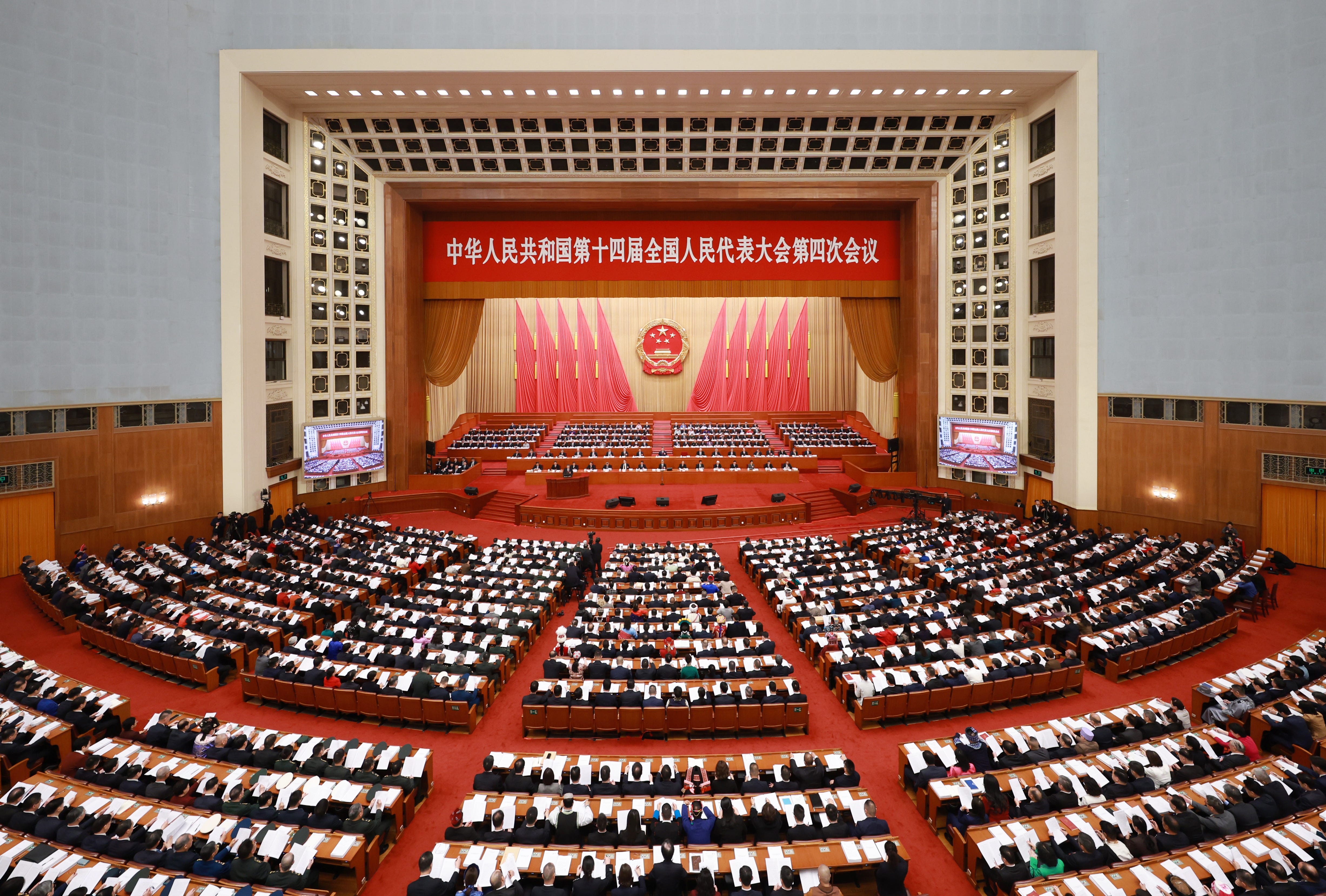
The piece traces the lifecycle of a social issue. It maps out how a localized problem gets identified, translated into bureaucratic language, flagged as a priority, and navigated through a maze of ministries, Party organs, and the National People's Congress (NPC).
This matters because it complicates two dominant, yet incomplete, narratives: that Chinese policy simply flows unobstructed from the top down, and that institutions like the NPC are purely symbolic.
The reality is far more intricate. The NPC is certainly not a Western-style legislature—you won't see politicians arguing over public complaints in open debates or on the campaign trail—but neither is it irrelevant. Instead, it acts as a highly structured conduit where local concerns are aggregated, filtered, and fed into the bureaucracy.
In many ways, the Southern Weekly report serves as a vivid, real-world case study for a dynamic that Princeton political scientist Rory Truex presciently captured exactly a decade ago. In his 2016 book Making Autocracy Work: Representation and Responsiveness in Modern China, Truex coined the concept of "representation within bounds." As he astutely noted,
meaningful representation can and does arise in an authoritarian setting, in the absence of electoral accountability. It arises not from bottom-up citizen pressure, but from top-down accountability to a regime with informational needs. However, deputy activism on sensitive political issues can engender unwanted citizen attention, so regimes pre fer their deputies to exhibit "representation within bounds."
Seen from this angle, China's government is not quite as unique as it is often portrayed. Like many massive bureaucracies, it runs on compromise, coordination, and competition across departments. And like many others, it does not always deliver. As the article bluntly notes, the NPC system has long struggled with a classic bureaucratic headache: plenty of official replies, but not enough actual follow-through.
The following piece was first published on Southern Weekly's WeChat account on March 12. Please note that the translation below is mine and has not been reviewed.
当一份建议,被划上“重点”之后
When a legislator's proposal is marked "priority"
By Du Maolin, Southern Weekly reporter
One day in September 2025, Meng Hongjuan received an invitation from Beijing. The letterhead read: Department of Elderly Care Services, Ministry of Civil Affairs.
She quickly realized that a proposal she had submitted during the annual session of the National People's Congress (NPC) had been included among the NPC's "priority-supervised" proposals.
Meng is a workshop director at Zhende Medical Co., Ltd. in Zhejiang Province. Her proposal concerned the link between elderly care as a public service and elderly care as an industry. She told Southern Weekly that the letter signaled the start of follow-up communication and consultation. "It was the first time since I was elected as a deputy to the 14th National People's Congress."
Every year during the NPC session, deputies submit thousands of proposals/bills. In 2025, a total of 9,160 were received. Only a small number were ultimately singled out for priority supervision.
In practice, "priority supervision" means that the Standing Committee of the National People's Congress selects certain matters from among deputies' proposals, assigns them to the relevant handling bodies, and has the relevant special committees of the NPC supervise the process.
Deputies' proposals/bills are widely seen as an important channel through which the public can take part in the management of state affairs. Yet for many years, some deputies have criticized handling bodies for "placing more weight on replying than on implementation".
That is why the priority supervision system has been given high expectations: proposals/bills should not stop at a written response. In 2005, the system was formally introduced at the national level. Provincial, municipal, and county-level people's congresses later adopted it in turn.
Now, after twenty years, this mechanism has become part of a broader effort to improve how deputies' proposals are handled. But how, exactly, are proposals "supervised" and "processed"? What happens after a proposal is marked as "priority"?
I. The first "full coverage"
This was not the first time Meng Hongjuan had turned her attention to older people.
In 2024, her second year as a deputy to the current NPC, she submitted a proposal on accident insurance for the elderly. During her research, she heard the same concern again and again: many older people were still doing farm work or taking casual jobs. What they feared was not hardship itself, but the possibility that if an accident occurred, no one would cover the cost of medical treatment and nursing care.
These concrete, small-scale anxieties made Meng realize that advancing elderly care required a full set of supporting safeguards.
By 2025, her focus had widened further. She was already familiar with the production process for medical supplies, and not unfamiliar with the care and rehabilitation needs of older people.
That professional sensitivity allowed her to spot problems in the elderly care service system during field research. In some care institutions and at the primary level, she saw another reality at work: the number of beds was rising, but nursing and rehabilitation staff were still in short supply; facilities were being upgraded, but professional management was lagging behind.
The shortage of trained personnel and the slow pace of professional development were issues she kept recording. Before the 2025 NPC session opened, she turned those observations into five proposals, covering subjects ranging from building talent for integrated medical and elderly care services, to innovation in elderly care finance products, to support for privately run care institutions, and loosening investment restrictions for pension fund management institutions. All of them pointed to the same core goal: to make the connection between elderly care as a public service and elderly care as an industry work more smoothly.
After the session closed, Meng only then realized that her sustained attention over two consecutive years had received a different level of recognition, when she learned that her proposal had been listed as a priority-supervised proposal.
Southern Weekly has learned that Meng's proposal on elderly care was grouped under the broader priority-supervised category of "promoting the integrated development of elderly care as a public service and elderly care as an industry work". In general, priority supervision is divided into several broader categories, each covering multiple proposals from NPC deputies.
Once a priority-supervised proposal is identified, it is assigned to the relevant government departments, the Supreme People's Court and the Supreme People's Procuratorate, or other responsible bodies for handling, while the relevant special committee of the NPC oversees the process.
Take 2024 as an example. That year, for the first time, the topics for priority-supervised proposals were reviewed and approved by the Council of Chairpersons of the NPC Standing Committee. "Previously, topics were discussed and approved at the Secretary-General's office meeting after opinions had been solicited from various sides," one source familiar with the workings of the NPC told Southern Weekly.
According to Xinhua, Chinese state news agency, in 2024 the Council of Chairpersons approved 20 priority-supervised proposal categories, involving 225 individual proposals from deputies. These were supervised by seven special committees, including the NPC Financial and Economic Affairs Committee, and assigned to 19 lead handling units, including the National Development and Reform Commission.
Southern Weekly's review found that the 20 priority-supervised categories mainly fell into six broad groups: developing new quality productive forces, strengthening talent for modernization, improving public well-being, promoting green development, balancing development and security, and advancing the rule of law in China.
"The main idea is to select, as priority-supervised proposals, those that relate to the central tasks of the Party and the state, that deputies have raised in a relatively concentrated way, and that are highly comprehensive and highly visible," the same source explained.
By 2025, the number of priority-supervised proposal categories had risen to 23, with 20 handling units taking the lead. According to the NPC's official website, this marked the first time that all 35 delegations and all 10 special committees were covered.
II. "Face to face" and "side by side"
Giving priority supervision to one batch of proposals does not mean that other proposals are ignored.
During the 2025 NPC session, more than 9,000 proposals were submitted in total. On March 26 that year, shortly after the session closed, the NPC Standing Committee held a handover meeting and assigned these proposals to 211 handling bodies for study and processing.
"But priority-supervised proposals usually take longer to handle, and the relevant departments will also hold follow-up meetings and discussion sessions," the source said.
Meng Hongjuan's experience bears this out.
About three months before she received the invitation, on June 27, 2025, the Ministry of Civil Affairs had already produced a written reply to her proposal.
Under the Deputies Law, proposals are generally to be answered within three months. If a proposal has a wide scope or is difficult to handle, the deadline can be extended to six months.
The reply Meng received was not drafted by the Ministry of Civil Affairs alone. It was the product of joint research by the Ministry of Civil Affairs together with the Ministry of Education, the Ministry of Human Resources and Social Security, the National Health Commission, and other departments.
After the written exchange came offline communication. On September 18, 2025, Meng travelled from Zhejiang to Beijing. The next morning, the Ministry of Civil Affairs organized a field visit for four NPC deputies, including Meng, to inspect and conduct research at several elderly care institutions in Xicheng and Fengtai districts of Beijing.
That afternoon, at the discussion meeting, copies of a "Collection of Materials" printed by the Department of Elderly Care Services of the Ministry of Civil Affairs were laid out on the table. The participants did not come from just one department. Meng noticed that, in addition to a vice minister from the Ministry of Civil Affairs, officials from the Ministry of Natural Resources, the Ministry of Human Resources and Social Security, and the National Health Commission were also present. The NPC Social Development Affairs Committee, which was responsible for supervision, also sent representatives.
The deputies spoke in turn. As soon as Meng raised the issue of social security for the elderly, an official from the Ministry of Human Resources and Social Security picked up the thread and responded on the spot. She recalled that this was the moment when she truly understood what the word "priority" meant: problems were raised on site, and they were also recorded and answered there and then.
Beyond this "face-to-face" exchange, there was also "side-by-side" fieldwork.
In 2024, Dong Hongtao, an NPC deputy and a mechanic with China Railway Xi'an Group Co., Ltd., submitted a proposal calling for better use of railway transport advantages to lower logistics costs across society. It was listed as a priority-supervised proposal.
Dong told Southern Weekly that just one month after the NPC session closed that year, the Ministry of Transport informed him, by letter and by phone, that his proposal had entered the priority-supervision process. Before that, he had never even heard of the concept.
In May and June 2024, the Ministry of Transport carried out research in Yulin, Shaanxi Province, under the theme of "advancing cost reduction, efficiency gains, and transformation upgrading in transport logistics."
“The ministry chose the research destination itself,” Dong said. He did not ask why Yulin had been selected, but he guessed it was related to the city's fast-growing modern logistics industry and its increasingly important role as a logistics hub at the junction of Shaanxi, Gansu, Ningxia, Inner Mongolia, and Shanxi provinces.
The fieldwork lasted two days. Dong followed the research team as it visited logistics parks and dedicated railway lines used to transport coal and other energy resources, discussing issues along the way.
"At the time I was the only NPC deputy there," he said. As he understood it, the team also visited other places and arranged face-to-face communication with nearby NPC deputies there as well.
In his view, this way of "laying out the problems on site" is more effective than simply sending documents back and forth, because departments can hear directly where the bottlenecks are on the front line.
Southern Weekly has learned that in 2024, in addition to taking part in discussion meetings organized by the handling units, the relevant special committees of the NPC also sent research teams to different parts of the country to learn about the handling of priority-supervised proposals, usually together with other departments.
Among all the departments and institutions involved in the priority supervision system, the deputies affairs committee of the NPC Standing Committee plays an important role. One of the responsibilities of the deputies affairs committee, established in 2023, is to promote the handling of deputies' proposals.
"More specifically, once priority-supervised proposals are identified, they track progress, understand how the work is moving forward, coordinate the different steps, and ensure that the supervision mechanism operates smoothly," Wang Rui, an official with the deputies affairs committee of a district people's congress standing committee under a municipality directly under the central government, told Southern Weekly.
In Wang Rui's view, the system has now moved towards maturity: the Chairpersons' Council (editor's note: at the local level, the Directors' Meeting) reviews and approves the list; the handling units take the lead; the special commissions follow up and press the work forward; and the deputies affairs committee of the standing committee coordinates the overall process.
III. Testing the waters first
This increasingly clear division of labor sketches out the path by which the mechanism has evolved since it was established in 2005.
The year before the system was formally introduced, the NPC Standing Committee carried out a trial run. After the close of the second session of the 10th NPC in 2004, it selected eight priority-supervised areas on a trial basis, involving issues such as student loans for university students, food safety management, and land acquisition compensation, and required the relevant bodies to handle them as priorities.
At the time, the selection criteria were clear: the content had to concern the central work of the Party and the state, major questions of reform, development and stability, or issues of broad public concern.
That trial run was jointly supervised by the General Office of the NPC Standing Committee and the General Office of the State Council. The immediate background was the rapid growth in the number of deputies' proposals. According to the source mentioned earlier, from the 6th NPC (1983-1988) to the 10th NPC (2003-2008), the number of proposals submitted rose from more than 2,000 to over 6,000, making the handling burden "extremely heavy".
As the numbers rose, the quality of handling came under criticism from deputies. There was not enough attention, and the results were often unsatisfactory. Sheng Huaren盛华仁, then vice chairman and secretary-general of the 10th NPC Standing Committee, once described the handling of deputies' proposals vividly: "year after year, the same old pattern; session after session, the same old faces".
China Youth Daily once reported that the standard response from handling departments at the time had become a formula of "three sentences": "Thank you for your excellent proposal; your proposal is under careful study; we hope you will continue to make suggestions on our work."
Against that backdrop, priority supervision was expected to be treated as key cases to drive broader progress: invite deputies to take part directly in the handling process, carry out field investigations at the primary level, provide serious feedback on the results, and shift the focus from mere "replying" to actual "implementation."
In some cases, the results were striking. The magazine of China's NPC once disclosed that in 2004, the proposal on "compensation for landless farmers during land acquisition" involved 27 separate proposals and 119 deputy signatures, and was listed for priority supervision.
During the handling process, the former Ministry of Land and Resources established a monthly reporting system to track the repayment of overdue land acquisition compensation. By the end of 2004, a total of RMB 17.546 billion in unpaid compensation, accumulated nationwide since 1999, had been identified and fully repaid.
After this trial phase, the priority-supervision mechanism for deputies' proposals was formally introduced during the 2005 NPC session, with the first batch covering 10 items.
One of them came from NPC deputies representing arid western regions such as Ningxia, Xinjiang, and Gansu provinces, who proposed "developing water-saving agriculture in the arid western regions".
In this case, the division of supervisory responsibilities became clearer. The Ministry of Water Resources took the lead, the National Development and Reform Commission and the former Ministry of Agriculture acted as assisting bodies, and the NPC Ethnic Affairs Committee carried out supervision. The earlier practice of joint supervision by the General Office of the NPC Standing Committee and the General Office of the State Council came to an end.
In 2005, the handling and implementation of deputies' proposals also went through a series of broader changes.
In April of that year, a special handover meeting was held in Beijing. For the first time, the General Office of the NPC Standing Committee convened a dedicated meeting to assign deputies' proposals in a unified way to 133 handling units in the capital. This high-level, centralized method of handover later became routine.
Then, in June, that practice was written into the Measures for Handling Proposals, Criticisms, and Opinions of Deputies to the National People's Congress (the "Measures"). The Measures made clear that proposals requiring priority handling were to be followed up and supervised by the relevant special commissions of the NPC, working together with the relevant handling bodies to achieve tangible results.
By the end of that year, at a meeting of the NPC Standing Committee, He Yehui, then deputy secretary-general of the NPC Standing Committee, reported on the handling of proposals, criticisms, and opinions submitted during the third session of the 10th NPC. This was the first report of its kind in the history of the NPC Standing Committee.
The mechanism's basic framework was thus established, but the process of refinement did not stop there.
In December 2018, when the Measures were revised, an entire new chapter on the "priority supervision of deputies' proposals, criticisms, and opinions" was added. It further clarified the principles and procedures for identifying priority-supervised proposals, the requirements for supervision, and the mechanisms for rolling handling and follow-up supervision, making the framework more clearly defined.
According to Southern Weekly's count, since 2005 the NPC Standing Committee has identified a total of 336 priority-supervised proposal categories, involving more than 3,600 specific proposals from deputies. More than 60 of these categories have concerned public well-being: 18 on improving services for "the elderly and the very young", 15 on advancing the Healthy China agenda, and 11 on promoting high-quality and fuller employment.
IV. The attention of the top leader is especially important
As the numbers have accumulated, the priority supervision mechanism has moved from a working-level experiment, to being defined in normative documents, and then to receiving firmer recognition legislatively.
In March 2025, the third session of the 14th NPC reviewed and passed a decision to amend the Deputies Law, which made explicit provisions on deputies' proposals that are designated for priority handling by the Chairpersons' Council or the Directors' Council.
Before the amendment of the Deputies Law, Huang Lansong, deputy director of the Research Center on the People's Congress System at Shandong University, took part in a number of related discussion meetings. In her memory, leaders in the people's congress system, NPC deputies, and scholars all broadly supported elevating the supervision system for deputies' proposals into statutory law.
"That is because the system has been in operation for more than twenty years, and its practices have been continuously improved and refined, gradually reaching maturity," Huang told Southern Weekly. On the other hand, she said, the practical results had also been positive and had won broad recognition from deputies.
Local governments have also experimented in different ways, with different priorities. Southern Weekly has learned that some provinces divide "supervision" more finely into key supervision by members of the Directors' Council and special supervision by special commissions. In some places, the government's "top leader" takes part directly in priority supervision, creating stronger cross-departmental coordination.
Wang Rui has felt this in very concrete terms. In his district, each year the proportion of proposals approved by the Directors' Council of the district people's congress standing committee for priority supervision is around 15% to 20% of all deputies' proposals.
"After the district people's congress session closes, the deputies' proposals have already been assigned," Wang said. The district chief then holds a dedicated handover meeting on deputies' proposals and committee motions, assigning tasks to government departments, with the district people's congress also sending representatives to attend.
Wang explained further that most priority-supervised proposals usually involve multiple ministries or departments, and the areas where responsibilities overlap are often exactly where the real problem lies. Consensus can be reached in a meeting, but when it comes to aligning specific policies or arranging budgets, much more detailed coordination is needed. How to turn "consensus in the meeting room" into "institutional implementation" depends especially on whether the top leader takes it seriously.
With strong leadership attention, the deputies affairs committee where Wang works reports twice a year to the district people's congress standing committee on the progress of supervision over proposals. "The main purpose is to overcome the tendency in practice to value reply over implementation," he said.
An unnamed NPC deputy told Southern Weekly that although priority supervision places emphasis on fieldwork, discussion meetings, and face-to-face communication, whether it can ultimately be translated into policy adjustment and institutional implementation still requires observation over a longer period.
Submitting proposals is both a statutory right of NPC deputies and an important way for them to perform their duties according to law. In Huang Lansong's view, the key to handling proposals lies not only in whether replies are timely, but in whether the process creates sustained momentum for implementation and improvement. She suggested combining the implementation of deputies' proposals with mechanisms such as law enforcement inspections, and using institutionalized follow-up supervision to ensure that "supervision" and "handling" form a closed loop.
*At the interviewee's request, Wang Rui is a pseudonym.
Thanks so interesting. And impressive. May it keep getting better and hope our government in Malaysia studies this closely.
Many, many thanks for that. We're suffering from an enforced absence of information about China's governance.
A quibble: "Truex coined the concept of "representation within bounds." As he astutely noted, "meaningful representation can and does arise in an authoritarian setting, in the absence of electoral accountability. It arises not from bottom-up citizen pressure, but from top-down accountability to a regime with informational needs. However, deputy activism on sensitive political issues can engender unwanted citizen attention, so regimes pre fer their deputies to exhibit "representation within bounds."
Seen from this angle, China's government is not quite as unique as it is often portrayed”.
Truex, presumptuously and dishonestly distorts and obscures the nature of Chinese governance. A clue: his use of the indefinable/meaningless term, 'authoritarian'.
Neither Russia nor China can compete with our brand of authoritarianism. Domestic surveillance here has become total. Our propaganda is so powerful that it turns democratically elected leaders into dictators and creates WMDs out of thin air and start wars that have killed 30 million innocent people. Our corporations financially strangle entire nations and kill disfavored leaders–led by billionaires who hold more wealth than the majority of humanity combined, and who maintain power by
• warrantless surveillance of private conversations.
• SWAT teams raiding homes
• militarized police shooting thousands of of unarmed citizens
• arresting schoolchildren in the name of zero tolerance
• secretly banning 50,000 people from flying
• imprisoning 2,000,000 people without trial
• massive government spending with no benefit to citizens
• 300,000 gagged subpoenas enjoining recipients from ever divulging it
• roadside strip searches
• border sweeps that imprison citizens and non-citizens
• fusion centers that collect and disseminate data on citizens’ private transactions
• militarized agencies with stockpiles of ammunition
• confiscate all citizens' wealth [Taking the Gold: FDR's Executive Order 6102. https://youtu.be/dVUwb-yvdBg]
The US President does all of them. Often.
The Chinese government does few of these things, its police are unarmed, its legal system is highly trusted, and its government’s policies are very popular.