

Chinese media widely picked up Donald Trump's reference to Confucius at the welcoming banquet hosted by Xi Jinping, reading it as a gesture of respect—and, perhaps, a source of national pride.
Trump said:
From the beginning, our citizens have shared a deep sense of mutual respect. Founding Father Benjamin Franklin published the sayings of Confucius in his colonial newspaper. Today, a sculpture recognizing that ancient Chinese sage is carved on the United States Supreme Court.
But far less attention was paid to another episode Trump cited as evidence of a long history of China-U.S. amity: a Chinese-inscribed stone tablet inside the Washington Monument.
Trump went on:
The appreciation ran in both directions. Chinese admirers of President George Washington gifted a stone tablet honoring his memory to adorn the Washington Monument. It bears the words of a Chinese official who called the great general and statesman a hero among men.
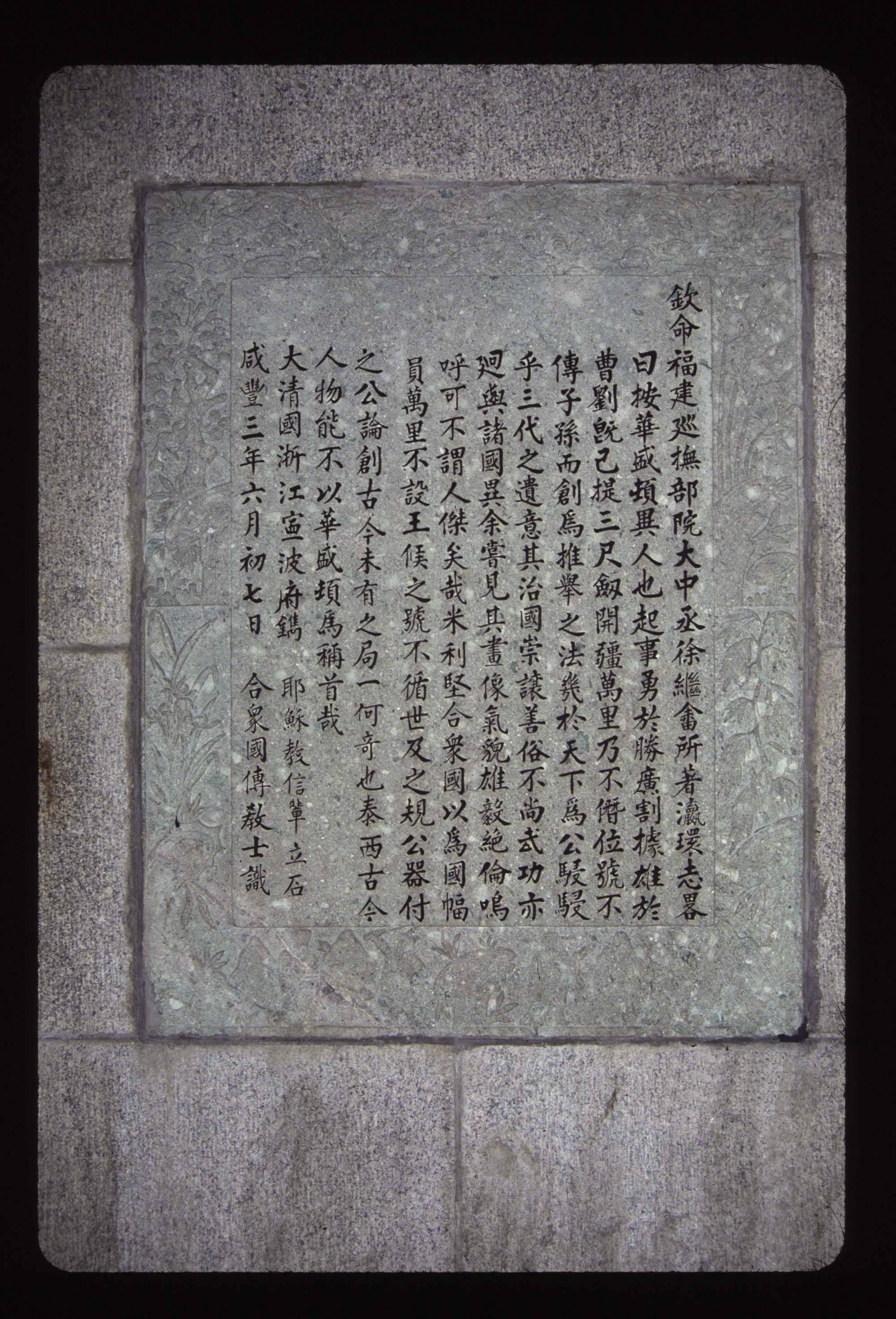
The image above shows the tablet Trump referred to. It is the only commemorative stone inscribed in Chinese among the 188 memorial stones embedded in the interior walls of the Washington Monument, donated by individuals, organisations, and communities from around the world.
According to the U.S. National Park Service, the block sits at the 220-foot level of the monument, on the 10th landing. It was donated in 1853 by the American Mission, Ningpo, China.
The Chinese inscription was later translated into English by Dr. Peter Parker, an American physician and missionary, and the translation was included in the book History of the Washington National Monument and of the Washington National Monument Society.
Below is the Chinese text of the inscription, together with Dr. Parker's English translation from more than a century ago.
钦命福建巡抚、部院大中丞徐继畬所著《瀛寰志略》曰:
Su-Ki-Yu, by imperial appointment, Lieutenant Governor of the Province of FuhKun (FuhKun refers to Fujian today — Yuzhe), in his Universal Geography, says:
"按,华盛顿,异人也。起事勇于胜广,割据雄于曹刘,既已提三尺剑,开疆万里,乃不僭位号,不传子孙,而创为推举之法,几于天下为公,骎骎乎三代之遗志。其治国崇让善俗,不尚武功,亦迥与诸国异。余尝见其画像,其貌雄毅绝伦,呜呼,可不谓人杰矣哉!
It is evident that Washington was a remarkable man. In devising plans he was more decided than Chin-Sing, or Wu-Kang; in winning a country, he was braver than Tsau-Tsau or Lin Pi. Wielding his four-footed falchion, he extended the frontiers thousands of miles, and then refused to usurp the regal dignity or transmit it to his posterity, but first established rules for an elective administration. Where in the world can be found such a public spirit? Truly, the sentiments of three dynasties (Three dynasties refers to Xia, Shang and Zhou dynasty in ancient China — Yuzhe) have all at once unexpectedly appeared in our day! In ruling the State he promoted and fostered good customs, and did not depend on military merit. In this he differed from all other nations. I have seen his portrait; his air and form are grand and imposing in a remarkable degree. Ah! Who would not call him a hero?
米利坚,合众国以为国,幅员万里,不设王侯之号,不循世及之规,公器付之公论,创古今未有之局,一何奇也!泰西古今人物,能不以华盛顿为称首哉!
The United States of America regard it promotive of national virtue generally and extensively neither to establish titles of nobility and royalty nor to conform to the age, as respects customs and public influence, but instead deliver over their own public deliberations and inventions, so that the like of such a nation—one so remarkable—does not exist in ancient or modern times. Among the people of the Great West, can any man, in ancient or modern times, fail to pronounce Washington peerless?
大清国浙江宁波府镌,耶稣教信辈立石。
咸丰三年六月初七日,合众国传教士识。
This stone is presented by a company of Christians and engraved at Ningpo, in the Province of Che Heang (Che Heang refers to Zhejiang today — Yuzhe), China, this third year of the reign of the Emperor He-en Fung, six month and senventh day. [July 12, 1853]
For decades, the tablet remained little known. It returned to diplomatic visibility in 1998, when Bill Clinton mentioned it in a speech to students at Peking University during his China visit. Clinton said:
From the windows of the White House, where I live in Washington, D.C., the monument to our first President, George Washington, dominates the skyline. It is a very tall obelisk. But very near this large monument there is a small stone which contains these words: The United States neither established titles of nobility and royalty, nor created a hereditary system. State affairs are put to the vote of public opinion.
This created a new political situation, unprecedented from ancient times to the present. How wonderful it is. Those words were not written by an American. They were written by Xu Jiyu, governor of Fujian Province, inscribed as a gift from the government of China to our nation in 1853.
I am very grateful for that gift from China. It goes to the heart of who we are as a people -- the right to life, liberty, and the pursuit of happiness, the freedom to debate, to dissent, to associate, to worship without interference from the state. These are the ideals that were at the core of our founding over 220 years ago. These are the ideas that led us across our continent and onto the world stage. These are the ideals that Americans cherish today.
The more revealing story, however, is not the stone itself, but the man whose words were carved into it: Xu Jiyu (actually it is Xu Jishe徐继畬), then Governor of Fujian province.
A reform-minded scholar-official, Xu authored the book Universal Geography《瀛寰志略》 in 1848, which introduced nearly 80 countries and regions around the world, including an account of George Washington.
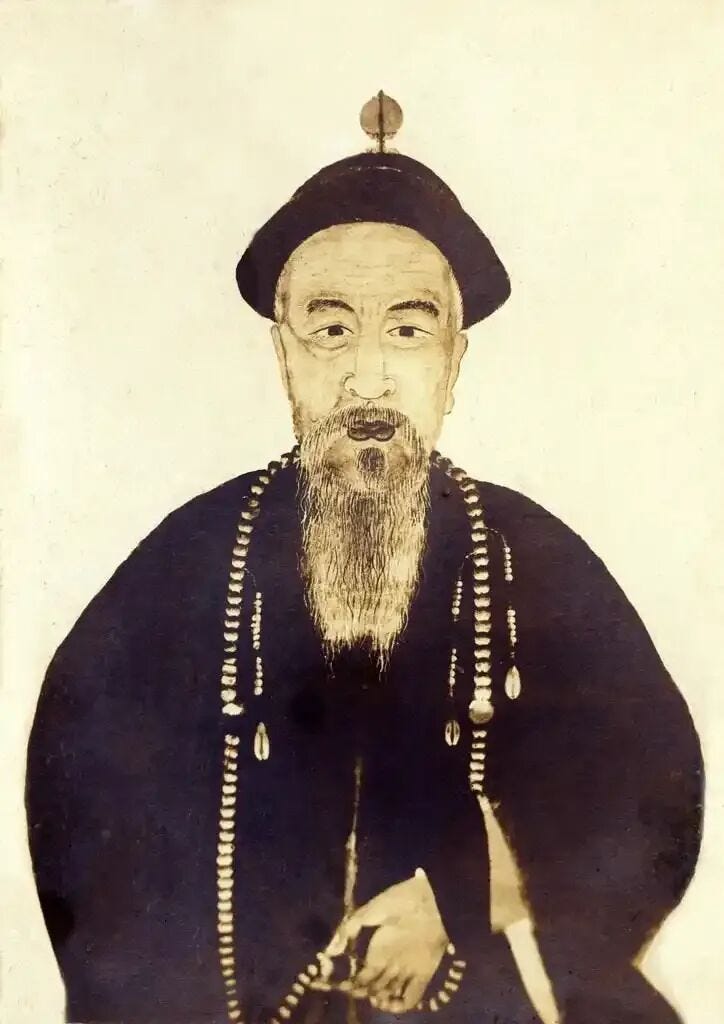
More than a geography book, Universal Geography was one of Qing China's early attempts to describe the modern world in systematic terms—its politics, economies, militaries, histories, and empires.
For example, Xu gave detailed accounts of Britain's constitutional monarchy and America's democratic republic, and praised both. He was especially taken by Washington: a military founder who did not crown himself, did not pass power to his descendants, and helped create a system in which public affairs were subject to public deliberation.
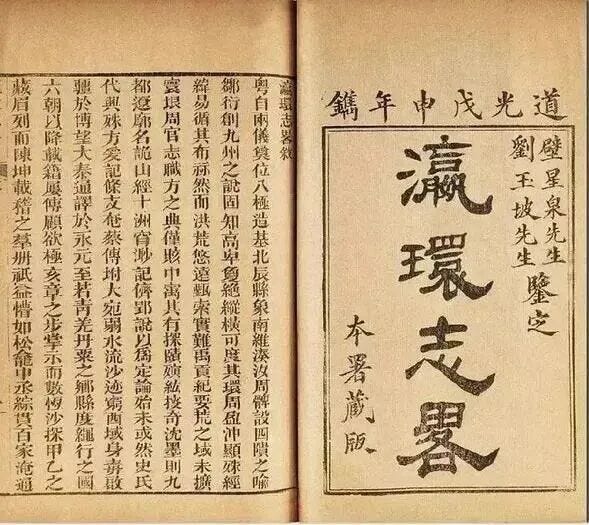
The book also tracked Western colonial expansion, including British rule in India and Southeast Asia, and the potential threat it posed to China.
By today's standards, Xu's work is somewhat dated. In its own time, it was a breakthrough. Completed more than a decade before China's Self-Strengthening Movement gathered force, it challenged the old China-centered view of the world and helped open a window onto global politics.
That made Xu politically vulnerable. Partly because of his account of Western political systems, conservatives at court accused him of excessive admiration for foreign countries. In 1851, he was removed as Governor of Fujian and recalled to Beijing to take up a largely ceremonial post. The following year, he was stripped of office altogether and sent home.
His fortunes later turned. In 1865, as the Self-Strengthening Movement gained momentum, Xu was brought back into government and appointed to a post roughly comparable to today's vice foreign minister. He helped train a new generation of diplomats and translators, becoming an important figure in China's early engagement with modern diplomacy.
On March 29, 1868, The New York Times profiled Xu in an article titled "America in China", comparing him to Galileo.
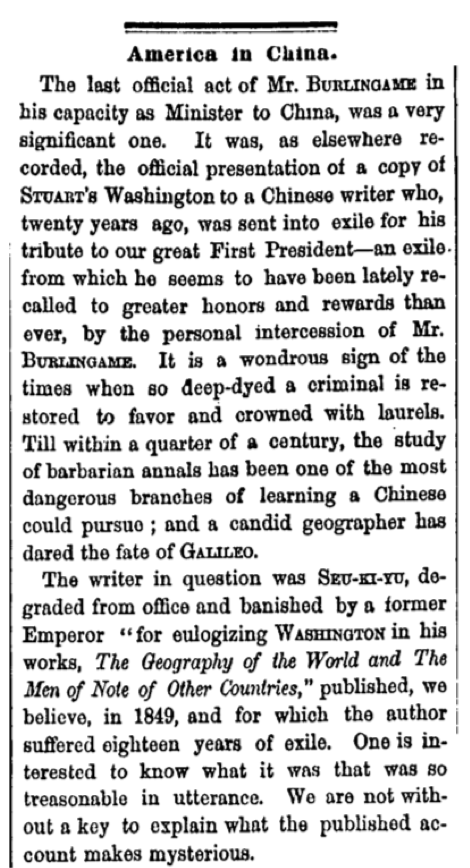
The last official act of Mr. Burlingame in his capacity as Minister to China, was a very significant one. It was, as elsewhere recorded, the official presentation of a copy of Stuart’s Washington to a Chinese writer who, twenty years ago, was sent into exile for his tribute to our great First President—an exile from which he seems to have been lately recalled to greater honors and rewards than ever, by the personal intercession of Mr. Burlingame. It is a wondrous sign of the times when so deep-dyed a criminal is restored to favor and crowned with laurels. Till within a quarter of a century, the study of barbarian annals has been one of the most dangerous branches of learning a Chinese could pursue; and a candid geographer has dared the fate of Galileo.
The writer in question was Seu-ki-yu, degraded from office and banished by a former Emperor “for eulogizing Washington in his works, The Geography of the World and The Men of Note of Other Countries,” published, we believe, in 1849, and for which the author suffered eighteen years of exile. One is interested to know what it was that was so treasonable in utterance. We are not without a key to explain what the published account makes mysterious.
Xu died in Beijing in 1873, aged 79.
Apparently in the mid-19th century, some Chinese officials were already trying to understand the American experiment, and to translate it into the political language of their own civilization.