

China released its energy plan for 2026-30 on June 25. As China becomes an increasingly indispensable global energy player, especially in the green transition, understanding the direction of its energy transformation over the next five years offers a window into where the world's energy transition is headed.
Today's newsletter features a comprehensive reading of the plan, formally titled Plan for Building a New Energy System during the 15th Five-Year Plan Period (2026-30).《新型能源体系建设“十五五”规划》. The analysis comes from Dr. Lu Ruquan 陆如泉, who is perhaps one of the best-qualified people to interpret the document.
Dr. Lu heads the Economics & Technology Research Institute at China National Petroleum Corporation (CNPC ETRI), the only one among China's 29 nationally recognized elite think tanks dedicated to energy.
He holds dual bachelor's degrees in Petroleum Engineering and English from China University of Petroleum and earned his PhD in international relations from the China Institutes of Contemporary International Relations. A former deputy general manager of CNPC's International Department and a veteran of its Iraq and Sudan projects, he has, since 2006, devoted himself to strategic management and policy analysis.
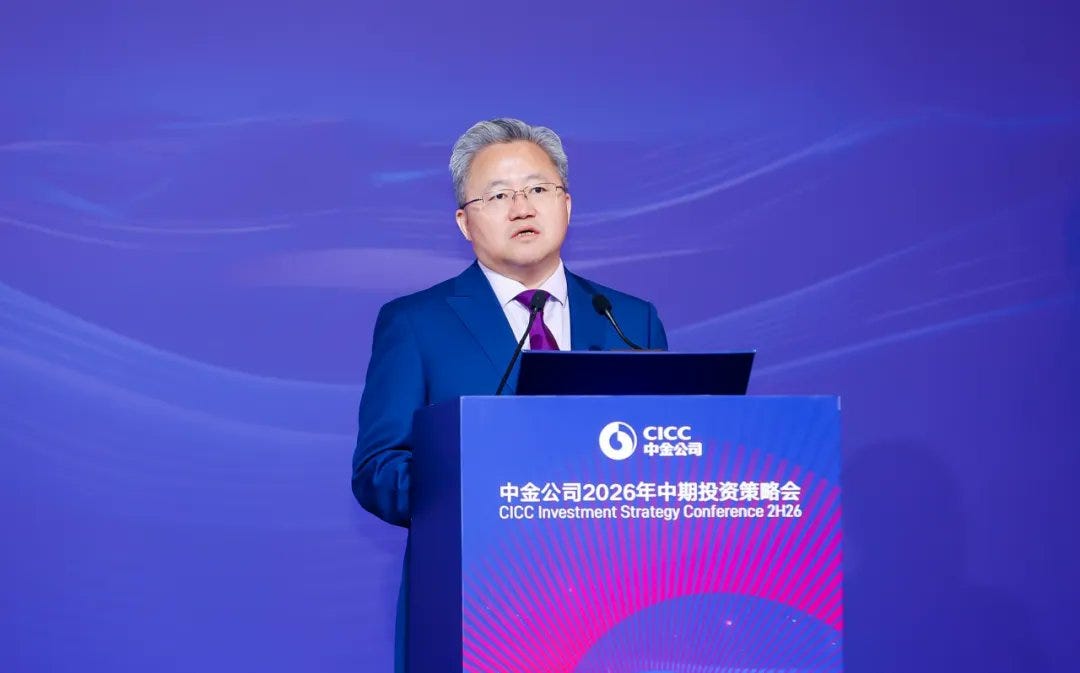
Dr. Lu's analysis was originally published on his WeChat public account on June 28. Since the piece is already clearly structured, I will not bother adding a summary of my own. Dr. Lu has kindly authorized me to translate the piece, please find the full English version below.
透析《新型能源体系建设“十五五”规划》的十大关键词
Ten Keywords to Decode the 15th Five‑Year Plan for a New Energy System
The most heated topic in China's energy sector these days has probably been the Plan for Building a New Energy System during the 15th Five-Year Plan Period (2026-30).《新型能源体系建设“十五五”规划》. On June 25, the National Development and Reform Commission and the National Energy Administration (NEA) officially released the plan. On June 26, NEA Administrator Wang Hongzhi introduced the plan's key points for accelerating the new energy system during the 15th Five-Year Plan period at a State Council Information Office press conference, and answered questions from reporters.
I also received many interview requests from journalist friends these days. Their questions mainly focused on the following areas:
— How is the new plan (2026-30) different from the last plan (2021-26)? Which new formulations deserve the most attention?
— The plan stresses balancing energy security and green transition. Do you think the weight of energy security in China's energy strategy is rising? How do you think these two goals can be balanced?
— The international community is following China's energy transition closely. What does this plan mean for the global energy transition?
— At the press conference, the NEA said investment in key energy projects and new business forms during the 15th Five-Year Plan period (2026-30) will exceed 20 trillion yuan (roughly 3 trillion U.S. dollars). From the perspective of enhancing system resilience and achieving green and low-carbon goals, how should this 20 trillion yuan be allocated to maximize investment effectiveness?
— China's energy transition has entered a more challenging second half. Compared with the previous phase of quantitative expansion, what qualitative changes will the energy system undergo over the next five years? What unprecedented new challenges will arise? During the 15th Five-Year Plan period (2026-30), the oil and gas industry will face the dual pressure of ensuring supply and pursuing transition. How will its strategic mission change?
— The plan defines the 15th Five-Year Plan period (2026-30) as a period of adjustment and reshaping for international energy cooperation. How should we understand the phrase "participating in and leading the transformation of global energy governance," and what are the practical levers for doing so?
Over the past couple of days, I have studied the plan carefully. In response to these questions, I will analyze it along four dimensions.
I. New Features of the "15th Five-Year Plan for a New Energy System" Compared with the "14th Five-Year Plan for a Modern Energy System"
It is worth noting that the terms "modern energy system" and "new energy system" respectively come from the reports to the 19th (in 2017) and 20th (in 2022) National Congresses of the Communist Party of China. Compared with the 14th Five-Year Plan period (2021-25), which focused on building a "modern energy system," the core difference of the 15th Five-Year Plan (2026-30) lies in a comprehensive elevation of the system's architecture: moving from a "modern energy system" centered on scaling up, to a "new energy system" centered on systemic restructuring, high‑quality development, and high‑level security. The specific differences are as follows:
First, the core positioning is different. The 14th Five-Year Plan (2021-25) focused on "modern energy system," emphasizing scale expansion and structural optimization; the 15th Five-Year Plan (2026-30) focuses on a "new energy system," emphasizing system restructuring and high-quality development.
Second, the main indicators have been significantly upgraded. The target for comprehensive energy production capacity has risen from 4.6 billion tonnes of standard coal equivalent to 5.8 billion tonnes; total installed power capacity has jumped from 3,000 GW to 5,400 GW; the share of non-fossil energy in total energy consumption has increased from 20% to 25%; and the share of non-fossil energy in power generation has risen from 39% to 50%.
Third, the development philosophy has changed. The focus is shifting from "kick‑starting new energy at scale" to "integrating generation, grid, load, and storage across the whole system"; from "prioritizing supply security" to "taking safe and sufficient supply as the precondition and low-carbon transition as the main thread"; and from "hardware building" alone to a dual-drive model powered by "both market mechanisms and digital technologies."
Fourth, the power system is being restructured. The 14th Five-Year Plan (2021-25) focused on expanding installed capacity; the 15th Five-Year Plan (2026-30) emphasizes high-proportion consumption of renewable power and system flexibility. It makes clear that wind and solar power will become the "dual mainstay" of both installed capacity and electricity generation.
Fifth, the meaning of "security" has been deepened. The focus has expanded from "ensuring basic supply" to "firmly securing the strategic bottom line under extreme conditions." The plan places particular emphasis on increasing oil and gas reserves and production, stabilizing annual crude oil output at 200 million tonnes, replacing petroleum consumption, and securing the supply of critical mineral resources for new energy.
Sixth, scientific and technological innovation has moved to a new stage. The goal has shifted from "technological breakthroughs" to "overall self-reliance and controllability in key technologies and equipment across the industrial chain." New specific indicators have also been added, such as average annual growth of over 5% in PCT patent filings in the energy field, and more than 100 demonstrations of first-of-their-kind major technical equipment.
In addition, the plan proposes a new spatial layout of "using western energy in western China," adds binding targets such as reductions in carbon emissions per unit of electricity generation, and for the first time establishes virtual power plants and vehicle‑to‑grid interaction as independent market entities.
If the 14th Five-Year Plan (2021-25) was about building the "framework" and "scale" of the energy system, then the 15th Five-Year Plan (2026-30) is about carrying out a profound "interior renovation" and "system upgrade." The core objective is to make the entire energy system smarter, safer, and greener.
II. Ten Keywords that Capture the Essence of the Plan
Based on the full text of the new plan, I have identified the ten most transformative and symbolic keywords:
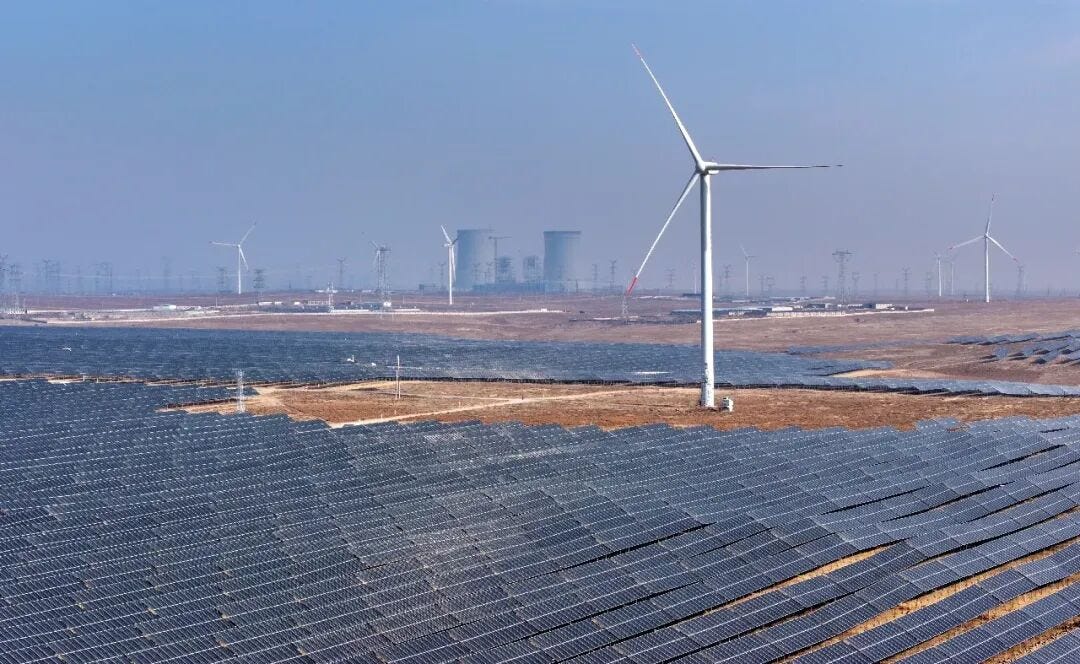
Keyword 1: Wind and solar power as "dual mainstay". The plan makes clear that by 2030, wind and solar power will account for more than 50% of total installed power capacity, and non-fossil energy will account for 50% of total power generation. This means that new energy will, for the first time, become both the "capacity mainstay" and the "generation mainstay" of the power system. China's energy structure is reaching a historic turning point.
Keyword 2: The new power system. The power system is being upgraded from "generation‑grid‑load‑storage" to a system tailored for a high proportion of new energy. The core task is to reposition coal‑fired power as "supporting and regulating power" and to accelerate the construction of intelligent dispatch systems, thereby solving the consumption challenges posed by large‑scale, variable new energy.
Keyword 3: Flexible regulation capacity. This is about systematically addressing the volatility of weather-dependent energy sources. The plan sets clear targets: 160 GW of pumped storage, 300 GW of new energy storage, and for the first time brings virtual power plants (50 GW) and vehicle‑to‑grid interaction (50 GW) into the large‑scale regulation framework.
Keyword 4: The strategic bottom line of energy security. "Extreme scenarios" are written into a Five‑Year Plan for the first time. The plan emphasizes stabilizing annual crude oil production at 200 million tonnes and building large‑scale oil reserves and underground gas storage clusters, so that the nation's energy supply is secure even under extreme conditions.
Keyword 5: "AI+." The plan makes an innovative proposal for compute‑power synergy, promoting "electricity empowering computing, computing boosting electricity". The plan envisions smart power plants, digital oil and gas fields, and AI‑enabled intelligent system‑wide dispatch and unmanned coal mining.
Keyword 6: A unified national power market. The power market is transitioning from pilot programs toward full-fledged construction. The aim is to organically link inter‑provincial spot markets, capacity markets, and ancillary services markets, using price signals to guide resource flows and break down inter‑provincial barriers so that electricity truly "circulates" across the country.
Keyword 7: The full hydrogen-ammonia-methanol chain. This area is moving from demonstration to industrialization. The plan sets a 2030 target of 2 million tonnes of green hydrogen. Beyond laying out hydrogen pipelines, it also outlines, for the first time, dedicated pipelines for green methanol, promoting the large‑scale use of hydrogen in transport, chemicals, and power generation.
Keyword 8: Using western energy in western China and strengthening eastern self-sufficiency. Overturning the traditional one-way logic of "west-to-east electricity transmission," the plan requires that 70% of new energy demand in eastern regions during the 15th Five‑Year Plan period (2026-30) be met locally. Energy‑rich regions are encouraged to convert energy on‑site, for example through direct green-power connections, balancing "west‑for‑west use" with "west‑to‑east transmission."
Keyword 9: Controlling the total amount and intensity of carbon emissions. China is formally moving from "controlling both the volume and intensity of energy use" to "controlling the total amount and intensity of carbon emissions." The plan adds a binding indicator requiring carbon emissions per unit of power generation to fall by more than 10%, and expands the scope of the national carbon market, using carbon constraints to force green transition.
Keyword 10: Integration of energy production and consumption. Consumers are no longer passive "end‑users". Factories, industrial parks, and EV users are encouraged to aggregate their own resources through virtual power plants, smart micro‑grids, and direct green electricity connections, thus participating in system interaction and becoming new entities that both "generate and regulate".
These ten keywords thread together the core logic of the new plan: from scale expansion to systemic restructuring, and from hardware construction to mechanisms and digital‑intelligent drivers. Of course, these ten are simply my own selection and may well omit other important aspects.
III. The Positioning of the Oil & Gas Industry in the Plan and Its Future Development Priorities
As someone from the oil sector, my greatest interest naturally lies in how the plan positions the oil & gas industry and charts its future development.
It is obvious that the plan puts non‑fossil energy in the leading role, and the content dealing with the positioning and future direction of oil & gas is not extensive. Yet, based on the plan's text, it can be summarized as: the "ballast stone" for security and the "stabilizer" for the green transition. Its core mission, in an era of peaking consumption and shrinking incremental volumes, is to fortify the energy security baseline through "stabilizing production, increasing reserves, and strengthening pipeline networks", while simultaneously achieving its own green and low‑carbon transformation through "integration, reducing oil (as fuel), and increasing chemicals".
In terms of core positioning, oil & gas are the "ballast stone" that underpins energy security. During the 15th Five‑Year Plan period (2026-30), oil & gas remain strategically tasked with safeguarding national energy security.
First, "stabilizing oil and increasing gas" is the core task. The plan makes clear that annual crude oil output should remain stable at around 200 million tonnes, and natural gas production should grow steadily.
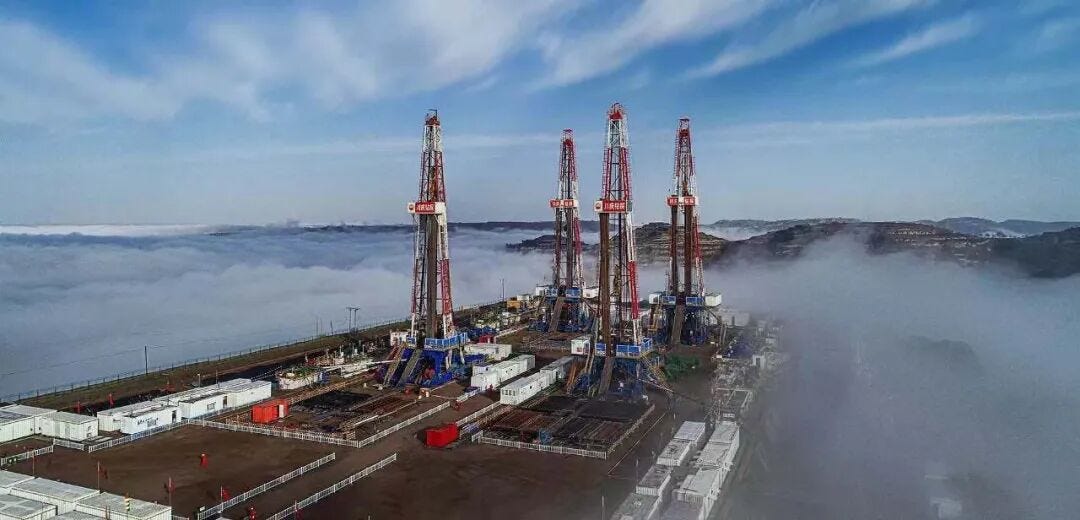
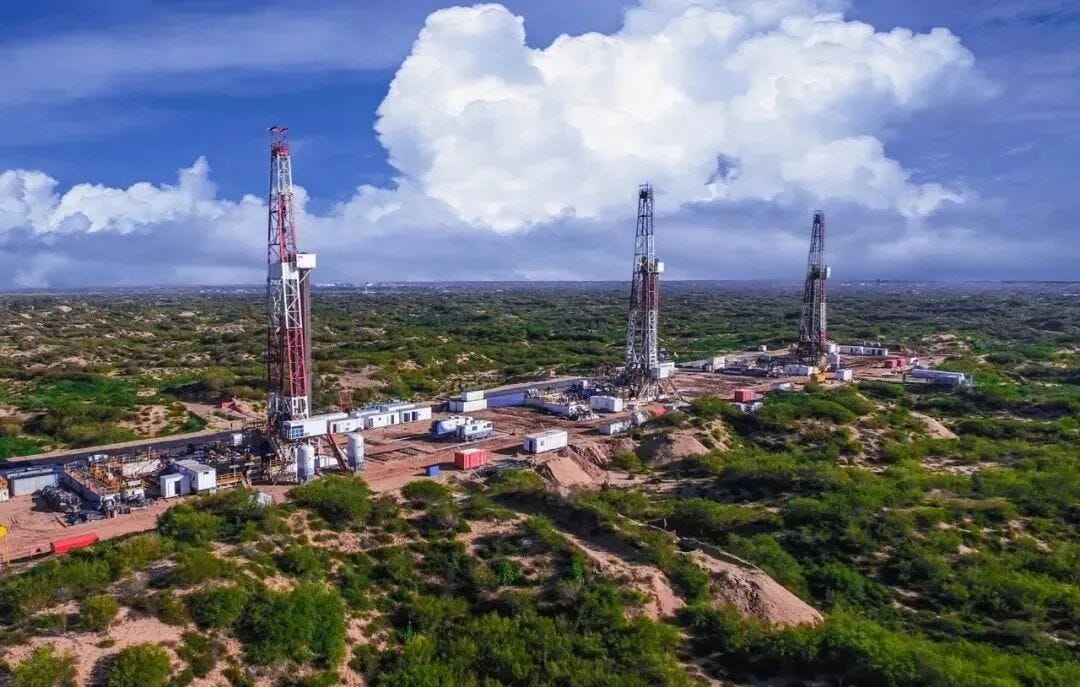
Second, in terms of key regional layout, the plan focuses on building strategic oil and gas security bases in areas such as Ordos, the Bohai Bay, Sichuan-Chongqing area, Tarim Basin, and Songliao Basin.
Third, in strengthening reserves and pipeline networks, the main task is to improve the oil & gas reserve system and continue improving the "national unified network" for oil and gas, with a target of 500 billion cubic meters per year of primary gas pipeline transmission capacity.
In terms of transition and development direction, oil & gas are undergoing a green transformation from "fuel" to "feedstock." While ensuring security, the oil and gas industry also faces a profound green transition, with three new characteristics:
First, in upstream exploration, the requirement is to "stabilize oil and increase gas" across four major frontiers: boosting investment in deep onshore, deepwater, unconventional, and mature oil and gas fields, so that offshore and unconventional resources become the mainstay of stable crude oil production.
Second, in downstream refining, the direction is strict capacity control and a shift toward "high‑end, sophisticated" products. Refining capacity should be strictly controlled under the principle of "capacity replacement with reduction," while companies should be guided toward optimization and restructuring. At the same time, enterprises are encouraged to increase the yield of chemical feedstock oil, specialty oil products, and high-end new materials.
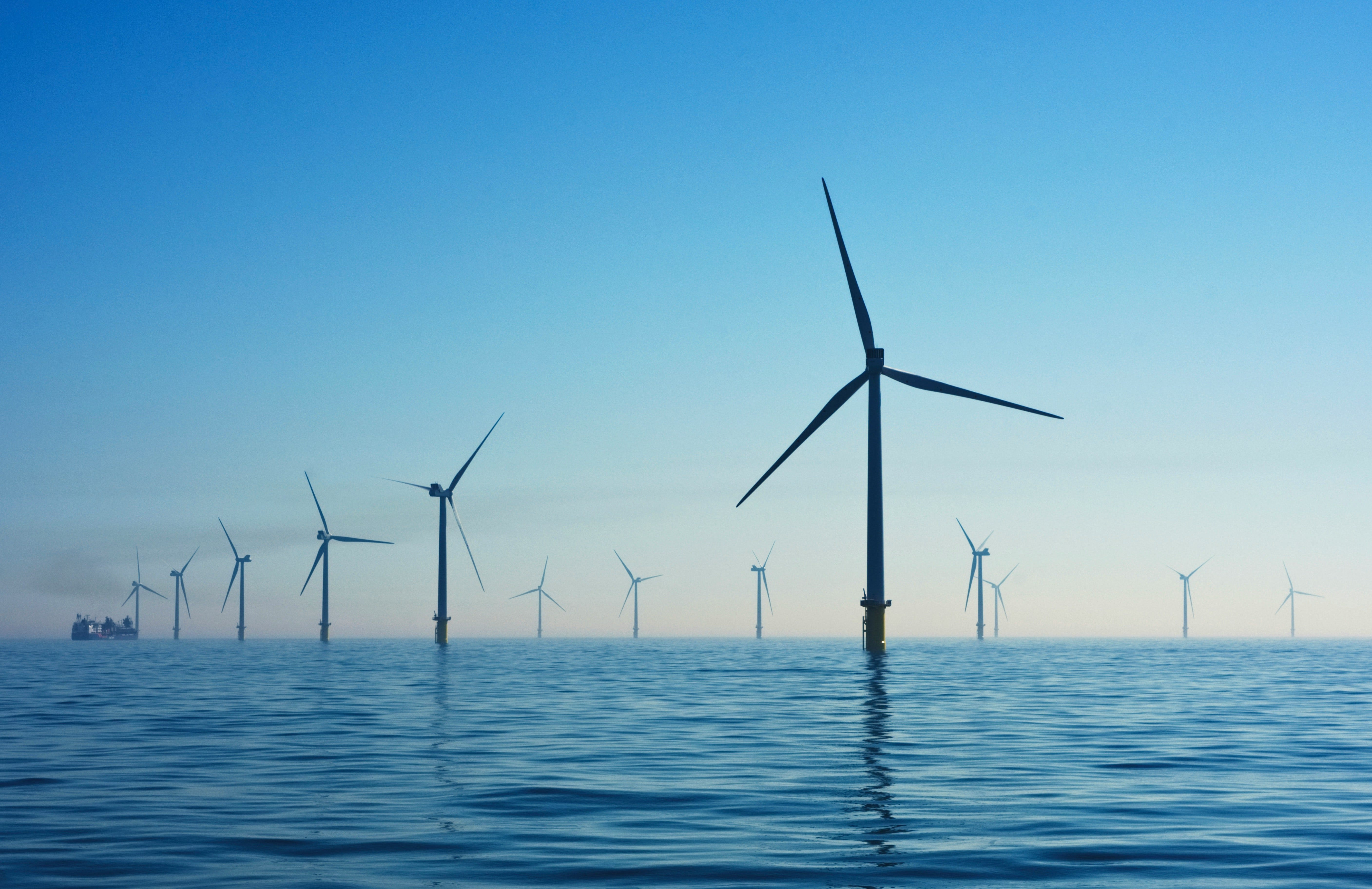
Third, in green transition, the task is to build "low-carbon and zero-carbon" oil & gas fields; carry out large-scale integration of oil & gas fields with new energy, such as integrated "wind-solar-gas-storage" development; explore coordinated development of offshore oil & gas fields and offshore wind power; promote the construction of regional CCUS (carbon capture, utilization and storage) industrial clusters; and increase the electrification rate of oil and gas field production.
My overall impression is that the oil & gas industry's development over the next five years will be a combination of "defense" and "attack". "Defense" means defending the baseline of 200 million tonnes of domestic crude output and a complete pipeline and reserve system; while "attack" means exploriing new frontiers such as deep strata and deep water, and transform toward "feedstocks" and "new materials", achieving a low‑carbon transformation through integrated development with new energy.
IV. Overall Considerations for International Energy Cooperation and Global Energy Governance in This Plan
Having worked for a long time in international energy cooperation, I naturally pay special attention to the energy cooperation content in the plan. The seventh part of the plan, "A Multi‑dimensional International Cooperation System", is indeed a major strategic addition. China is no longer positioning itself merely as a "strategic buyer", but also emphasizes "participation and leadership".
On the one hand, energy cooperation is to shift from "participant" to "leader", and the hallmark of this shift is control over rules and discourse power. Previous plans tended to stress "utilizing international resources", whereas the new plan, for the first time, unequivocally sets out to "participate in and lead" global energy governance. This means China must move from passively adapting to international rules toward actively formulating and exporting rules.
Concrete levers include: conducting high‑caliber energy diplomacy in China, operating the Belt and Road and Global Clean Energy Cooperation partnerships well, and even promoting the establishment of non‑governmental international organizations in the nuclear energy field in China. China will gradually increase its voice on issues such as global carbon pricing and mutual recognition of green certificates.
On the other hand, greater emphasis is placed on exporting the full value chain of "technology + standards." Previous international cooperation mostly involved "exporting products and production capacity," such as selling solar panels and wind turbines. This has now been upgraded to an integrated approach of exporting "products, technologies, standards, and services" together.
It is particularly worth noting that the plan, on the one hand, addresses international "green trade barriers," such as the EU's carbon border adjustment mechanism, by enhancing the international recognition of China's green certificates to empower exports. On the other hand, it champions "small yet beautiful" best‑practice green projects, rather than simply large‑scale engineering works. At the same time, the plan explicitly proposes building an international green fuel bunkering and trading center in Shanghai. This signals that China is trying to seize the commanding heights in the international pricing and standards systems for green fuels.
Overall, the release of this plan marks the formal transition of China's energy development from the "first half" of scale expansion to the "second half" of systemic restructuring. This means China will no longer simply pursue the construction of more power stations. Instead, it will address deeper questions about how the entire energy system can operate efficiently, remain absolutely secure, and integrate into the global system. If I were to sum up the plan's essential philosophy in four phrases, they would be:
— Security is the bottom line: keeping oil and gas production stable and building new reserve systems are elevated to a new strategic height.
— Green is the core: the "dual mainstay" status of wind and solar power is established for the first time, and a full pivot is made toward "controlling the total amount and intensity of carbon emissions".
— Innovation is the driver: through "AI+" and a unified national power market, the energy system is being made smarter and more efficient.
— Governance is about leadership: China is committed to transforming from a "participant" in global governance to a "leader".
Lu Ruquan: Five major trends & three subtle shifts amid China's energy transition

Weeks ago, this newsletter featured a piece by Dr. Lu Ruquan (陆如泉), offering a five-dimensional framework for decoding China's (energy) policy rhetoric. I am glad to see that our subscribers find it useful.