

At this year's national "two sessions", concerns about China's falling birth rate and broader population decline were again on display.
In a March 7 post on his personal WeChat account, James Jianzhang Liang, who is the Trip.com Group's co-founder and executive chairman and one of China's best-known public advocates of pro-natal policy, gathered the fertility- and population-related proposals put forward by deputies to the National People's Congress and members of the Chinese People's Political Consultative Conference.

Mr Liang's own conclusion was blunter than the official rhetoric. Beijing now talks of building a "fertility-friendly society", and last year rolled out a national childcare subsidy of 3,600 yuan (around USD 517) a year for children under three. But that still looks more like a gesture than a genuine transfer of risk from households to the state.
China's fertility slump is not simply a crisis of confidence or culture, according to Liang. It is, at heart, a crisis of incentives: families bear most of the money, time, and career cost of raising children, while the country as a whole pockets the future gains in workers, taxpayers, consumers, innovators, and social continuity.
That is why Mr. Liang argues for the simplest, least poetic answer: pay parents properly. In his telling, large-scale cash support for child-rearing families would do two things at once. It would compensate households for producing a public good; and, because such families tend to spend rather than save, it would channel money straight into consumption at a time when China is still struggling with weak domestic demand. On fertility, as on consumption, the diagnosis is no longer the problem. The real shortage is political willingness to spend at the scale the problem requires.
This piece was first published on James Liang's personal WeChat account on March 7. The translation below is mine and has not been reviewed by him.
2026年全国两会有关人口和生育问题的提案汇总
A roundup of proposals on population and fertility issues at the 2026 national "two sessions"
At this year's national "two sessions," deputies to the National People's Congress (NPC) and members of the Chinese People's Political Consultative Conference put forward a wide range of proposals on population and fertility issues. This article offers a summary of those proposals.
One point should be made at the outset: all of the proposals listed here come from publicly available media reports. As far as I know, there were also other proposals on population and fertility that were not covered by the media. So the proposals collected here do not represent the full set of population- and fertility-related proposals submitted during this year's national "two sessions."
Yao Jinbo姚劲波: Fertility support should cover children from age 0 to 18

According to a 4 March report by The Beijing News, Yao Jinbo, an NPC deputy and chairman and CEO of 58.com, the operator of one of the largest online marketplaces in China, said that in recent years China's number of births has kept falling, population aging has deepened, and the inertia of low fertility has become even more apparent.
"In the past, people worried about whether they could afford to have a child. Now they are more concerned about whether they can raise the child well and whether childcare support is available. Fertility support needs to come from systematic policy design, so that families feel able to have children, able to raise them, and properly protected."
In his view, China should build a comprehensive support system covering the full 0-18 growth cycle, supporting every stage from marriage and pregnancy to childbirth and child-rearing, so that families have more confidence and more predictability when making fertility decisions.
To that end, Yao proposed a package of systematic policies to keep improving the fertility support system.
At the top institutional level, he suggested writing the principle of fertility support "regardless of birth order" into national policy documents, removing various hidden barriers, relaxing eligibility requirements for adoptees and those placing children for adoption, scrapping the rule that adoptive parents must be childless, and ensuring that adopted children enjoy the same rights as biological children in household registration, school enrollment, social security, and other areas.
On policy coordination, he proposed setting up a national population development commission and establishing a regular joint-meeting mechanism to coordinate the implementation of fertility support policies and regional population development, creating a more stable and long-term policy framework.
On incentives and funding, Yao proposed creating a population development fund dedicated to fertility subsidies, childcare service development, and related public services, while encouraging local governments to adjust childcare subsidy standards dynamically in line with their economic development, making support policies more sustainable.
At the public-service level, he called for further improvements to support for marriage, pregnancy, childbirth, and parenting, including stronger support for young people's marriage and childbearing, low-interest marriage and childbirth loans for new graduates and newly married families, and housing support.
At the same time, he said China should address the shortfall in childcare services for children aged 0-3, improve maternity medical coverage, include services such as pain relief during childbirth in medical insurance, and expand maternity insurance coverage to provide families with more continuous and accessible support.
"Only when families feel able to have children, able to raise them, and able to raise them well will population development have staying power and society retain its vitality," Yao said. By combining institutional guarantees with better public services, he argued, China can build a stronger foundation for long-term, balanced population development.
Pang Yonghui庞永辉: Raise childcare subsidies substantially
According to a 5 March report by Jimu News, Pang Yonghui, an NPC deputy and a master of Chinese arts and crafts, proposed substantially raising childcare subsidy standards and issuing long-term special government bonds for childcare in order to boost people's willingness to have children. His specific proposals were as follows.
First, raise childcare subsidies and extend them across the whole growth cycle. He suggested adjusting the subsidy policy so that families would receive RMB 1,000 per month for a first child, RMB 3,000 per month for a second child, and RMB 5,000 per month for a third child and above, until the child turns 3. At the same time, families with multiple children should receive reductions in income tax and social security contributions, further easing the financial burden on households and making the subsidy policy genuinely effective as an incentive.
Second, issue long-term special government bonds to fund the subsidies. He proposed bonds with a maturity of around 30 years to raise childcare subsidy funds and achieve inter-generational fairness, so that future taxpayers who will benefit from the additional labor force also share the current cost of child-rearing. Given China's ample productive capacity at present, he argued, distributing childcare subsidies could also help activate idle capacity and expand domestic demand.
Third, improve supporting policies and build a full-chain fertility-friendly system. Alongside higher subsidies, he called for vigorous development of affordable childcare services, a broader rollout of free pre-school education, more effective implementation of initiatives launched to relieve students of excessive burdens from homework and off-campus tutoring, so as to reduce household education spending, and appropriately shorter working hours alongside guaranteed parental leave rights, so as to address families' concern that they "dare not have children because no one is available to help care for them."
Pang said: "Childcare subsidies are not just a welfare measure. They are also a strategic investment in future development momentum. By building a full-chain fertility-friendly system, China can effectively strengthen public confidence in childbearing and build up its talent dividend for long-term national development."
Zhang Yi张翼: Keep the universal subsidy, but add a second layer of supplementary subsidies
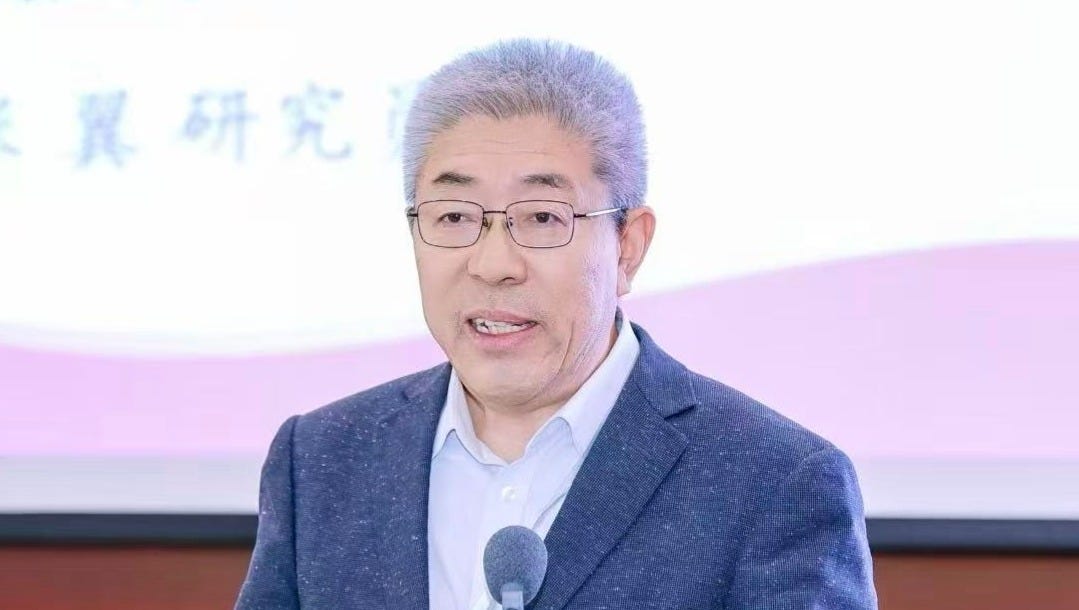
According to a 5 March report by China Business Journal, Zhang Yi, an NPC deputy and dean of the School of Sociology and Ethnology at the University of Chinese Academy of Social Sciences, noted that the Central Economic Work Conference had clearly called for efforts to "stabilize the number of new births," and that the core of solving the problem of people "not daring to have children" lies in reducing the cost of raising them.
In his field research, Zhang found that many families do want children, "but worry that the financial pressure is too great" . He noted that the current universal childcare subsidy is RMB 3,600 per year for children aged 0-3, or RMB 300 per month, which is not enough to encourage people to have children.
In his view, the current policy only covers very young children, providing support only for those aged 0-3. In a two-child family, if the first child is already over 3, the household cannot receive support for that child. He also argued that the subsidy level is too low. "For low-income families, RMB 300 a month is just a drop in the bucket; for high-income families, it provides no real incentive. It does not truly ease the pressure of child-rearing."
To address these problems, Zhang proposed a two-tier system of "maintaining the universal subsidy plus adding a supplementary subsidy," with a particular tilt towards low-income and lower-middle-income households.
He suggested that for low-income families with per capita disposable income below 50% of the national average, a first child should receive an extra RMB 800 per month, bringing the total including the universal subsidy to RMB 1,100; a second child should receive an extra RMB 1,600 per month, bringing the total to RMB 1,900; and a third child should receive the same as a second child.
"In other words, if the first child has already aged out of the system, but the second and third children are both within it, a low-income family could receive as much as RMB 3,800 a month."
For lower-middle-income families, defined as those with per capita disposable income between 50% of the national average and the average itself, Zhang proposed an extra RMB 400 per month for a first child, bringing the total to RMB 700 with the universal subsidy, and an extra RMB 800 per month for a second child, bringing the total to RMB 1,100. Together, the first and second child would then bring in RMB 1,800 per month.
"For a low-income family raising both a second and a third child at the same time, RMB 3,800 a month is roughly equal to a migrant worker's monthly income. That can more or less cover one person's wages, and would go a long way towards easing the problem of not being able to afford children," Zhang calculated. "For a lower-middle-income family, RMB 1,800 a month for two children can also cover a meaningful part of the cost of raising them, making them more willing to have a second child."
Tian Xuan田轩: Establish a nationwide unified child development account
According to a 4 March report by The Beijing News, Tian Xuan, an NPC deputy and Boya Distinguished Professor at Peking University, proposed creating a unified child development account across the country under a system of "an account opened at birth."
Each newborn's ID number would serve as the unique identifier and be automatically linked to the household registration system. The central government could inject an initial RMB 1,000-2,000 into each child's account, with higher initial amounts of RMB 3,000-5,000 for special groups such as households receiving the minimum living allowance, disadvantaged children, and left-behind children. A dedicated management system should also be built on the national social security information platform to enable interconnection across multiple systems.
He also proposed building a diversified funding system that allows compound growth over time. The government could provide guiding funds through fiscal budgets and transfers of state-owned capital; families could make voluntary contributions and in return receive higher special additional deductions for individual income tax; companies that contribute to the accounts of employees' children could deduct part of the amount from corporate income tax; and charitable organizations should be encouraged to make targeted donations.
Zheng Gongcheng郑功成: Establish a mothers' pension system
According to a 4 March report by China News Service, NPC deputy Zheng Gongcheng, speaking on how to build a fertility-friendly society, noted that legal and policy tools should be used to address the way childbearing affects women's employment and career opportunities.
Zheng placed particular emphasis on the necessity and importance of creating a mothers' pension system. In practical terms, that would mean treating time spent caring for infants, such as one or two years, as a deemed contribution period, ensuring that women's pension benefits are not reduced because of childcare. As he put it: "This institutional design links the contribution of childbearing to security in old age, and represents a formal recognition of the social value of womens reproductive labor."
Ruan Xiangyan阮祥燕: Three recommendations on fertility protection
According to a 6 March report by Beijing Youth Daily, NPC deputy Ruan Xiangyan, director of the endocrinology department at Beijing Obstetrics and Gynaecology Hospital, made three recommendations on fertility protection.
First, strengthen prevention at the source, standardize diagnosis and treatment, and establish a fertility assessment and protection mechanism so as to minimize avoidable fertility damage.
Second, accelerate the spread of technology so that mature techniques such as ovarian tissue cryopreservation and transplantation become safer, more standardized, more affordable, and more widely accessible.
Third, improve institutional protections by fully integrating fertility protection into whole-life-cycle health services, so that more people can enjoy fair and accessible reproductive health protection.
Zhao Jing赵菁: Build a stronger full-cycle system for protecting reproductive health

According to a 3 March report by 21st Century Business Herald, the current lack of adequate protection for women's fertility, both physically and psychologically, has led some families who "want to have children" to abandon those plans.
Over the longer term, this does not just weaken individuals' willingness to have children; it may also undermine society-wide confidence in childbearing, directly affecting the achievement of the national strategy for high-quality population development.
Zhao Jing, an NPC deputy and vice-chair of Buchang Pharma, proposed building a stronger full-cycle system to protect reproductive health. Her suggestions included deepening public-hospital pay reform to reduce hospitals' financial reliance on invasive treatment; drawing up technical guidelines for organ-preserving treatment involving women's core reproductive organs, and making fertility impact assessment a necessary pre-operative step; establishing a second-opinion system for major surgery; and introducing a special 24-48-hour informed-consent protection period for fertility risks. She also called for a more diversified support system for infertility treatment.
Li Yanfeng李燕锋: Keep bride price below RMB 60,000
According to a 4 March report by Red Star News, this year's No. 1 Central Document, released in February, stated that China should "continue tackling the problem of excessively high bride prices in rural areas, strengthen joint governance in neighboring inter-provincial regions, guide people towards sound views on marriage, childbearing, and family, and foster a simple and civilized marriage culture."
High bride prices add to the cost of getting married and, together with the cost of children's education and other pressures, may create an atmosphere in which young people feel intimidated by marriage and parenthood.
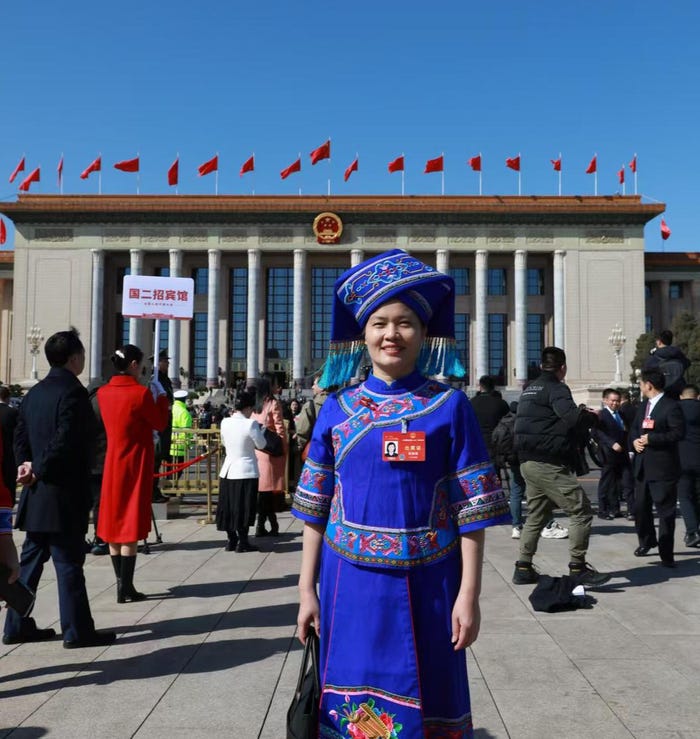
Li Yanfeng, an NPC deputy and director of the library in Guigang, Guangxi Province, proposed setting an upper limit on bride price and offering employment or entrepreneurship incentives to families who marry with a low bride price. Discussion of how to curb "excessively high bride prices" has gone on for years.
In Li's view, the trend can only be stopped with a clear rule. She suggested introducing a unified standard. "Although economic development differs from place to place, I suggest that bride price should not exceed RMB 60,000."
Song Zhaopu宋兆普: Lower the legal marriage age appropriately and encourage earlier marriage and childbirth among people of suitable age
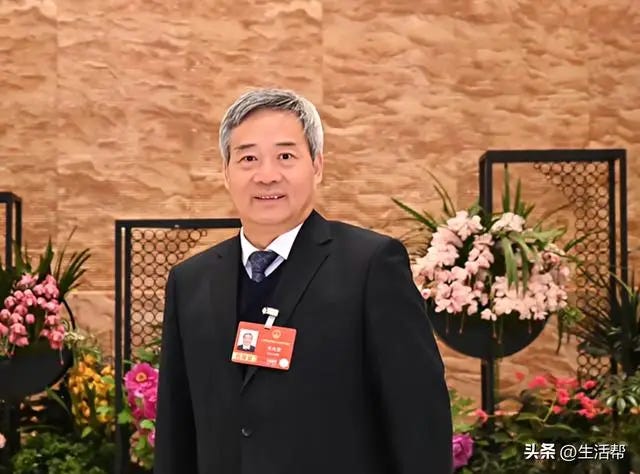
According to a 4 March report by The Beijing News, NPC deputy Song Zhaopu said in an interview that fertility issues remained one of his main concerns this year. He argued that if people delay childbearing too long, age-related declines in sex hormones and ovarian function may affect fertility. He therefore proposed appropriately lowering the legal age of marriage and encouraging people of suitable age to marry and have children earlier.
He also said that some abnormal patterns of miscarriage currently deserve greater attention, and suggested that the state should study and introduce measures as soon as possible to regulate and reduce them.
Yang Yunyan杨云彦: Foster a new culture of marriage and childbearing, and build family-friendly households
According to a 4 March report by China News Service, Yang Yunyan, a member of the CPPCC Standing Committee and deputy director of the Standing Committee of the Hubei Provincial People's Congress, said that population development is a foundational, overarching issue tied to the great rejuvenation of the Chinese nation.
In his view, cultivating a positive outlook on marriage and childbearing requires society as a whole to move in the same direction, with government, society, and families working together. The key lies in deepening understanding, lowering costs, and adopting differentiated policies, so as to create endogenous momentum and a virtuous cycle for high-quality population development.
He therefore proposed fostering a new culture of marriage and childbearing and building family-friendly households in three ways: first, promote a positive outlook on marriage and childbearing; second, build bridges for emotional communication between generations; and third, encourage couples to share childcare responsibilities.
Peng Jing彭静: Make senior high school education free
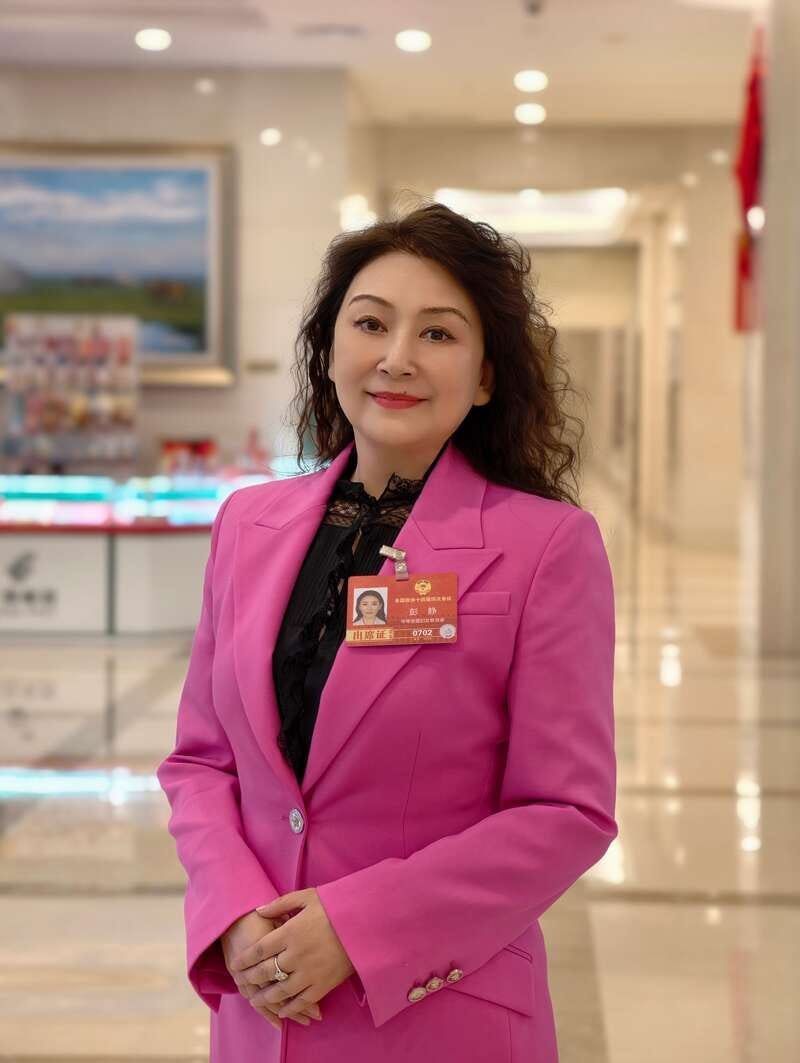
According to a 4 March report by China Youth Daily, Peng Jing, a member of the CPPCC National Committee and director of Chongqing Jingsheng Law Firm, proposed creating a mechanism for gradually making senior high school education free.
She suggested a three-step approach. The first step would prioritize exempting tuition fees for rural households receiving the minimum living allowance, people in extreme hardship, disabled students, and families with multiple children.
The second would gradually expand the policy to all students with rural household registration. The third would make senior high school education free for all urban and rural students. In places not yet ready for full coverage, tuition fees and textbook fees could be waived first, while service charges would be subject to capped pricing.
Gan Huatian甘华田: Adopt a dual-track policy of tax deductions and childcare subsidies
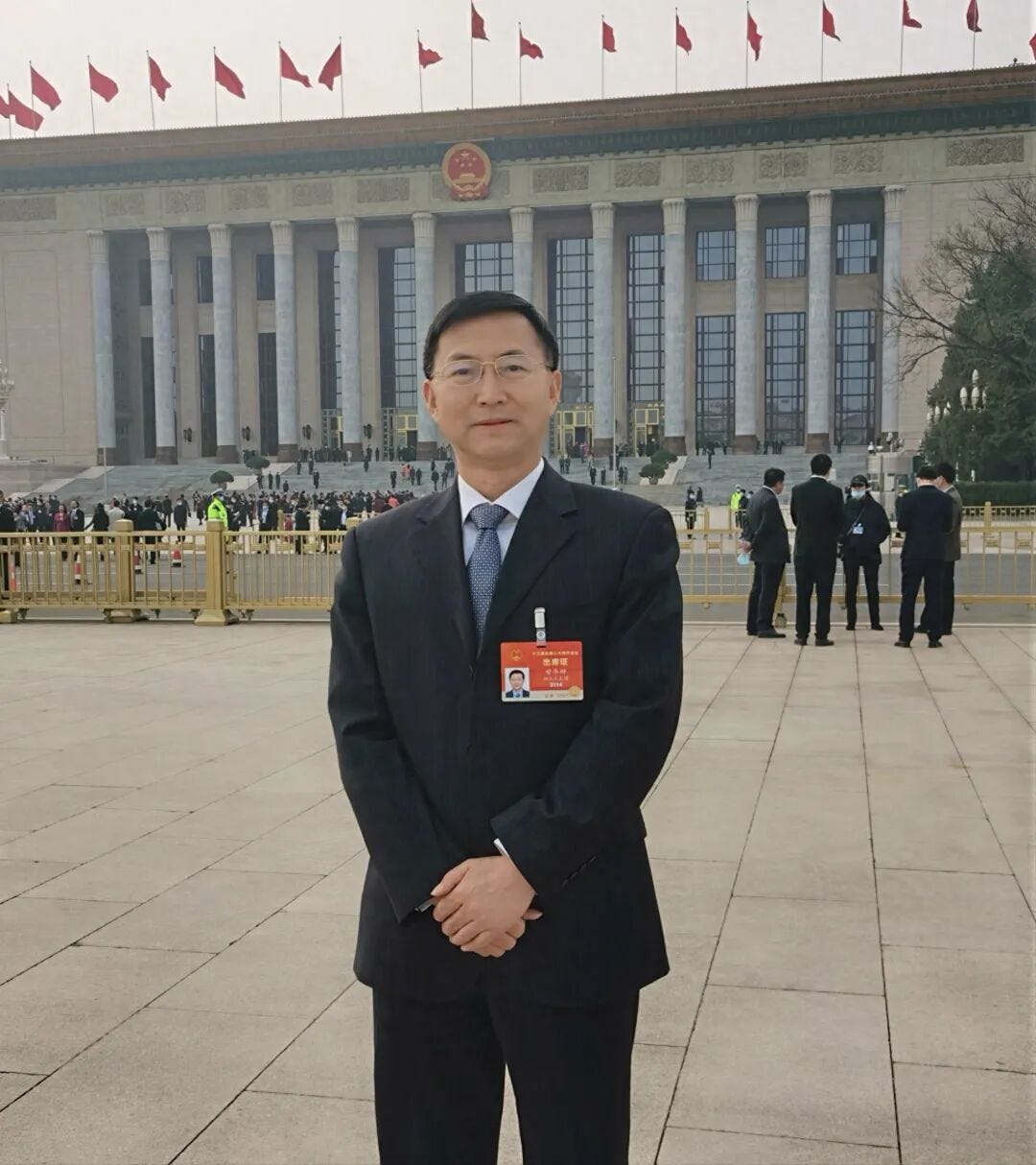
According to a 5 March report by Sichuan News Network, Gan Huatian, a member of the CPPCC National Committee and professor at West China Hospital of Sichuan University, said that China's number of births has continued to decline in recent years. The Central Economic Work Conference explicitly called for the country to "promote a positive outlook on marriage and childbearing, and strive to stabilize the number of new births."
Although China has already introduced a three-child policy and a series of supporting measures, and the recommendations for the 15th Five-Year Plan also stress the need to effectively reduce the cost of childbirth, child-rearing, and education, many families still face serious difficulties in real life, including heavy financial burdens, weak protection of women's rights, and insufficient policy coordination.
Gan therefore proposed a dual-track approach combining individual income tax deductions with childcare subsidies, with stronger support for multi-child families, rural households, and low-income groups. He also proposed expanding the scope of medical insurance reimbursement so that childbirth and prenatal check-ups become fully free, and bringing assisted reproductive technologies and related medicines into the medical insurance system. At the same time, he called for a better cost-sharing mechanism for childbirth and further optimization of maternity insurance, including fiscal subsidies and tax breaks to reduce the extra cost to employers of hiring women of childbearing age.
He also urged stronger efforts to encourage fathers to participate in childcare and ensure that paternity leave is genuinely implemented. On top of existing maternity leave provisions, he proposed making paternity leave compulsory and gradually extending it, alongside shared parental leave, and including implementation of men's childcare leave in corporate credit evaluation systems. By encouraging men to take on more childcare responsibility, he argued, pressure on women could be reduced.
He further called for tough action against gender discrimination in employment, including stronger labor inspection, smoother complaint channels, and strict legal penalties and public exposure for employers that discriminate against women on the basis of marriage or childbearing status.
Lu Ming陆铭: Shorten working hours and cut unnecessary overtime
According to a 4 March report by Tencent Finance, CPPCC member and economist Lu Ming proposed shortening working hours and reducing unnecessary overtime.
He suggested optimizing the Labor Law provisions on working hours, cumulative overtime hours, and overtime pay; strengthening enforcement; raising the cost of violations; and establishing convenient, confidential reporting channels for workers. He also called for improvements to evidence and arbitration mechanisms, including better rules on what counts as proof of overtime, in order to address the difficulty workers often face in producing evidence.
In addition, he proposed making the definition of "disguised compulsory overtime" clearer in law or judicial interpretation, so that regulators have a more solid basis for enforcement.
At the corporate level, Lu said companies should speed up digital transformation and use technology to reduce unnecessary time costs and manual workloads. Firms should also be guided to adopt more advanced management methods, using outcomes rather than hours spent at work as the core basis for evaluation.
Lyu Guoquan吕国泉: Strengthen implementation of the two-day weekend and protect workers' right to rest
According to a 4 March report by China Newsweek, Lyu Guoquan, a CPPCC member and former director of the General Office of the All-China Federation of Trade Unions, said in an interview that overtime remains widespread in some workplaces, especially in labor-intensive enterprises, public institutions, and major internet companies.
Lyu called for compliance with the Labor Law requirement that weekly working time should not exceed 44 hours. Public institutions, government bodies, and enterprises, he said, should all ensure that working-hour standards are respected so that workers have enough time to rest and maintain their physical and mental health.
He also noted that although the two-day weekend has been in place for many years, its implementation is still far from satisfactory, especially in small and micro enterprises, the service sector, manufacturing, and internet companies, where single-day weekends and alternating single- and double-weekend schedules remain common. He therefore proposed stronger enforcement of the two-day weekend system to ensure workers' right to rest.
Comment from James Jianzhang Liang: Large-scale direct payments to families raising children would be an immediate, high-impact policy with a double benefit
In recent years, China's fertility rate has fallen to around 1.0. Persistently low fertility not only raises the share of elderly people in the population and drains vitality from society; as long as fertility remains below replacement level, the overall population will continue to shrink. The consequences are serious: weaker innovation, slower economic growth, more intense social "involution" , and a marked decline in overall national strength. That is why raising the fertility rate has become a point of broad agreement among many deputies and members at the national "two sessions."
The fundamental reason for the continuing decline in fertility is that the cost of raising children, whether in money, time, or energy, is borne mainly by families, while the enormous value created by those children in the future, as workers, consumers, innovators, taxpayers, and inheritors of culture, language, and group identity, is enjoyed mainly by the state and society. This mismatch between who pays and who benefits needs to be corrected through social compensation on a sufficient scale.
That is why proposals from representatives such as Yao Jinbo, Pang Yonghui, and Zhang Yi to increase fertility subsidies deserve support. There are many possible ways to raise fertility, but large-scale direct payments to families raising children are one of the few measures that can produce visible results quickly while serving two goals at once.
Recent figures released by Statistics Korea show that South Korea recorded 254,500 births in 2025, up by 16,100 from the previous year, an increase of 6.8%, marking a second straight year of growth since 2024.
South Korea had long faced the severe challenge of the world's lowest fertility rate. In 2023, its fertility rate fell to 0.72, a record low. In 2024, the number of births rose for the first time in many years, up by 3.6% year on year, and the total fertility rate edged up to 0.75. In 2025, that positive trend continued, with the total fertility rate rising further to 0.8, the highest level in nearly four years.
There are two main reasons why South Korea's births have risen for two consecutive years. One is that people born during the birth peak of 1991-1995 have gradually entered their prime marriage and childbearing years. The other is that the government introduced stronger pro-natal policies. On 11 January 2024, South Korea's Ministry of Health and Welfare announced a sharp increase in subsidies for parents of children under 2. Under the new policy, parents with babies under 1 receive KRW 1 million per month, roughly RMB 5,000, while parents raising children aged 1 to 2 receive KRW 500,000 per month.
In addition, several local governments in South Korea have gone even further. Incheon, for example, introduced the "1 Billion dream" policy. The program aims to support every baby born in Incheon with life-cycle support worth about KRW 100 million in total, roughly RMB 500,000, from the fetal stage to age 18. South Korea's experience suggests that direct cash support can help raise fertility, but only if the support is large enough.
At present, one of the main problems facing China's economy is that demand in many sectors is not keeping pace with the growth in supply. If China wants to address that problem, the key is to create more demand.
The most direct, effective, and straightforward way to do that is to give money to consumers, especially to families raising children. Because such families tend to spend a high share of what they receive, a large portion of the money would quickly be converted into consumption, helping to stimulate the market and in turn supporting fiscal revenue growth.
For that reason, giving money to families raising children would not only expand consumption and improve people's quality of life and sense of wellbeing. It would also raise the fertility rate, strengthen China's innovative capacity, and boost its overall national strength. It is a policy that can deliver two gains at once.
China must go all out to boost its birth rate, leading demographer warns

China has realized that its depressed fertility rate is quietly breeding serious long-term consequences — and a shrinking headcount is only the most immediate, surface-level symptom.
A small Chinese city offers handsome cash to boost births. It worked.

Can money change minds about children? A small city in central China is betting yes.
All good ideas and things for the government to implement along with perhaps elevating the social status of parents and having children. Afterall they have nothing to lose by not trying.
But I don't see how even the CPC can turn this around. Others have tried things like this and its not really doing much and their cultures have not been impacted by such a top down population control policy.
Even if the OCP was never implemented this would have come for China by now as well given what I have seen in the rest of East Asia's population trends. Modernity, the internet and the smartphone really is the best contraceptive.