

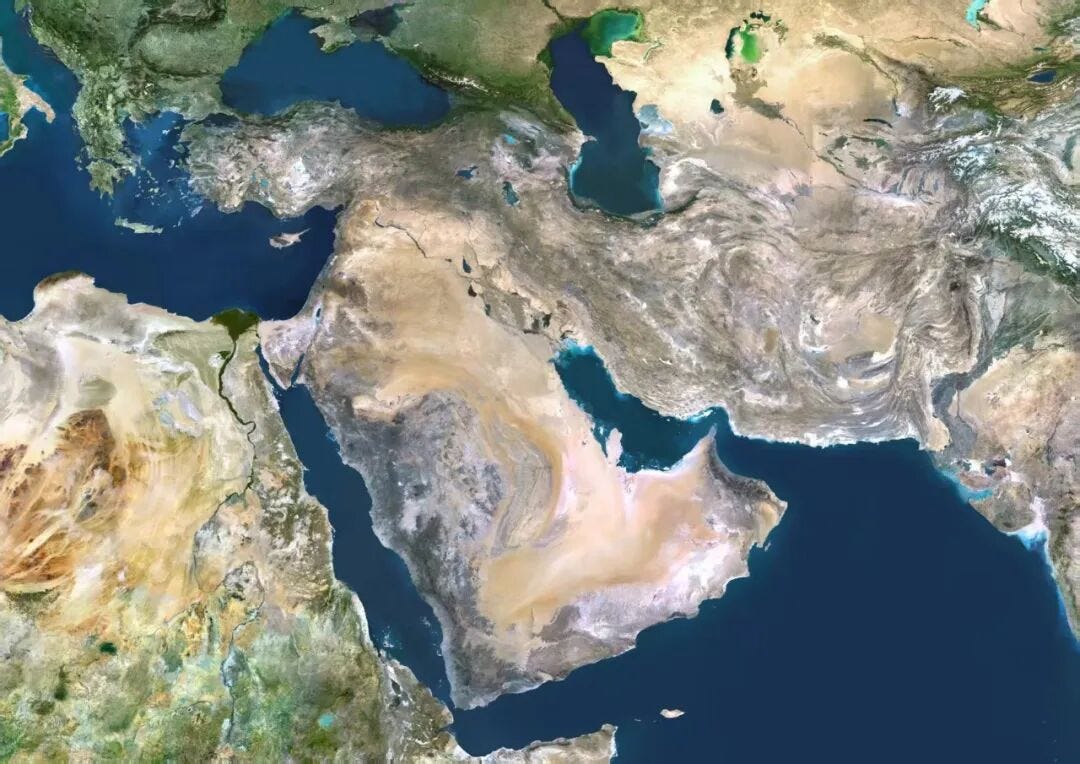
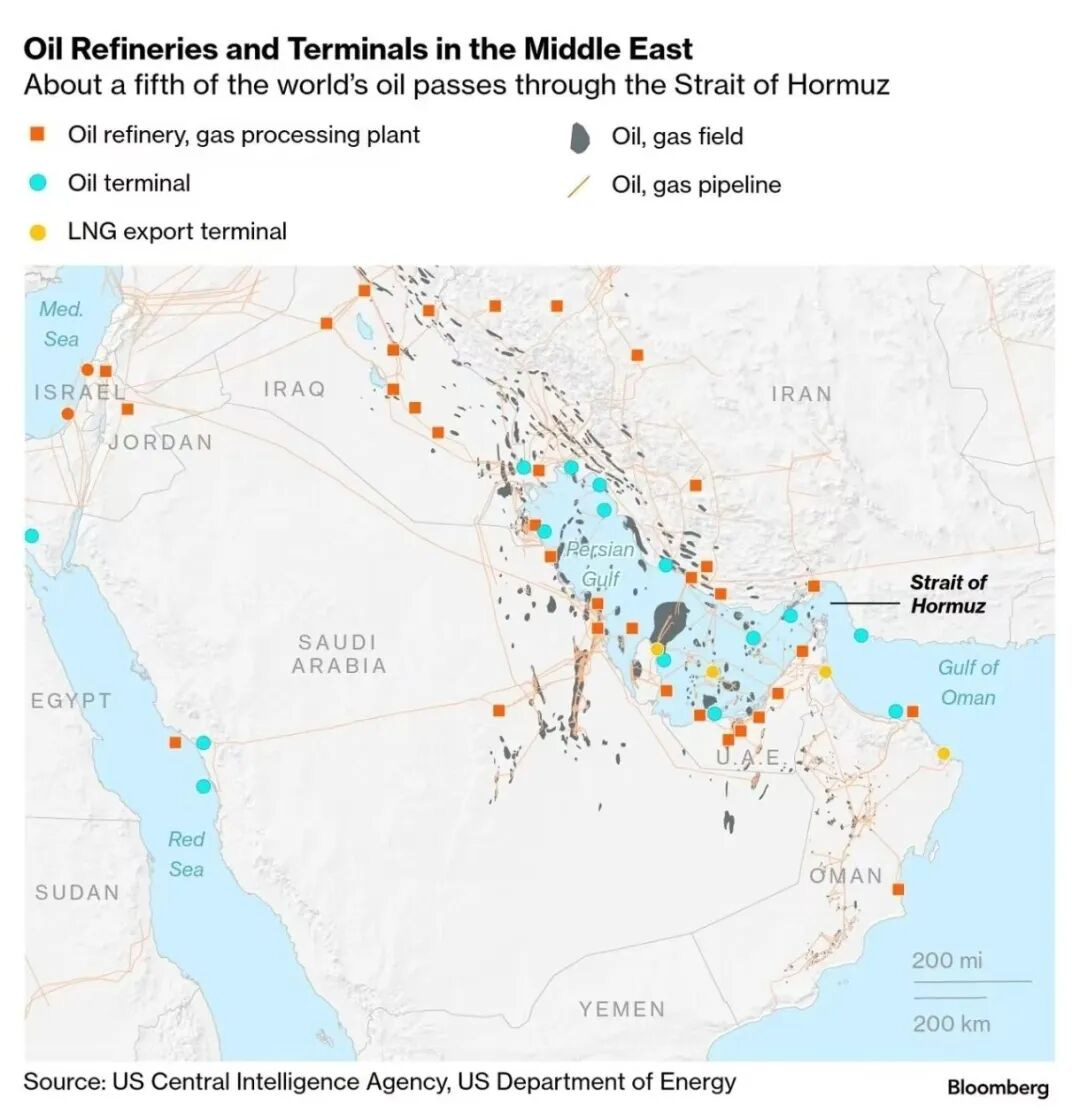
It is barely an exaggeration to say that the gears of the global economy turn, or grind to a halt, based on what happens in the Strait of Hormuz, the vital waterway linking the Gulf states to the outside world.
Since the February 28 joint U.S.-Israeli strikes on Tehran, this 54-mile stretch of water has been plunged into high alert. The safety of this route doesn't just sway the energy markets anymore; it holds the fate of a rapidly growing number of Chinese traders deeply invested in the Middle East.
Today's newsletter features a piece from Southern Weekly, a Guangzhou-based newspaper renowned for its investigative reporting, on the 24-day blockade of the Strait of Hormuz, the Chinese seafarers left drifting at sea, and the Chinese exporters forced into paralysis on shore.
The piece below was first published on Southern Weekly's WeChat account on March 23. Please note that the translation below is mine and has not been reviewed.
霍尔木兹海峡“封锁”24日:漂在海上的船员,与被迫停摆的外贸人
24 days into Hormuz closure: Chinese Seafarers adrift, traders at a standstill
Adrift at Sea
In the middle of the night, a white speck streaked across the sky in a long arc towards the horizon. Seconds later, flames erupted on the opposite shore.
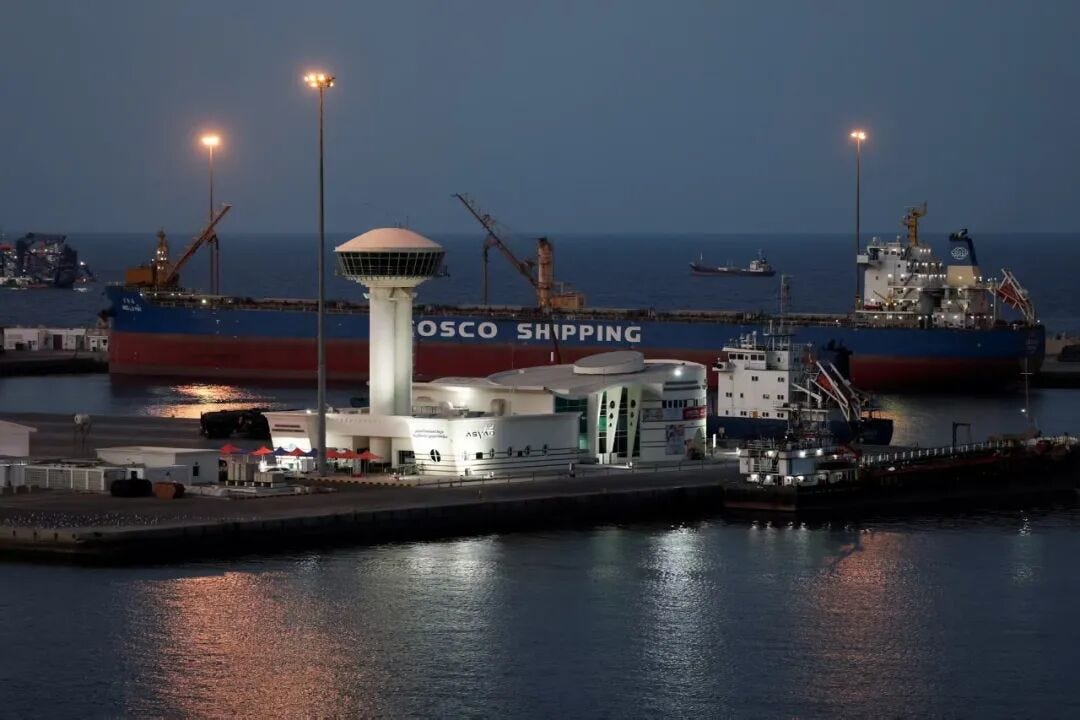
Shortly after 1 a.m. local time on March 9, a falling drone struck an oil storage facility at the port of Fujairah in the United Arab Emirates (UAE), setting it on fire. The blast was captured on video by the second officer on watch aboard a Chinese merchant ship, and later posted online by the vessel's captain, Li Yan. At the time, the ship was anchored off Khor Fakkan, outside the Strait of Hormuz, just 10 nautical miles from the explosion.
Li, who works for a shipping company in southeast China's Fujian Province, had set sail from Novorossiysk on Russia's Black Sea coast on February 14, carrying 54,930 tonnes of wheat. The vessel was supposed to pass through the Strait of Hormuz into the Gulf and unload in Iraq on March 5. But on March 3, as it approached Khor Fakkan to refuel and resupply, Li received a message from the shipowner: "Do not enter the Persian Gulf. Wait at anchorage." The assigned anchorage was in the Gulf of Oman, east of the Strait of Hormuz and north of Fujairah, UAE.
In his 16 years at sea, Li Yan has dropped anchor countless times, but he told Southern Weekly this was the most chaotic experience of his career. "There was no GPS signal at the anchorage," he recalled. Dropping anchor blindly in such complicated waters is highly dangerous; snagging an undersea cable can lead to severe consequences, including massive compensation claims and potential legal trouble.
Left with no alternative, Li had his crew continuously scan coastal targets on the radar to calculate their bearings and distance. They had to constantly monitor their spacing from nearby vessels, relying on intermittent BeiDou satellite signals from their cell phones just to confirm their location. It took from 11 p.m. until after 3 a.m. to finally get the ship safely anchored.
Li then waited there for six days. The ship's GPS never returned, and the automatic identification system (AIS) remained down, leaving the crew completely blind to detailed traffic data and the positions of nearby vessels.
"If I can see Chinese characters on a ship, I assume it's Chinese; otherwise, I have no idea," Li said. Aircraft periodically roared overhead, and some crew members reported hearing shelling in the distance.
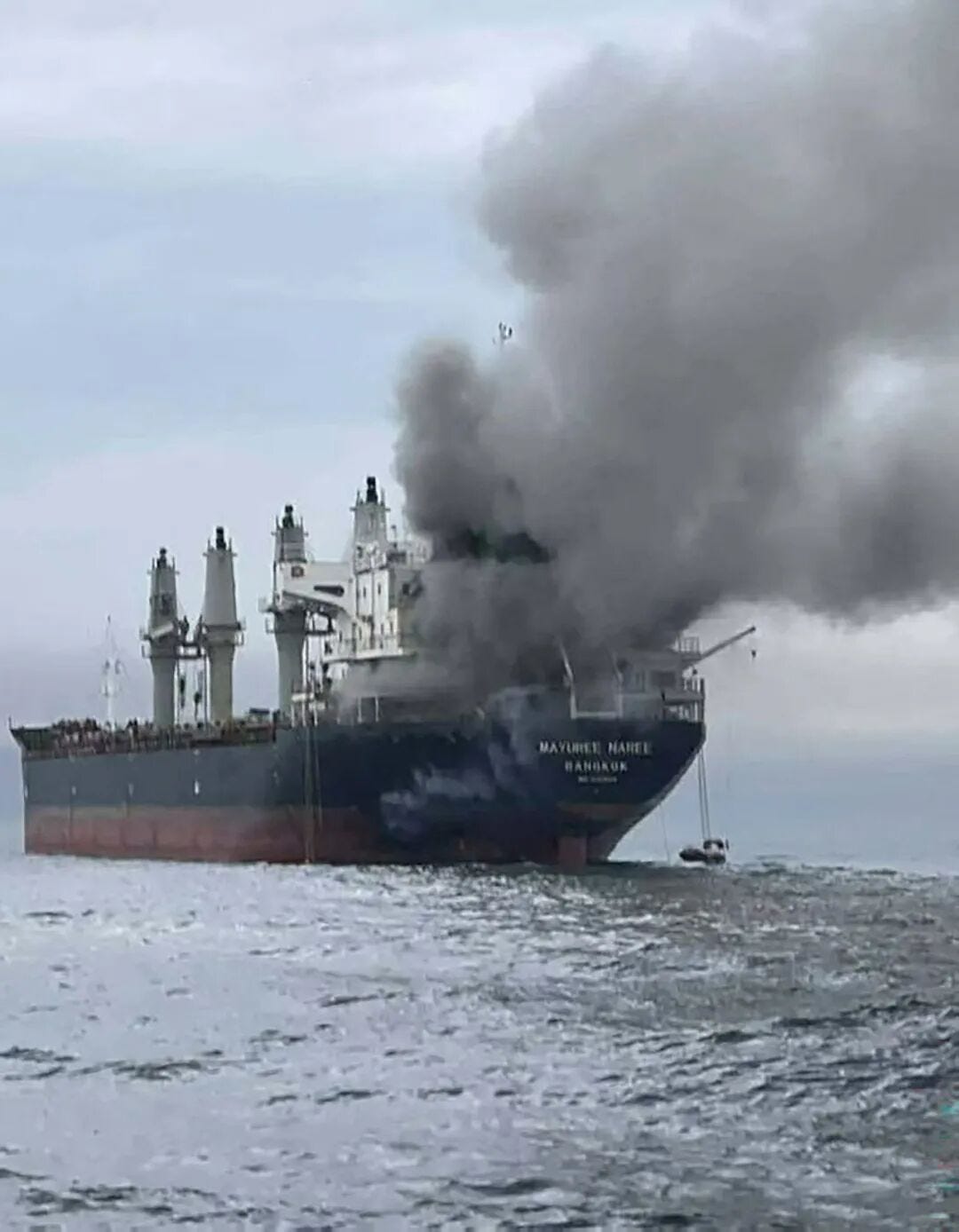
This bottleneck followed the February 28 launch of major US and Israeli military operations against Iran, which prompted Iran's Islamic Revolutionary Guard Corps to ban all ships from the Strait on March 2. According to The New York Times, at least 16 oil tankers, cargo and other commercial ships have been attacked in the Persian Gulf since the conflict began. Many ships have halted or diverted, and at least hundreds of vessels have been forced to wait outside the Strait.
Between March 1 and 19, only 116 voyages passed through Hormuz, down 95 percent from a year earlier, according to an industry data firm Kpler.
The prolonged wait has left the crew increasingly anxious. Li's primary concern is their freshwater supply. When they first dropped anchor, the vessel had over 130 tonnes of freshwater; that has now dropped to just over 100 tonnes. To conserve it, the crew is using seawater to flush toilets and has shut down the laundry. Because the ship's machinery also requires water, 30 to 40 tonnes must be kept in reserve, leaving only about 80 tonnes available for use. "At two tonnes a day, we can last a month at most," Li noted. "And the longer this drags on, the worse the water quality becomes."
Li reported the looming shortage to the shipowner. However, entering the port is impossible due to the war, and diverting to another port to resupply would burn too much fuel, an expense the owner refuses to cover. For now, the crew's only option is strict water rationing.
Food supplies, meanwhile, are holding steady. "Meals aren't a major issue for the time being," Li said. While fresh vegetables will run out around March 20, the ship has ample reserves of meat, frozen foods, and dry goods, along with long-lasting staples like potatoes, frozen cauliflower, and dried green beans.
On the night of March 10, Li received orders to weigh anchor and steam east to escape the High-Risk Area (HRA). They were instructed to drift in international waters off southern Pakistan and await further instructions. "Staying at anchorage means paying port fees, and the waters we were in are considered dangerous," Li explained. "With still no word on our discharge port, leaving the HRA to drift outside it was the safer option."
By March 21, Li still had no timeline for when the ship could berth and unload. Every day, he posted a short video online, always with the same caption: "Waiting."
Missing Clients and Soaring Freight Rates
"There are frictions in Iran every now and then, but nothing really comes of it over these years. Internet outages usually resolve in a week or two," said Tina, a 12-year veteran of the foreign trade industry. It wasn't until reports of the Iranian Supreme Leader's death that she realized the severity of the situation. "This is the biggest hurdle I've ever faced."
Tina runs a paints and coatings factory in east China's Anhui Province, exporting about 80 percent of her products to the Middle East. She typically communicates with clients via WhatsApp. For nine days after the war broke out, the "last seen" status of several Iranian customers remained frozen on February 28. Beyond the fate of her orders, her primary concern was whether her clients were safe.
On March 9, an Iranian client finally came online. Tina was so overwhelmed she nearly cried. He explained that he was about 30 kilometers outside central Tehran and had avoided the bombings so far, but admitted he "didn't know what would happen next."
In the first 10 days of February, Tina had shipped over 50 containers to the Middle East, five times her usual volume, hoping to get ahead of the Lunar New Year holiday and prevent inventory disruptions for her buyers.
Under normal shipping schedules, the cargo would have reached the UAE by early March. Instead, more than 30 containers are now in limbo. Some are stranded at temporary transit ports outside the Strait, while others are simply drifting at sea.
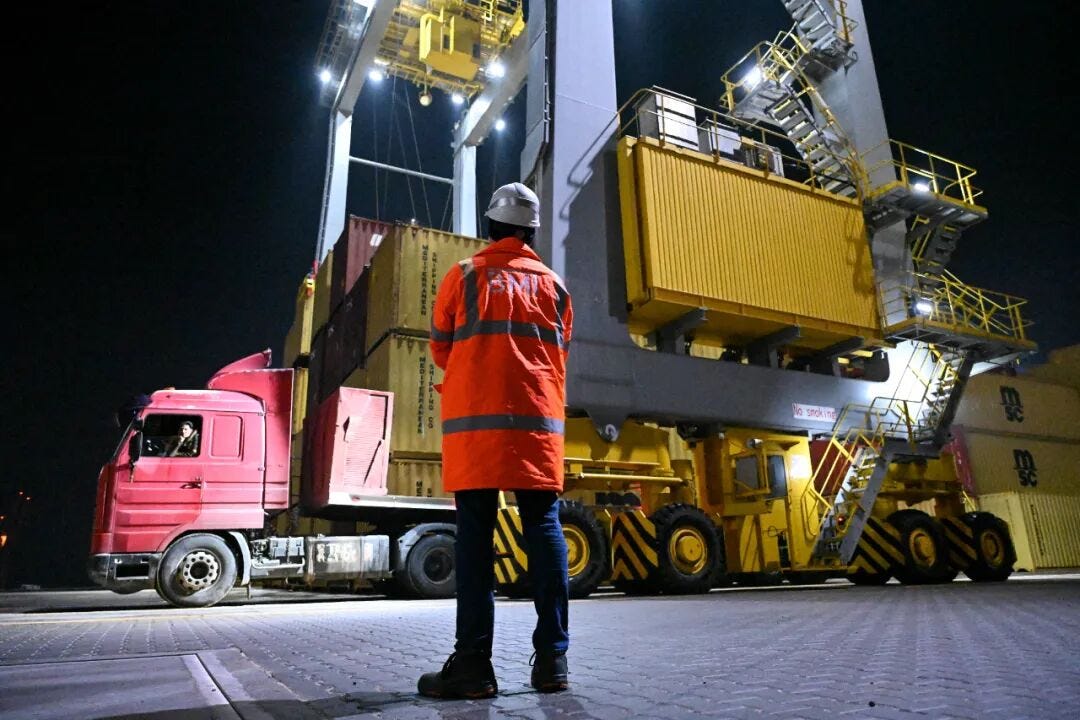
Days after the conflict broke out, Tina's freight forwarder relayed notices from the shipping lines: cargo stranded at sea would incur war-risk surcharges of USD 2,000 for a small container and USD 3,000 for a large one.
Tina calculated that these surcharges alone would add over 600,000 yuan (about $85,714) to her costs, even before factoring in additional expenses for overland transport.
Because most of her contracts are under CIF (Cost, Insurance, and Freight) terms, meaning the seller covers delivery and insurance to the destination port, this financial burden falls squarely on her. She asked her clients to split the increase, but even long-term customers declined. "Nobody wants to shoulder it," she said.
Freight forwarders are also scrambling. Facing volatile port conditions and fluctuating rates, they are rushing to find alternatives to the Strait of Hormuz for their clients.
Ma Wei, manager of the Guangzhou branch of Shenzhen A&E Container Transportation Co., Ltd, noted that his company primarily serves India, Pakistan, the Middle East, and the Red Sea. "Cargo bound for the Persian Gulf can't berth normally right now," he explained. "The main workaround is to unload at ports outside the Strait, like Khor Fakkan in the UAE and Sohar in Oman, and then wait for shipping lines to arrange inland transport."
Ma added that his company currently has over 2,000 containers drifting at sea. While shipping lines are handling the crisis differently, some have warned that cargo arriving at these transit ports after March 2 will face steep war surcharges ranging from USD 1,500 to 6,000 per container.
Guangzhou Anshida Supply Chain Co., Ltd (Ontask Express) has been operating as a freight forwarder to the Middle East for over a decade, with 90 percent of its business concentrated in Saudi Arabia and the UAE. According to sales director Kevin, the company shipped over 700 containers of household goods, building materials, and other products in January and February. Roughly 200 of those have yet to arrive. "The cargo is worth nearly 100 million yuan," he noted, adding that the delays are expected to generate over 2 million yuan in additional costs.
Faced with soaring expenses and an unpredictable conflict, some traders have paused shipments to wait things out. JCtrans, a major B2B international logistics platform with 770,000 registered users across 181 countries, reported a steep decline in activity. Since March, their big-data tracking has shown a 60 percent drop in global logistics demand to the Middle East compared to the same period in January.
While stranded cargo is a pressing issue, medical device trader Dong Man is far more concerned about the rest of the year. "Our Middle Eastern clients have already confirmed they won't attend the Canton Fair in April or the China International Medical Equipment Fair in Shanghai," she said. Orders generated from these exhibitions typically account for 30 percent of her annual sales. "Even after initial discussions at the fairs, clients still need to visit the factory and inspect the products in person. Online communication simply can't replace that."
Middle East Trade: Opportunities and Risks
Many Chinese exporters have turned to the Middle East in search of untapped potential.
A decade ago, Tina focused primarily on North America. However, recent U.S. and Canadian tariffs on Chinese goods wiped out her price advantage, forcing her to pivot to new markets. She found a wealth of opportunity in the Middle East. Because the region's economies have long relied on oil as their primary economic pillar, their industrial sectors remain relatively undiversified. As a result, they depend heavily on imports for construction materials, electronics, and daily consumer goods.
Tina's company specializes in paints and coatings, a category of engineering materials she describes as an "essential necessity." Even though these products are made from petroleum derivatives and the Middle East is rich in crude oil, the region lacks sufficient processing capacity and faces high labor costs. Consequently, they still need to import these goods in massive volumes.
At the same time, recent technological advances have elevated the quality of Chinese-manufactured goods, which are now often more highly regarded than traditional "Made in Europe" products. Tina considers herself fortunate that Middle Eastern demand has steadily grown over the past decade, "to the point where it can fully replace, and even exceed, the demand we used to see from the U.S. and Canada."
Tina's journey is common among Chinese traders. Over the past three to five years in particular, she has noticed a distinct "gold rush" mentality toward the Middle East. This shift is most evident in the growing number of Chinese travelers at UAE airports and the ubiquitous presence of Chinese contractors on Saudi construction sites.
According to Kevin, Saudi Arabia's "Vision 2030", unveiled in 2016, together with the rise of Middle Eastern e-commerce after 2021, has fueled rapid growth in consumer demand across the region.
"Our business has grown by over 30 percent annually for the past five years," he noted. "While many perceive the Middle East as volatile, the GDPs of Saudi Arabia and the UAE actually rank quite high globally. Rising consumer purchasing power and two decades of general social stability have provided a secure environment for doing business there."
The data backs this up. Consider Saudi Arabia, China's largest Middle Eastern trading partner: in 2025, bilateral goods trade reached USD 108.16 billion, with Chinese exports accounting for USD 53.42 billion. Compared to 2019, when total trade was USD 78.04 billion and exports were USD 23.86 billion, the value of Chinese exports to Saudi Arabia has more than doubled in just six years.
Kevin also emphasized the growing importance of the Strait of Hormuz for trade. "With rising demand and soaring post-pandemic air freight costs, many clients have shifted from air to sea," he explained. "Sea freight is roughly 70 to 80 percent cheaper. Although it takes 20 to 25 days longer, clients compensate by advancing their production schedules and carrying larger inventories."
Meanwhile, Tina constantly refreshes her news feed, terrified of missing any updates on the Strait. "My emotions have been a rollercoaster lately," she admitted, adding that she sometimes jolts awake in the middle of the night. "With everything still up in the air, I simply can't settle down or focus."
Although 20 percent of Tina's business is still in Asia and Russia, the unresolved Middle East cargo crisis has left her too distracted to even quote prices for other clients. "This one issue overshadows everything else right now," she said. "All I can do is wait. There's no point in getting anxious; a geopolitical crisis like this is completely out of any single individual's hands."
(Note: Li Yan and Dong Man are pseudonyms.)