

Ahead of Donald Trump's May 13–15 visit to China, China's Ministry of Foreign Affairs has been signalling, through both official and semi-official channels, a tone that is modest and cooperative, but also firm. Today's newsletter brings those messages together, with translations where needed.
I. PEACEFUL COEXISTENCE
On May 11, the official WeChat account of China's Foreign Affairs Ministry released a video titled "Peaceful Coexistence." The English text below was provided by the Ministry.
China and the United States, two leading global players, the world's two largest economies. How they interact with each other has far-reaching and global implications. To clash, confront each other, and wear each other down, or engage in sincerity and good faith? The history of China-U.S. relations offers an unmistakable answer.
Surging through the flames of World War II, the American "Flying Tigers" undertook the perilous Hump airlift and fought shoulder to shoulder with the Chinese people against fascism. In the years of frozen ties, "ping-pong diplomacy," where the small ball moved the big globe, enabled "a handshake that crossed the Pacific Ocean." In the years that followed, China-U.S. exchanges and cooperation brought out their respective strengths and delivered win-win results. Together, they fought terrorism, tackled the financial crisis and battled Ebola. Time and again, people have seen that when China and the U.S. join hands, they generate positive energy for the world.
Today, China-U.S. trade matches the annual GDP of a mid-sized country. 80,000 U.S. companies invest in China. 80% of Apple's core suppliers have plants in China. Tesla's Shanghai Gigafactory accounts for half of its global output. All this shows that China and the U.S. helping each other succeed and prospering together is a tangible prospect within reach. It will serve both countries and benefit the world. More importantly, the Chinese and American peoples both want a life of peace and happiness. Their joys and sorrows are much the same. Their online chats and in-person interactions reflect how the world should be. Neither China nor the US can remodel each other, but they can choose how they want to engage. The right choice is to commit to the principle of mutual respect, to hold the line on peaceful coexistence, and to strive for the prospect of win-win cooperation.
The Earth is too small for China and the U.S. to turn against and confront each other. And the Pacific Ocean is vast enough for both to prosper in their own ways. China and the U.S. must coexist peacefully on this planet for all time to come. A ready and open China is right here. It is now for the U.S. to choose the right course.
II. On the Eve of President Trump's Visit to China
On May 12, Chaoyang Shaoxia朝阳少侠, a semi-official WeChat account reportedly linked to China's Ministry of Foreign Affairs, published an article titled "On the Eve of President Trump’s Visit to China写在特朗普总统访华前夕." The English translation below is mine.
🌏 After nine years, U.S. President Donald Trump is about to visit China for a second time, drawing close attention at home and abroad. What is the significance of this visit? Here are some thoughts.
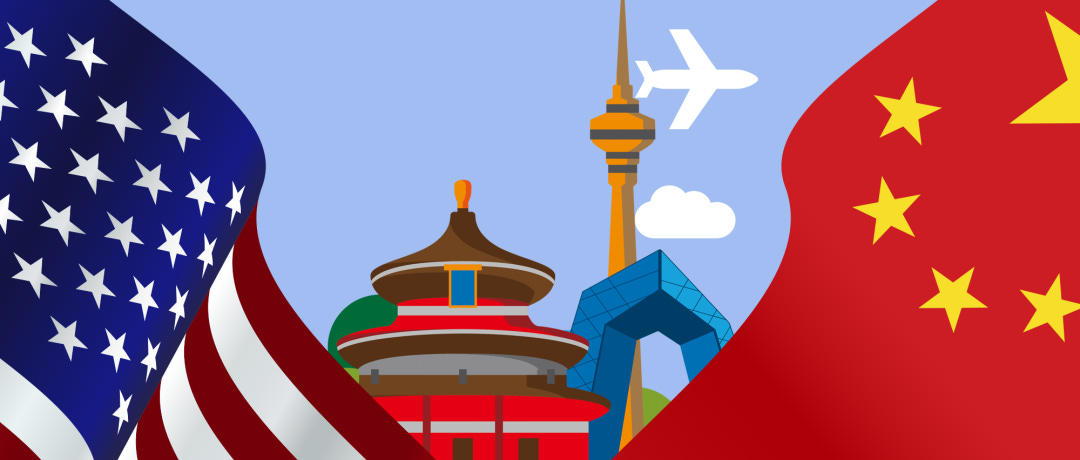
I. China-U.S. engagement reflects major-country responsibility
In 1972, during his visit to China, then U.S. President Richard Nixon said: "…if we can find common ground to work together, the chance for world peace is immeasurably increased."
History moves forward, but the wisdom of standing together through difficulties and coexisting peacefully continues to shine. The truth that China and the U.S. gain from cooperation and lose from confrontation, never goes out of date. As two major global players, China and the U.S. together account for nearly a quarter of the world's population and over half of the global economic output. The scale of bilateral trade remains enormous. Even though it declined in 2025, two-way trade still stood at 560 billion U.S. dollars, roughly equivalent to the annual GDP of a mid-sized country. If China-U.S. relations "sneeze," the international situation may well "catch a fever." What the people of China, the U.S., and the rest of the world need is not conflict between China and the U.S., but dialogue and communication.
In recent years, every time China-U.S. relations have gone through ups and downs, a handshake and dialogue between the two heads of state have helped restore stability, bringing a rare sense of stability to an unsettled world. At the beginning of spring this year, the two heads of state discussed the year's agenda for China-U.S. relations over the phone. At the height of the economic and trade frictions in 2025, several phone calls between the two heads of state, together with their meeting in Busan, directly helped stabilize the situation.
Today, the smoke of the Russia-Ukraine conflict has not yet cleared, the war in the Middle East continues, and the ship of the world is already rocking badly. Whether it can navigate through hidden reefs and turbulent waters depends, to a large extent, on whether China and the U.S. choose to "cross the river in the same boat" or "crowd each other out on that boat." New York Times columnist Thomas Friedman recently wrote that China and the U.S. "must govern, innovate, collaborate and coexist at a planetary scale to thrive." Otherwise, both countries will be "overwhelmed" by shared challenges.
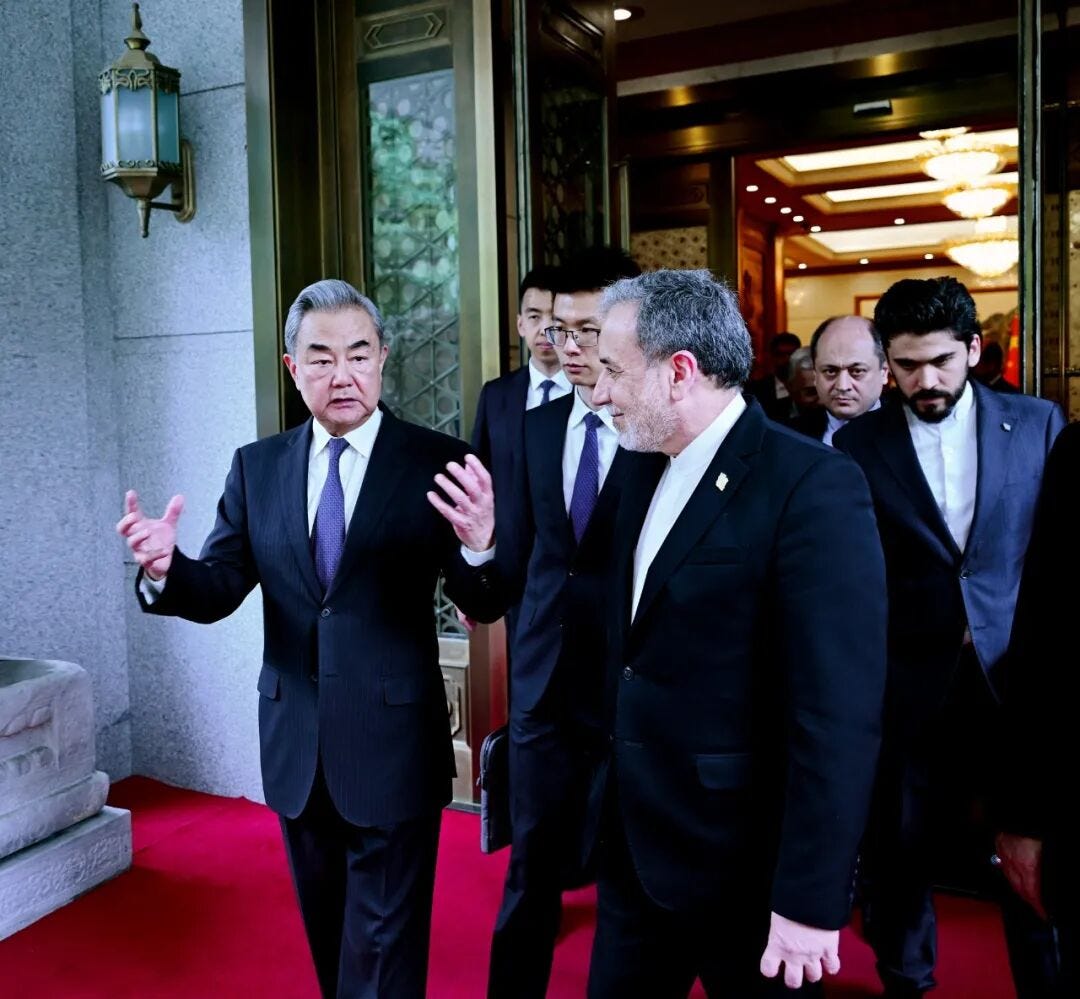
It is completely normal for the two countries to have different views on certain hotspot issues. The key is to prevent differences from escalating into misunderstandings, and misjudgments from turning into conflicts. The responsibility of a major country is not to pursue its own interests exclusively, but to bring benefits to the whole world. As the saying goes, "He who shares interests with the world will be supported by the world."
II. China-U.S. engagement reflects the will of the people
The year 2025 was dubbed by many as the "First Year of China-U.S. Online Diplomatic Relations."
Early in the year, millions of American "TikTok refugees" flooded into Xiaohongshu (RedNote), where Chinese netizens enthusiastically became "cyber tour guides." From comparing daily lives and expenses to sharing photos of pets and food, from teaching English to learning Chinese, people in both countries discovered through ordinary everyday life that their joys, sorrows, frustrations, and hopes were not so different after all.
At the end of the year, a group of young Americans became "Chinamaxxing" on TikTok. They followed Chinese creators in drinking hot water, practicing Tai Chi, and learning to make Tanghulu (candied hawthorn sticks), and integrated “Chinese style” into their own rhythm of life.
Offline, China's initiative proposed at the end of 2023 to welcome 50,000 young Americans to China for exchange and study programs over a five-year period has attracted large numbers of American young people and injected strong momentum into people-to-people exchanges between the two countries. The 240-hour visa-free transit policy has also amazed American tourists, who found themselves falling into a "sweet trap" woven together by Chinese food, culture, and development. Many realized that they had been misled by Western media for decades.
This two-way embrace between the two peoples meets the needs of today and echoes the lessons of history. The brightest moments in the history of China-U.S. exchanges have always been lit up jointly by the two peoples. Over 80 years ago, the American "Flying Tigers" undertook the perilous Hump airlift and fought shoulder to shoulder with the Chinese people against fascism. Over 50 years ago, "ping-pong diplomacy," where the small ball moved the big globe, enabled a handshake that crossed the Pacific Ocean. Over 30 years ago, Mrs. Gardner fulfilled her husband's dream of returning to his childhood home in Kuliang, creating a touching chapter in the history of people-to-people friendship between China and the U.S.

A poll by the Chicago Council on Global Affairs in 2025 showed that 53% of Americans held a favorable view of China, a clear rise from 41% in 2024. Many other polls also show that a majority of Americans hope China-U.S. relations can remain stable and that the two countries can cooperate more. This shows that both Chinese and Americans want to live good lives, and neither side wants confrontation and turmoil. Good news for China-U.S. relations naturally becomes something people on both sides hope to see.
As for those who constantly hype up the so-called "China threat," the American people should see them clearly. They are not acting in the interests of the American people, but are using anti-China rhetoric to achieve their own political agenda. In essence, they are enemies of the American people.
III. In bilateral interaction, China has confidence and strength
Today, China possess real confidence and strength in developing relations with the U.S.
In 2025, China's total exports rose to 3.8 trillion U.S. dollars, setting a historic trade surplus record of 1.2 trillion U.S. dollars. Its GDP reached a new milestone of 140 trillion yuan, equivalent to the combined economic output of Germany, Japan, India, the UK, and Italy. Against the backdrop of sluggish global economic growth, China contributed 30% of global growth with an economy that accounts for 17% of the global total. No matter how strong the winds and waves, the "ballast" remains steady.
In the first quarter of this year, amidst the one-year anniversary of the tariff war compounded by the Iran crisis, China once again refreshed outside perceptions of its economic stability and resilience with year-on-year GDP growth of 5.0%. A succession of "Sputnik moments" in Chinese technological innovation has emerged, demonstrating that the competitiveness of Chinese manufacturing lies not merely in price, but in its comprehensive system.
China has always followed its own rhythm and managed its own affairs well. The "15th Five-Year Plan" is already underway. In the next five years, China will lead the development of new quality productive forces, accelerate the building of a new development paradigm, and actively expand voluntary opening up. This strategic focus that turns blueprints into reality is not only China's source of confidence but also a blessing for the world.
Since the beginning of this year, leaders from many countries around the world have visited China in close succession. A survey by the American Chamber of Commerce in China shows that nearly 60% of U.S.-funded companies surveyed plan to increase their investment in China. The trend of "Going to China" reflects a global vote of confidence in China's development. "Partnering with China will bring more opportunities" and "Investing in China is investing in long-term stability" are becoming an international consensus, and this trend will continue to grow.
IV. Principles and bottom lines must be upheld in China-U.S. engagement
In developing China-U.S. relations, China is full of sincerity, but it also acts on principle.
The Taiwan question is the most important issue in China-U.S. relations. The U.S. should recognize that China must be reunified and will surely be reunified. The U.S. should play a constructive role in supporting China's reunification and opposing "Taiwan independence."
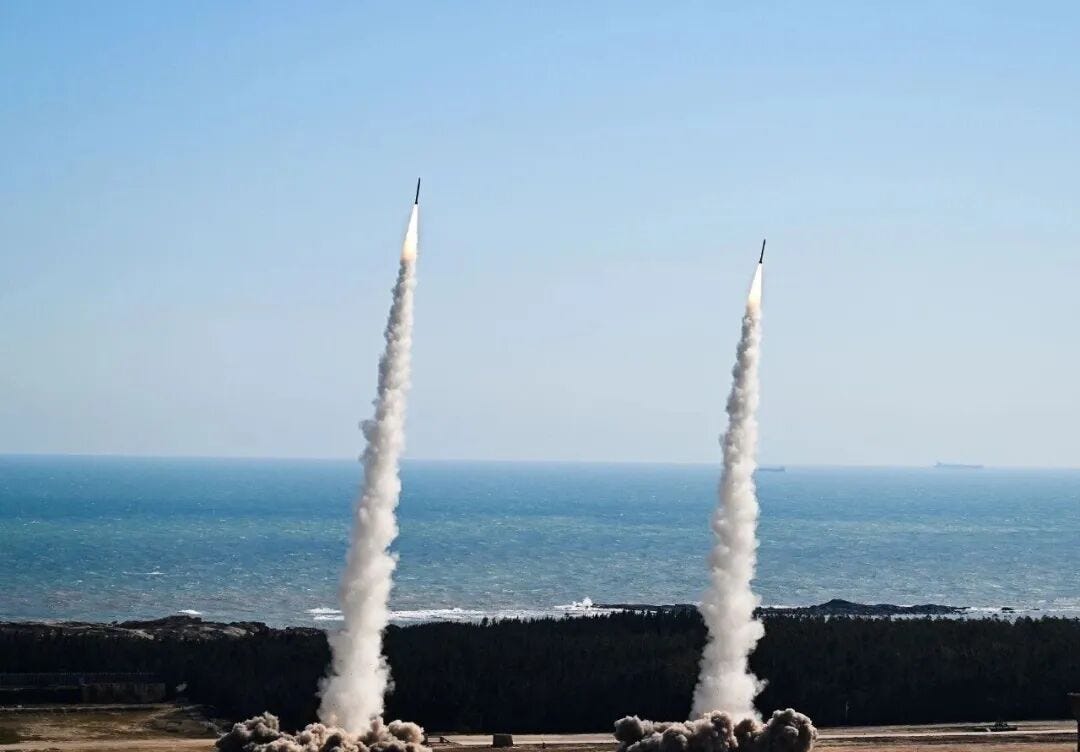
The U.S. also needs to abandon ideas such as "decoupling from China is beneficial to the U.S." and "China's success is America's failure." The Pacific Ocean is vast enough for both countries to develop in their own ways and prosper together. For decades, China's U.S. policy has remained consistent and stable, and the U.S. should do the same.
It is hoped that China-U.S. relations will embark on a new journey from Beijing this time, bringing more good news to the people of both countries and to the world.
Very conciliatory