

On July 11, China Macro-economy Forum (CMF) at Renmin University of China hosted an online seminar themed "The Essence of the Current K-Shaped Economic Divergence and Governance Strategies."
During the event, David Daokui LI(李稻葵), director of the Academic Center for Chinese Economic Practice and Thinking (ACCEPT) at Tsinghua University, bluntly refuted the prevailing market narrative of a "K-shaped" divergence — the idea that some sectors are thriving while others decline. He warned against relying on a small upward sliver to pull up the broader economy, stressing instead that China's greatest macroeconomic crisis is an overall cooling that has persisted for three years.
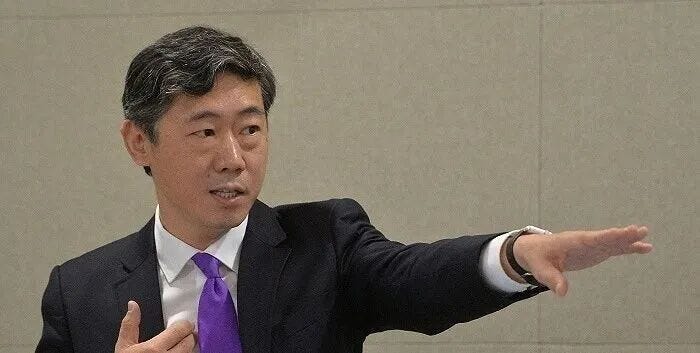
Li cited a broadly defined unemployment rate of 10.2% and the decline in fixed-asset investment in 2025 and the first five months of 2026, a downturn extremely rare in the statistical history of the People's Republic of China.
He argued that the twin engines that drove China's growth for the past two decades, namely real estate and local infrastructure, have stalled. While ordinary households have quietly absorbed the cost of the property crash, avoiding a wave of mortgage defaults, local governments are now drowning in a severe debt crisis. This local debt blockage is the primary pathology behind the current economic chill.
He urged the central government to break with convention and sharply expand bond issuance — doubling the planned 12 trillion yuan, or going even further — to use lower-cost central funding to restructure local debt, revive local finances and unblock the real economy.
Below is a translation of his speech transcript available online. Please note that the translation is mine and has not been reviewed by Prof. Li.
李稻葵:中国经济不是K型分化,而是整体偏冷
David Daokui LI: China's Economy Faces an Overall Cooling, Not a K-Shaped Divergence
My first central argument is that the greatest challenge facing China's macro-economy today is not a K-shaped divergence, but an overall cooling—and this cooling has persisted for three years.
Using the term "K-shaped divergence" creates the false hope that the upward arm of the "K" can pull up the entire economy. This misdirects our focus. While I agree with the previous speakers, we must recognize that single upward trajectory cannot carry the weight of the entire economic base. We must treat this issue with urgency.
First, the broad unemployment rate. Using foundational National Bureau of Statistics data, we recalculated this metric by including the "discouraged labor force"—those who have been unable to find jobs over the past two years and are no longer counted in official labor statistics. They have not given up, but are still actively seeking work. By adding them back into the calculation, we estimate the broad unemployment rate currently stands at 10.2%. This represents about 24 million long-term discouraged unemployed individuals, posing a significant risk to social stability.
Second, fixed-asset investment. From January to May, cumulative fixed-asset investment fell by 4.1%, with private and manufacturing investments both in negative territory. A cumulative contraction in fixed-asset investment has only occurred twice in the statistical history of the People's Republic of China: in 1961 and 1967. The severity of the current contraction is unprecedented.
These two issues demand our utmost attention. If left unresolved, all broader economic goals will face severe difficulties. Despite this, I must emphasize: China's economy has a bright future and enormous potential. We remain fully confident in it, but we must confront these problems directly.
Accepting that this cooling is a severe macroeconomic issue, we must analyze why the economy has operated below its potential growth rate for three consecutive years.
I will first offer an overall assessment and then explain the specific mechanisms involved.
In short, new growth drivers are not yet ready, while the traditional engines have stalled. Over the past two decades, China's booming economy was not primarily driven by household consumption (which accounts for roughly 35%-38% of GDP, excluding services), but by two massive engines:
The first was large-scale infrastructure investment, which continued for nearly two decades and arguably represented the largest infrastructure expansion in human economic history. The second was the broad-based rise of the real estate sector, which unquestionably provided an enormous boost to economic growth.
The pillar of infrastructure has been local governments. By our repeated calculations, over the past 20 years, local government infrastructure investment plus daily expenditures averaged 41% of GDP annually. This far exceeded household consumption and served as the primary driver of the Chinese economy. Approximately 75% or more of local government expenditure went toward infrastructure, with only a small fraction used for daily operations. This massive spending generated an enormous multiplier effect on the economy.
Today, both real estate and infrastructure have stalled. Regarding real estate, I entirely agree with Dr. Lu Ting's analysis on falling prices. However, I want to add that the impact of the real estate downturn on China's economy is actually much smaller than anticipated a few years ago, largely because households have absorbed a massive portion of the shock.
Chinese households hold approximately 400 trillion yuan (roughly 57 trillion U.S. dollars) in net housing wealth. Despite a significant drop in this net value, household consumption has not plummeted. Citizens have borne the pressure of falling prices while remaining remarkably composed. They deserve immense credit for this. In the West, a comparable drop would have led to mass mortgage defaults. China, overall, does not face this crisis.
Therefore, while the property downturn has hit fixed-asset investment and local fiscal revenues, these effects pale in comparison to the contraction of local governments. The primary factor causing the current economic cooling is local government debt.
As mentioned earlier, over the past 20 years, local governments have consumed an average of 41% of GDP. The problem now is that local governments have become a "blockage" in the overall operation of the economy.
How is it "blocked"? Let's start with households: more and more income is being deposited into banks. Macroeconomic data clearly shows that household deposits have been rising in recent years. While some of this money is being used to pay off mortgages early, the overall total is going up. As for enterprises, investment is weak, and the corporate leverage ratio remains largely flat. Companies hold both deposits and loans, meaning that, overall, they have not secured any net investment resources from the financial system.
Meanwhile, our micro-to-macro calculations show that total local government debt now exceeds 100% of GDP. Historically, this debt has been short-term (under five to seven years) with very high interest rates. Vast amounts of capital are simply rolling over old debt. Despite central government debt-resolution quotas, crushing interest rates mean local debt levels are still rising.
Local governments already depend heavily on fiscal transfers from the central government. Without continuously rolling over their debt, many would struggle even to maintain normal operations, let alone meet their interest obligations. As they issue new debt to repay old debt, borrowing outpaces repayment, and the total debt stock expands.
The result is: households hesitate to borrow; businesses are unwilling to convert financial resources into investment; and a large proportion of the money borrowed by local governments simply circulates within the financial system without producing new economic activity, because it is used to repay existing debt. This is the financial manifestation of the blockage currently affecting the economy.
In the real economy, total local government expenditure, including both routine expenditure on personnel and operations and capital expenditure, has dropped from 41% to 35% of GDP, with capital expenditures plummeting. Furthermore, local governments are squeezing enterprises by clawing back previously promised tax incentives or collecting taxes in advance.
Local governments have therefore become a component of the Chinese economy that "absorbs heat". A computer chip needs to dissipate heat in order to function, but local governments have effectively become "heat absorbers"—a "black hole" that drains energy from the economy. This is the fundamental reason China’s economy is currently running too cold.
Fundamentally, the economy has failed to rotate its growth engines, stalling in the pivot away from real estate and infrastructure toward a new development path.
Specifically, after completing major infrastructure projects, local governments have become preoccupied with repaying their debts. Because interest rates remain high, the more debt they repay, the greater the total debt burden becomes. This process absorbs enormous amounts of economic and financial energy without converting that energy into actual output or productivity.
It has also created a series of additional problems, including overdue payments to businesses and the collection of taxes in advance, ultimately saddling businesses with an overwhelming operational burden.
What, then, should be done? If we agree on this diagnosis, I propose the following strategies:
First, the problem must receive the highest level of attention, and we must maintain a strong sense of urgency. The overall economy is running cold. We should stop fixating on the small upward sliver of a "K-shaped" recovery, because they cannot pull the entire Chinese economy forward.
Second, the central problem is the blockage, and the source of that blockage is local government debt. The solution therefore follows naturally: China should expand the debt capacity of the central government. Central government debt currently amounts to less than 30% of GDP, leaving considerable room for expansion. Local governments, meanwhile, possess large quantities of commercially valuable assets that can be monetized. The central government should issue substantially more debt. The planned 12 trillion yuan in issuance is far from sufficient and should be doubled or increased even further.
After the debt is issued, local governments can propose projects for the central government to fund. Specific applications could include:
Purchase unsold local properties and convert them into affordable housing or housing with a reasonable rent-to-price ratio, and package them into Real Estate Investment Trusts (REITs) for commercial operation;
Invest in "people-focused" projects, such as granting urban residency to migrant workers, supported by central government transfer payments funded through the issuance of additional treasury bonds;
Qualified local governments can apply to the central government and sign guarantees, promising to regulate future borrowing and avoid reckless debt issuance, in order to swap out their existing high-interest debt.
Through this series of operations, it is possible to significantly improve the ability of local governments to assist in economic transition and foster new growth drivers, or at least turn them from a negative force into a positive one. This money can be used to stabilize real estate, invest in people, boost livelihood spending, or be paired with local consumption subsidies (such as hosting concerts). There are many ways to do this. But currently, the economic driving capacity of local governments is simply insufficient.
If we can reach this consensus, I believe the Chinese economy can quickly recover from its current state of cooling and blockage. I want to emphasize again: the Chinese economy has a future, it is bright, and it holds great potential. Once these problems are resolved, the economy will quickly return to an upward trajectory and realize its growth potential.
This concludes my analysis. I welcome any criticisms or corrections. Thank you all!
Former advisor to China's central bank calls for more govt investment

China released its Q1 foreign trade figures yesterday, with exports rising by 6.9% (a 13.5% increase in March alone) and imports falling by 6%. Many media outlets have described the export surge in March as a final push before the full impact of Trump's tariffs sets in.
Local governments key to China's macro stimulus policy effectiveness

China passed a new law today to reassure private entrepreneurs and encourage their investment and operations. From the perspective of your host, the most intriguing party in interactions with private enterprises in China is the local government.
“Overall cooling”
When China was recovering from Mao’s extreme poverty, from 1980 until 2005, they wanted, needed, 7% annual growth. The economy doubled its size every 10 years. Cities built subways and perimeter highways, then they started to number the perimeter highways, the first…the second.
To China, “overall cooling” is likely to be compared to the economic growth of other nations.
IF China had to endure the growth rate of the U.S. economy, that would be a disaster.