

China's investment-driven growth model is delivering less growth while piling up more debt. The IMF is hardly the first to notice. Its new book, Toward a New Economic Growth Model for China, calls for a shift toward consumption, services and productivity, away from an economy long reliant on investment in property, infrastructure and manufacturing.
Dr. Lu Ruquan, President of the Economics & Technology Research Institute at China National Petroleum Corporation (CNPC ETRI), a nationally recognized energy think tank, reviews the book in the essay below and offers his own assessment of China’s reform priorities.
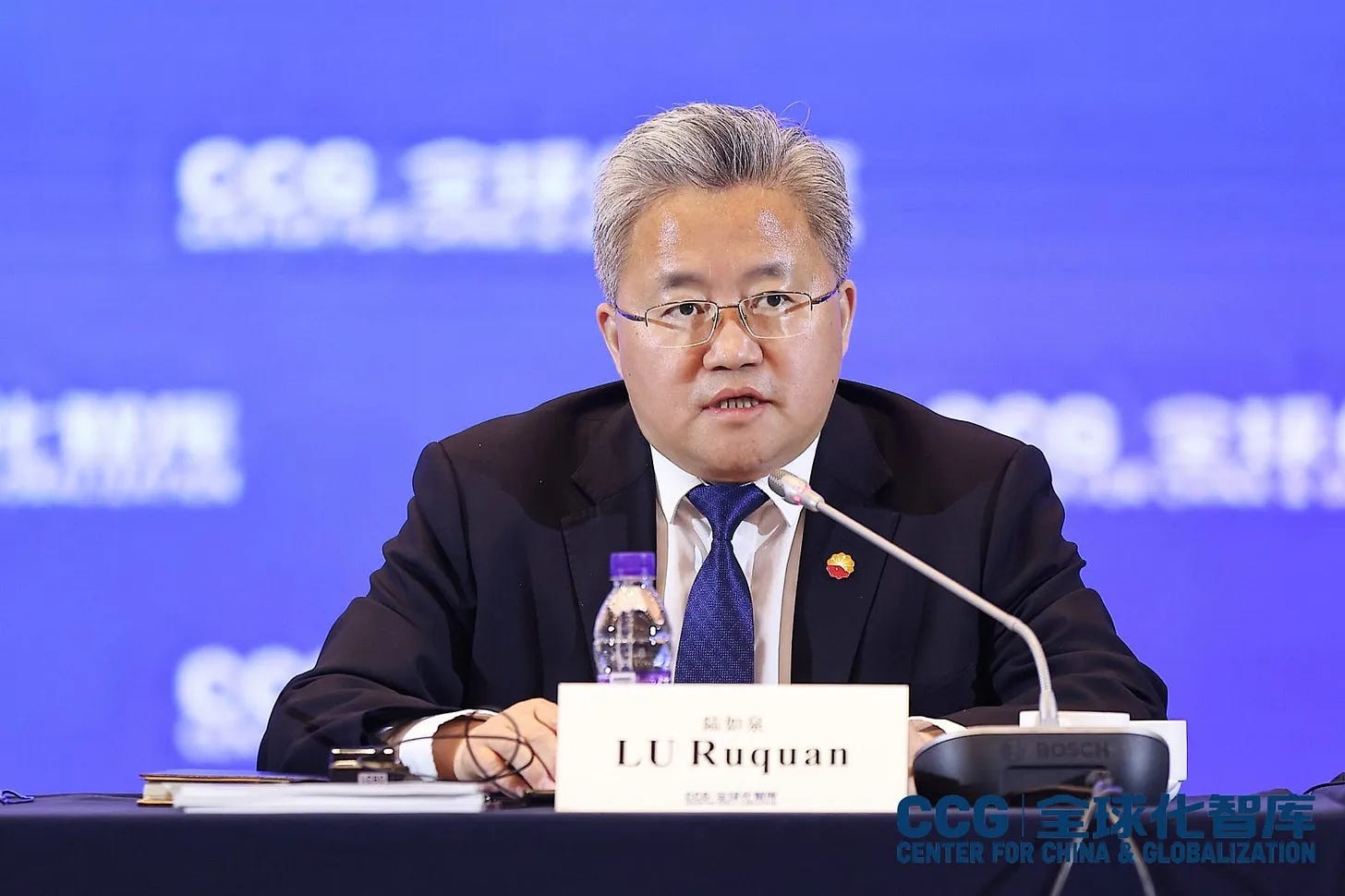
Lu focuses on an imbalance that runs through the economy. Local governments borrow expecting a bailout, state firms enjoy preferential credit, and households put money aside to cover retirement, healthcare and education.
He argues that China needs to change who bears these risks. Stronger social protection would give households greater confidence to spend, while banks and state enterprises should face the consequences of their lending and investment decisions. Private businesses, meanwhile, need a fairer chance to compete.
None of these ideas is particularly new. Economists in China and abroad have been making similar arguments for years. But reform is never easy, and until these proposals are actually put into practice, it is worth keeping the conversation going.
Dr. Lu first published the essay on his personal WeChat account, but the post was taken down following user reports. The full translation follows.
IMF这本诊断中国经济的专著有点“邪门”,我是这么看的!
My Take on the IMF's New Book on China's Economy
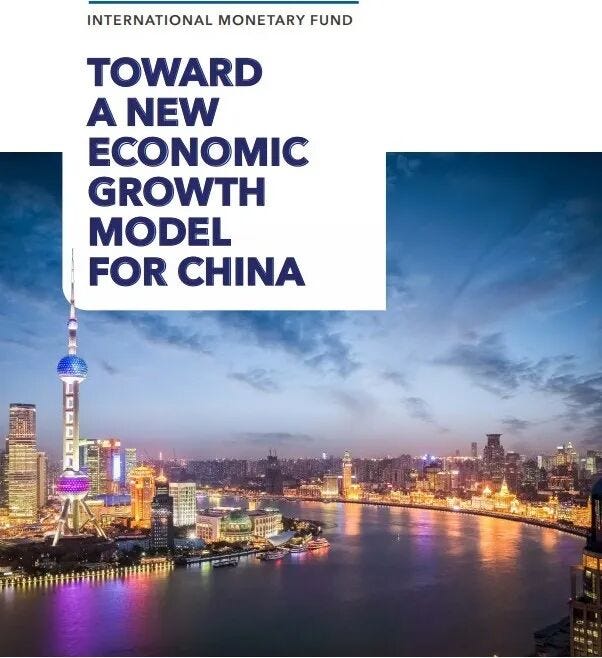
Not long ago, China's ambassador to a developed country sent me a message on WeChat: "What do you make of the central arguments and conclusions of this new IMF book on China’s economy?" He also sent me a copy of the book in English.
At 238 pages, it was far more substantial than a typical IMF report. I replied, "I appreciate you asking. I haven't studied the Chinese economy in great depth, so I'll need to read the book before getting back to you."
The book, Toward a New Economic Growth Model for China, was published by the International Monetary Fund (IMF) on September 18 this year. It was jointly edited by four senior officials in the IMF's Asia and Pacific Department, with contributions from more than 20 economists, many of them current or former members of its China team. It draws on years of research, annual consultations and technical collaboration with China to set out a comprehensive reform agenda.
The book has 11 chapters in three parts. Part I, the introduction, consists of Chapter 1. It reviews China's "exceptional economic performance" since reforms began in the late 1970s and the major challenges that have emerged over the past decade or so. Part II, "Structural Reforms for a New Growth Model" (Chapters 2-6), examines household savings, the service sector, industrial policies, investment efficiency and the green transition. Part III, "Macro and Financial Frameworks for the New Growth Model" (Chapters 7-11), discusses institutional frameworks and structural reforms, including the fiscal framework, local government debt, the monetary policy framework and the insolvency framework.
The book does not attempt to predict whether China will successfully make the transition. Instead, it examines what such a transition would entail, how much it would cost and what benefits it might bring.
In other words, the book is primarily concerned with the problems facing China's old growth model and the costs and benefits of reform. I would group its main conclusions under three headings.
First, China's old growth model is no longer working. Growth has been highly capital-intensive and is increasingly constrained by diminishing returns on investment. High debt levels have become another major constraint. The real estate sector cannot again become a significant driver of growth even when the correction ends. A shrinking labor force and weakening productivity growth are further constraints.
Second, the book quantifies the costs and benefits of structural reform. Doubling social spending in areas with larger rural populations would cost an additional 1.0 percent of GDP and lead to a cumulative increase in consumption equivalent to 1.8 percent of GDP over five years. Industrial policy is estimated to have imposed a fiscal cost of about 4 percent of GDP annually over 2013-23. Factor misallocation from industrial policies is estimated to lower domestic aggregate total factor productivity (TFP) by about 1.2 percent. On average, listed state-owned enterprises (SOEs) exhibit total factor productivity of revenue (TFPR) levels that are 31 percent lower than their private counterparts, while their capital productivity is, on average, 51 percent lower than that of private firms. Auctioning a share of emissions permits could cumulatively raise up to 3.3 percent of GDP in revenues through 2035; the book also recommends a transition to a quantity-based emissions trading system (ETS), or cap-and-trade system.
Third, the book sets out the direction of reform: reallocate expenditure from investment to social protection; restructure nonviable local government financing vehicle (LGFV) debt through corporate insolvency; explicitly recognize domestic price stability as the primary objective of monetary policy; unwind implicit guarantees in the financial system; and allow the orderly exit of unprofitable and unproductive firms.
As I read it, the book's overall conclusion is that several engines of the old model that once powered China's rapid growth, including real estate, urban investment and local government borrowing, have all stalled at the same time. Yet the structural reforms now being pursued by the Chinese government are also costly. If the costs become too high, the reform process will be impossible to sustain. To my mind, the book takes a pessimistic view of China's economic future.
The book also has three distinctive features.
First, every chapter is supported by quantitative analysis. Almost every argument is backed by detailed data: the 1.8 percent of GDP increase in consumption; the 4 percent fiscal cost and 1.2 percent productivity loss associated with industrial policy; the reduction in the primary deficit by about 7.5 percentage points of GDP; the welfare gains equivalent to 7 percent of GDP from ETS reform through 2035; and the potential output gains of 6-7.5 percent from SOE reform. It is a rare example of a book built around the arithmetic of reform, with policy recommendations accompanied by estimates of costs and benefits and proposals for the order in which reforms should be implemented.
Second, its language is notably restrained. Criticism is directed at "models" and "frameworks", rather than at individuals or specific policy positions. It explicitly acknowledges reforms already underway, including the package of measures to address local government debt, revisions to the Enterprise Bankruptcy Law and the gradual increase in the retirement age. It leaves policymakers room to maneuver while making its proposed direction clear.
Third, the sequencing of reforms is a recurring concern. Policy frameworks for managing financial stress must be established before restructuring LGFV debt. As I understand the sequencing, scaling back industrial subsidies must go hand in hand with dismantling monopolies, and fiscal consolidation must come after the expansion of social spending.
To sum up my reading of the book: the traditional engines of China's growth model are running out of steam. China needs a transformation that changes its policy priorities, the allocation of powers and responsibilities, and the structure of the economic system. Consumption and productivity must replace investment as the engines of growth; local governments must move away from their dependence on land-sale revenues, while social protection is strengthened; and market-based resource allocation must replace government-led mobilization as the guiding principle of the financial system.
Let me now turn to my overall assessment and reflections, drawing on the findings of the research team at the institution where I work.
First, China's economic development needs to be viewed in a broader context. Over more than four decades of reform and opening-up, rapid growth was driven primarily by the institutional benefits of market-oriented reforms and integration into the global economy. As China entered the stage of high-quality development, its economic objectives underwent a fundamental paradigm shift. The central goal moved from catching up in quantity to catching up in quality, and the driving force shifted from factor inputs to innovation. An overriding emphasis on GDP gave way to a multidimensional framework encompassing innovation, coordination, green development, openness and shared development.
Second, reform has entered a critical stage, often described in China as the "deep-water zone". Further progress requires confronting vested interests and overcoming deep-seated institutional problems. These reforms are difficult to advance, especially where they involve existing assets, resources and interests.
Third, China's assessment of its international environment has also changed considerably. Its overarching judgment is that "changes unseen in a century are accelerating". Strategic opportunities coexist with risks and challenges, while uncertainty and unpredictable developments are increasing. Coordinating development and security has therefore become more important. In critical sectors and areas, drawing on the strengths of the whole-of-nation system to achieve breakthroughs and improve capabilities may take priority over immediate economic returns.
Fourth, accelerating the creation of a new development pattern in which domestic circulation is the mainstay and domestic and international circulation reinforce each other is an unavoidable path forward. It is also the greatest challenge currently facing the economy. Broadly speaking, China does not lack new industries or new sources of growth. The problem is a mismatch between who bears the risks and who shares in the returns.
In the past, local governments borrowed to finance construction, assuming that the central government would bail them out. LGFVs borrowed on the assumption that the government would stand behind them. Banks lent to SOEs in the belief that the state would provide a backstop. Households, meanwhile, saved because they had to bear the costs of retirement, healthcare and education themselves.
This mismatch has left local governments financially squeezed, banks under strain and households reluctant to spend. As property and land sales have faltered, local government revenues have fallen while their debts remain. Banks face mounting pressure from nonperforming loans, household confidence has weakened further, and deflationary pressures have intensified. Continued reliance on investment and exports can only provide temporary relief from the slowdown, while leaving risks more concentrated.
Fifth, what China's economy needs today is not more engines of growth, but better risk sharing.
1. Social protection should share the risks borne by households.
Households are reluctant to spend because they must bear the costs of retirement, healthcare and education themselves. The first step in reform is therefore to make substantial improvements in social protection.
2. Local government risks should be shared more appropriately through central government support and stable local revenues.
Local governments are being squeezed from both directions: growth targets become more demanding as they are passed down through successive levels of government, while local authorities have too few fiscal resources and too many expenditure responsibilities. They used to rely on land sales and borrowing. Now land is hard to sell, but the debts remain. Revenue assignments and expenditure responsibilities need to be realigned to give local governments stable sources of income. At the same time, unsustainable LGFV debt needs to be addressed through corporate insolvency frameworks.
3. Banks should recognize losses in accordance with market principles.
One of the biggest problems facing banks is that they know many loans will not be repaid, yet are afraid or unwilling to recognize the losses. Banks must write off unrecoverable loans and restructure troubled ones. Deposit insurance and bank resolution frameworks must also be strengthened to prevent bank runs. Only when banks operate according to market principles can credit flow to productive uses.
4. SOEs should bear market risks.
SOEs operate under soft budget constraints: the government covers their losses, they borrow at preferential interest rates, and poor business decisions do not lead to market exit. As a result, substantial resources remain tied up in inefficient activities. Budget constraints must be hardened so that SOEs face real market competition. Those that need to exit should exit, and those that need restructuring should be restructured.
5. Private enterprises should have a level playing field.
Only when private businesses thrive can the risks associated with employment and innovation be spread across the market.
Sixth, the direction of China's future economic reform should be a shift from government-led resource mobilization to market-based resource allocation. The government's role is to set the rules, maintain essential safeguards and share the risks for which it is responsible. The market's role is to identify opportunities, set prices and bear the risks that properly belong to it. With these responsibilities clearly distinguished, China's economy can move away from debt-financed construction and toward growth driven by efficiency and consumption.