

Open Xianyu/goofish 闲鱼, China's largest secondhand marketplace, and you will find plenty of drones for sale from owners in Beijing.
New regulations adopted this month have left the capital's drone enthusiasts with few options. The rules, which take effect on November 15, designate the entire municipality as controlled airspace and prohibit drone flights, with narrow exceptions for authorized operations. The ban also extends to simply possessing or storing drones and their key components, prompting many owners to put their equipment up for sale.

These restrictions come after several years of growing policy support for the "low-altitude economy", a phrase familiar to anyone who has followed Chinese policy over this period. It has appeared in three consecutive annual government work reports since its debut in 2024, with its status rising each year: from a new engine of growth to an emerging industry, and now an emerging pillar industry. By late 2024, the National Development and Reform Commission, China's economic planner, had established a department dedicated to its development.
In China's political center Beijing, however, airspace security has taken precedence over efforts to develop the industry. In fact, the tension between these priorities extends beyond the capital, where tight controls on airspace also limit the industry's prospects for growth.
China’s low-altitude airspace is governed through a patchwork of military and civilian controls. Approval procedures vary from place to place, with civil aviation authorities, the military and local governments all playing a role. This creates difficulties for operators whose aircraft need to cross administrative boundaries and cannot simply turn around at the edge of each jurisdiction. Developing a commercially viable low-altitude economy requires the ability to operate at scale, which remains difficult when access to airspace is so restricted.
Today’s newsletter features a report by ANBOUND, a private Chinese think tank, examining the obstacles still confronting the country's low-altitude economy. It takes a systematic look at how the sector is understood and how airspace is controlled, as well as the limited role of market demand in guiding development and safety technologies that have yet to catch up.
Founded in 1993, ANBOUND says it began serving the Central Leading Group for Financial and Economic Affairs in 1998. The report was published on its official WeChat account, and I have translated it into English as follows.

中国发展低空经济目前还存在的问题
Problems Still Facing the Development of China's Low-Altitude Economy
Introduction
The Standing Committee of the Beijing Municipal People's Congress recently voted to adopt a revised version of the Regulations of Beijing Municipality on the Administration of Unmanned Aircraft《北京市无人驾驶航空器管理规定》. The revised regulations designate the entire administrative area of Beijing as controlled airspace for unmanned aircraft. They prohibit unmanned-aircraft flight activities, as well as the possession and storage of unmanned aircraft and their core components, and ban the transportation or carrying of unmanned aircraft and their core components into the municipality. In other words, Beijing not only imposes strict restrictions on the use of unmanned aircraft, but even prohibits their possession.
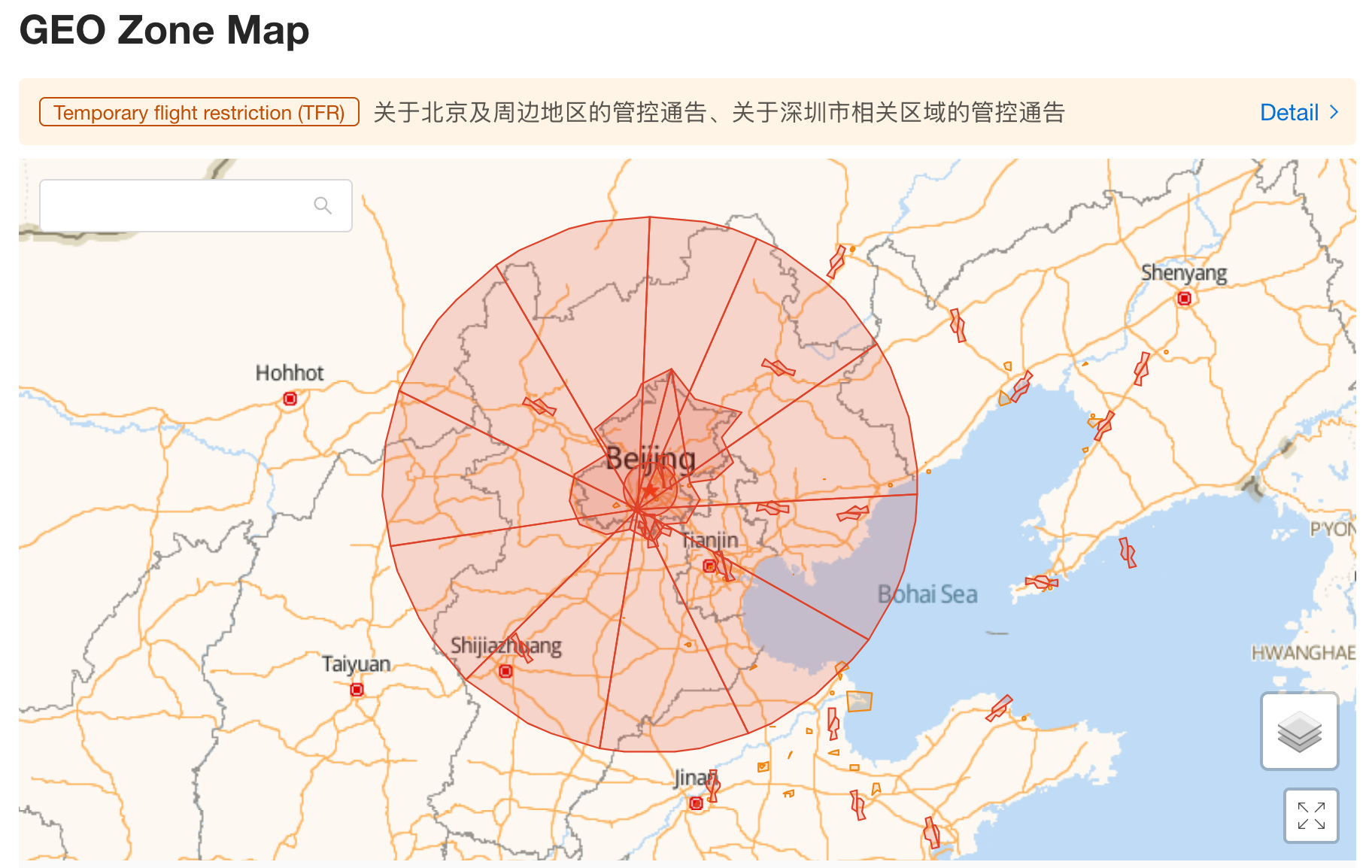
Separately, a map of the Capital No-Fly Zone that took effect on September 20 shows that, within a 300-kilometer radius of Beijing, all flight activities are prohibited except public air transport, official flights, military operations, customs operations, police activities, and firefighting and rescue missions.
ANBOUND has long taken a cautious view of the prospects for the low-altitude economy. This is not because we believe that the operating or business models associated with the low-altitude economy are inherently unworkable. Rather, China still faces numerous conceptual misunderstandings as well as practical bottlenecks and constraints in developing the sector, and many of these problems have seen little meaningful improvement over the years. This is why, even as local governments across the country rush to embrace the low-altitude economy, ANBOUND has continued to take a more skeptical note and maintain a cautious stance.
Main Text
The low-altitude economy has now appeared in China's Government Work Report for three consecutive years, with its policy status rising each year. In 2024, it was described as a "new growth engine新增长引擎." In 2025, it became an "emerging industry新兴产业." By 2026, it had been elevated to an "emerging pillar industry新兴支柱产业," placing it, in policy terms, on a par with sectors such as integrated circuits, aerospace, and biomedicine.
By a rough count, most Chinese provinces included the "low-altitude economy" in their 2026 government work reports, while the sector also features in the 15th Five-Year Plans (2026-30) of most regions. Governments at various levels are enthusiastic about building low-altitude economy industrial parks, and capital markets are eager to invest in the sector. The enthusiasm surrounding the low-altitude economy is evident.
ANBOUND has tracked and studied the "low-altitude economy" for many years and has consistently taken a cautious view of its development prospects. This is not because we believe its operating or business models are unworkable. Rather, China continues to face a range of conceptual and practical bottlenecks in developing the sector, and many of these problems have seen little meaningful improvement over the years.
The first problem concerns how the low-altitude economy itself is understood.
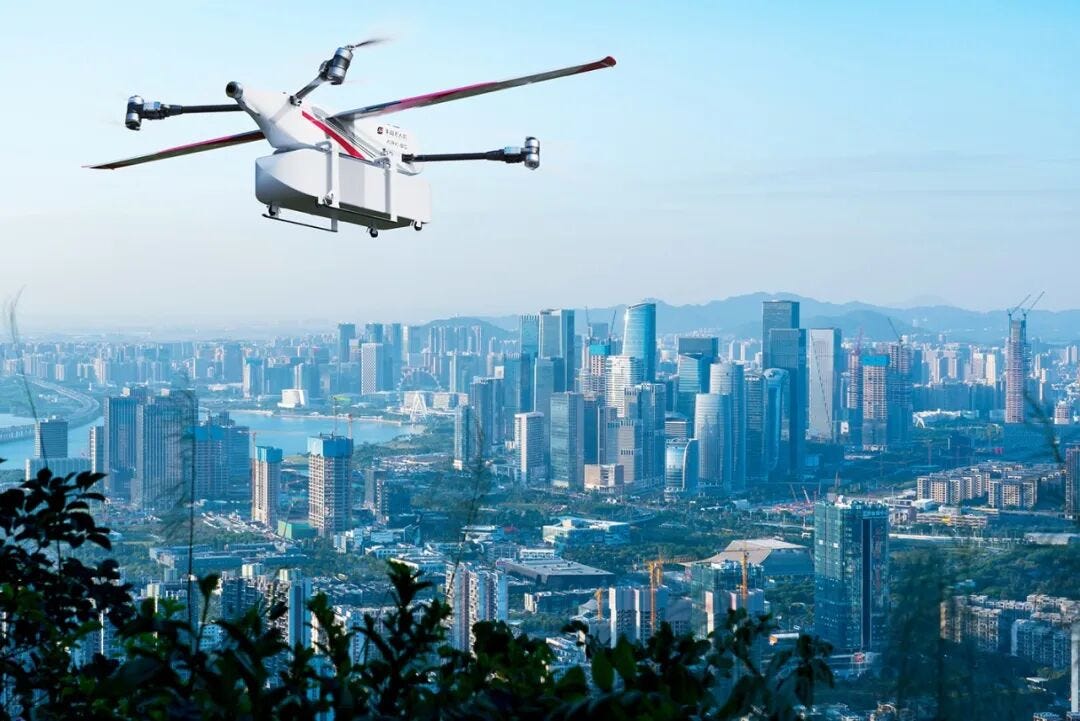
When people hear the term "low-altitude economy," many immediately think of drones. In reality, this conflates the "drone economy" with the "low-altitude economy." The assumption is that because DJI sells well and drones have become widely used, the low-altitude economy must therefore have strong prospects.
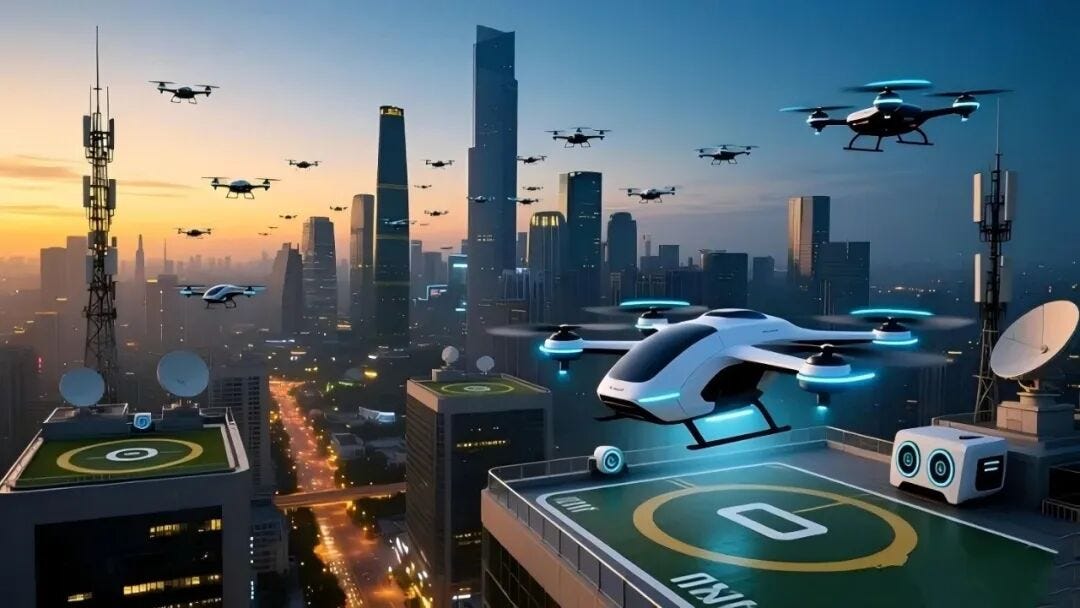
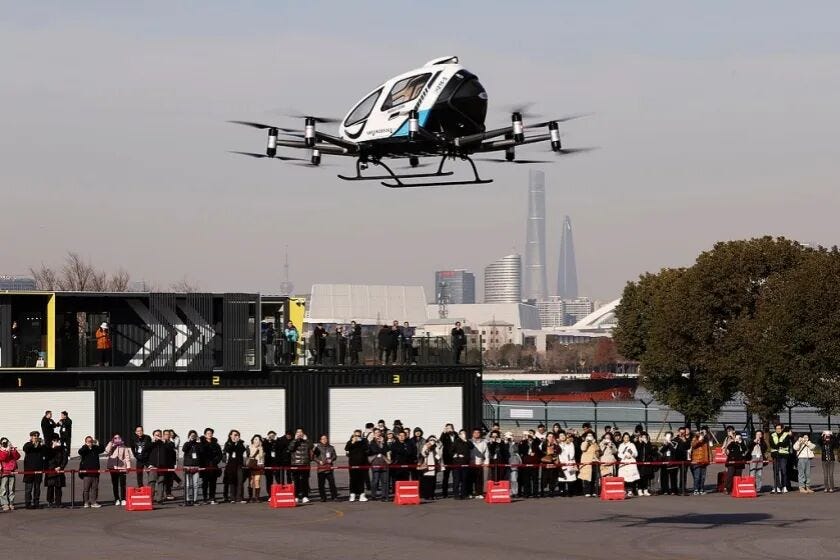
But these are actually two very different concepts. The low-altitude economy generally refers to electric vertical take-off and landing (eVTOL) aircraft, urban air taxis, general aviation, and low-altitude tourism. At its core is a commercial system centered on the movement of people.
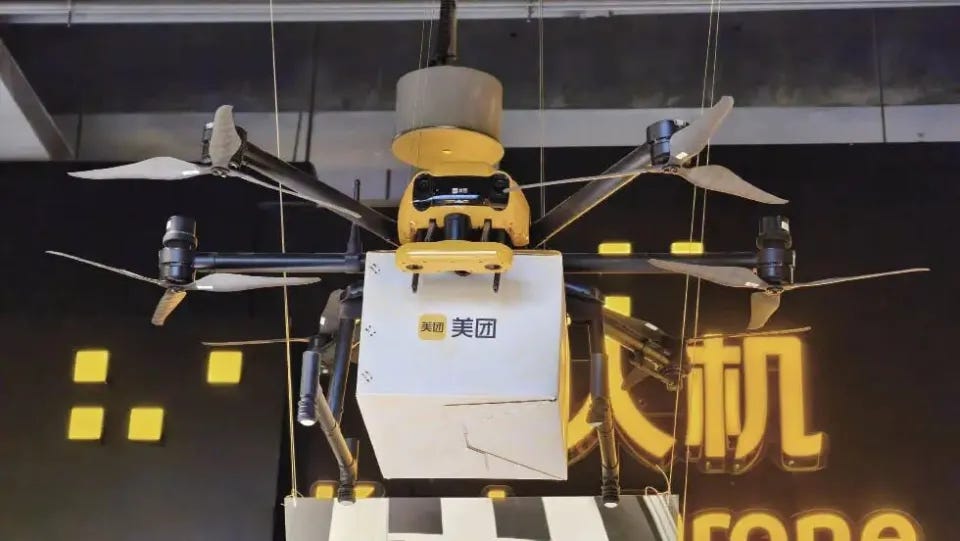
Drone manufacturers such as DJI, by contrast, operate in what could more accurately be called the drone economy. Their products are used in practical applications such as logistics and delivery, agricultural crop protection, power-line inspections, and surveying and mapping. The core function of these businesses is the movement of goods and information, rather than passenger transportation.
The two follow different technological pathways, operate under different regulatory frameworks, rely on entirely different business models, and face very different conditions for achieving scale. If the distinction between these two development paths is not clearly understood, problems will inevitably arise in policymaking.
The second issue goes to the heart of the matter and is one ANBOUND has repeatedly highlighted in recent years: the central constraint on China's low-altitude economy is not technology at all, but access to airspace. This is the fundamental logic underlying the entire issue.
China's low-altitude airspace operates under a mixed military-civilian management system, and approval authority varies from place to place. In some areas, authority rests with the Civil Aviation Administration of China; in others, with the military; and elsewhere, with local governments.
How many places in China currently have conditions genuinely suitable for developing the low-altitude economy? In practice, the answer is essentially the six pilot cities approved in 2024: Hefei, Hangzhou, Shenzhen, Suzhou, Chengdu, and Chongqing. These cities were selected for special pilot programs under which part of the authority to manage airspace below 600 meters was devolved to the local level. Only these cities currently have the conditions to "explore" urban air-traffic management models for new types of aircraft such as eVTOLs.
Some argue that large areas of China's low-altitude airspace have already been opened up. In reality, however, most of these openings apply primarily to ultra-low-altitude airspace below 120 meters and are intended to serve applications such as drone logistics. This is fundamentally different from the altitudes required for passenger-carrying eVTOL operations.
Only a handful of places have genuinely opened their airspace to the low-altitude economy. Yet the usual approach of using pilot projects in selected locations to drive broader development does not work well in this case, because aircraft need to operate across administrative boundaries. They cannot simply reach a boundary and turn around. It would be like allowing cars onto the road in only six cities nationwide while everyone talks about the unlimited potential of the automobile economy.
ANBOUND's assessment is that without the opening of airspace, any discussion of industrial expansion or market prospects is little more than empty talk.
The third problem is more immediate: the current development of the low-altitude economy is not market-driven.
As noted above, by 2026 nearly all provinces had included the "low-altitude economy" in their annual government work reports, while references to it can also be found in almost every local version of the 15th Five-Year Plan (2026-30). In reality, however, many regions have failed to assess their own circumstances clearly and are proceeding blindly. The tendency to rush into whatever sector is currently fashionable does not reflect a market-oriented approach.
At present, projects labeled as part of the low-altitude economy" have relatively easy access to funding and financing. Local governments are rushing to launch projects, compete for pilot programs, and seek favorable policies. The underlying logic is much the same as it was during the earlier property boom. At the time, few believed there was a problem. Once the bubble burst, however, problems appeared everywhere. Local government finances are already under significant strain. Committing scarce resources to large numbers of highly uncertain low-altitude projects therefore carries considerable risk.
At a more fundamental level, the essence of the low-altitude economy is scale. Any industry described as an "economy" must be capable of reaching significant scale; otherwise, it cannot meaningfully be called an economy.
The problem today is that the basic conditions required for the low-altitude economy have yet to mature, and the necessary fundamental resources are not yet in place, but localities are already scrambling to get ahead of one another. It is rather like discussing how to develop long-distance road transport before the roads have been built and the vehicles have even been manufactured. Moving too far, too fast, without market demand acting as the guiding force, is precisely the kind of situation in which problems are most likely to emerge.
The fourth issue is a core concern: safety technology has not kept pace. ANBOUND has explicitly highlighted this problem in previous reports. Low-flying, slow-moving and small aircraft such as drones have developed rapidly, but the problems of being "hard to detect, contact, and control" remain pronounced.
On the one hand, unauthorized drone flights remain frequent and pose a serious threat to aviation safety. On the other hand, existing control technologies are still inadequate.
Communications, navigation and surveillance, or CNS, form the foundation of aviation operations. Yet China's low-altitude CNS capabilities still have significant weaknesses. There is no unified communications standard for low-altitude aircraft, making interoperability and coordinated command difficult. Navigation and positioning accuracy remains only in the range of 10 to 30 meters, which is insufficient for aircraft operating in constrained urban environments. Traditional radar surveillance systems, meanwhile, have numerous blind spots, are costly, and are difficult to deploy.
As a result, low-altitude airspace management continues to face persistent safety risks arising from the inability to reliably "see, connect with, and control" aircraft. For cities seeking to develop the low-altitude economy, safety must come first. Even a single serious low-altitude aviation accident could deal a devastating blow to the entire industry. With clear shortcomings still present in CNS, it is extremely difficult at present to eliminate such safety risks altogether.
Of course, there are other problems as well, including the insufficient number of general aviation airports and technological weaknesses in key aircraft systems. These issues do exist, but they are not the principal constraints.
Some argue that the United States also has a low-altitude economy and that it has developed relatively well, so China should be able to do the same. This comparison needs to be considered at two levels.
The U.S. low-altitude aviation sector has developed within the Federal Aviation Administration (FAA)'s airworthiness certification system and rests on more than a century of accumulated aviation experience. Drone accidents also occur in the United States, but the costs are borne by market participants. China, meanwhile, has followed a very different path: the government sets targets, local governments compete to enter the sector, and capital follows the trend. General aviation aircraft in China remain heavily dependent on imports, while components rely extensively on global supply chains. This is fundamentally different from the situation in the United States.
More importantly, the division and use of low-altitude military and civilian airspace in the United States are clearly defined, legally established, and stable. In China, these arrangements remain relatively ambiguous. Who controls the airspace? How can it be used? Under what conditions can it be used? Who bears responsibility when something goes wrong? There are still no clear answers to these most basic questions.
Overall, the conditions required to develop the low-altitude economy at scale, in the conventional sense of the term, remain inadequate.
Airspace — most of it remains under restrictions.
Airworthiness standards — many are still being developed.
Infrastructure — takeoff and landing sites, charging stations, and maintenance networks still need to be improved.
Business models — it remains unclear how eVTOL operations can become profitable.
Safety regulation — the regulatory system is still being developed and refined.
These are the reasons ANBOUND has long taken a contrarian position and maintained a cautious view of the "low-altitude economy."
One clarification is necessary. ANBOUND is cautious about the current tendency to roll out "low-altitude economy" projects on an ever broader scale, but it strongly supports the development of the general aviation manufacturing industry. Companies such as Cirrus Aircraft have already demonstrated highly successful products and business models and have built substantial markets overseas. General aviation manufacturing, however, is ultimately a different business from the broader market system encompassed by the "low-altitude economy." Viewed as a whole, the Chinese market currently faces a mismatch between its market system on the one hand and its manufacturing capabilities and service system on the other.
ANBOUND has consistently taken a cautious view of the development of the low-altitude economy because the foundations needed to support its growth remain incomplete. These include unresolved airspace issues, incomplete technical standards and airworthiness certification systems, and shortcomings in safety technologies. At the same time, market demand must be allowed to become the genuine driving force behind the development of the low-altitude economy.