

This guest post is written by Xinhua journalists Xinfeng Guo, an economic reporter, and Yin Tian, a former Germany correspondent who now covers regional affairs in China.
First electric vehicles, then tires and chemicals. Now China's duck meat has become the latest product subject to EU trade scrutiny. The European Commission has opened an anti-dumping investigation into imports of Pekin duck meat from China following a complaint filed by five EU producers in May.
The complaints alleges that cheap loans, subsidized soy feed, or preferential financing give Chinese producers an unfair price edge.
The filing reflects an understandable effort by European producers to protect their commercial interests amid intensifying competition. But the complaint also raises technical questions that deserve close scrutiny.
One concerns whether the product named in the investigation corresponds precisely to the duck varieties China exports. The other concerns the EU's use of its "significant distortions" methodology and third-country benchmarks.
I. Technical Questions Raised by the Investigation
A. Questions Over the Scope of the Product Under Investigation
One point of contention is whether the "Pekin Duck" named in the EU notice corresponds to the duck breed actually exported from China to Europe.
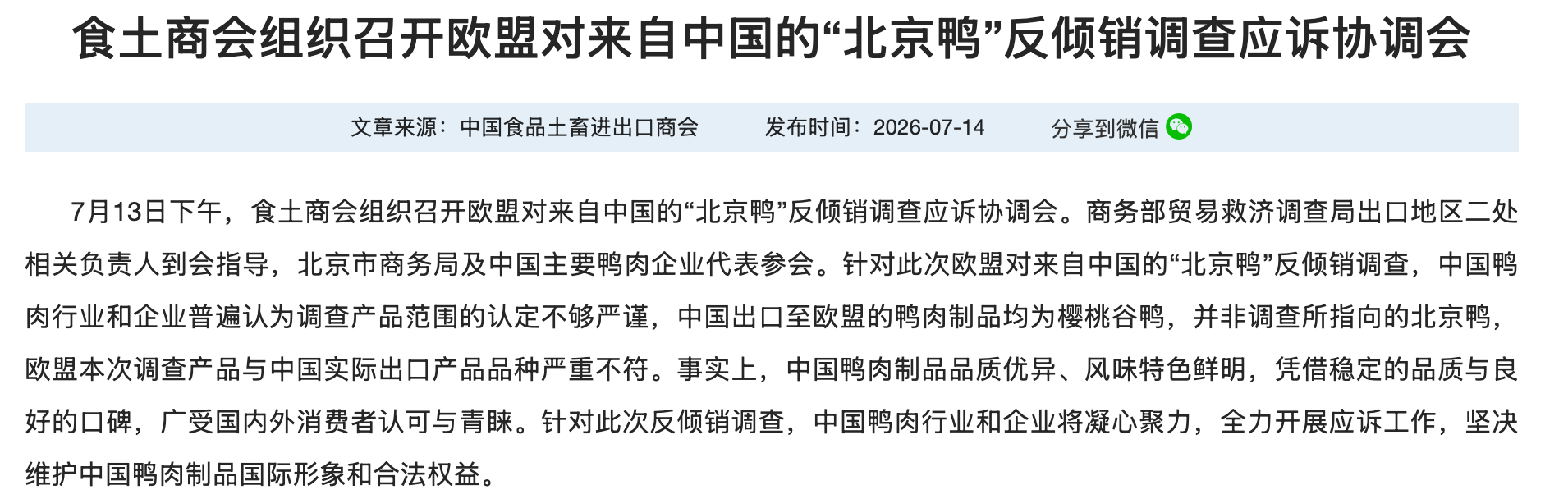
Chinese duck products shipped to the EU are predominantly made from the "Cherry Valley ducks (樱桃谷鸭)", not the Pekin duck referenced in the probe, according to a statement published by the China Chamber of Commerce of Import and Export of Foodstuffs, Native Produce and Animal By Products (CFNA). CFNA therefore considers the product covered by the EU investigation to be materially different from the varieties actually exported by China.
"Beijing Ya (北京鸭)," officially translated as "Pekin duck," is a Chinese national geographical indication product, while the Cherry Valley breed descends from Pekin ducks that were exported to the UK for selective breeding in the late 19th century. The Cherry Valley duck inherited Pekin duck's fine genes: efficient feed conversion, fast growth and high meat yield. In 2017, the UK's Cherry Valley Farms sold its equity to Beijing Capital Agribusiness Group and CITIC Agriculture.
The distinction does underline the need for the EU to define the scope of the investigated product precisely and ensure that its biological, commercial and customs classifications correspond to the products actually exported from China.
A CFNA staff member who requested anonymity said that, in the Chinese context, "Pekin duck" refers to a specific breed raised within a defined geographical area and used mainly in the domestic market. "Not a single purebred Pekin duck is exported," the staff member said, adding that the two have developed into distinct breeds.
B. Questions Over the Method Used to Determine Normal Value
A second and more consequential question concerns how the EU intends to determine the "normal value" of Chinese duck meat.
In its notice, the European Commission said:
In light of the information available, the Commission considers that there is sufficient evidence pursuant to Article 5(9) of the basic Regulation tending to show that, due to significant distortions affecting prices and costs, the use of domestic prices and costs in the country concerned is inappropriate, thus warranting the initiation of an investigation on the basis of Article 2(6a) of the basic Regulation.
Many Chinese producers, however, argue that their prices in the European market do not meet the legal conditions for a finding of dumping.
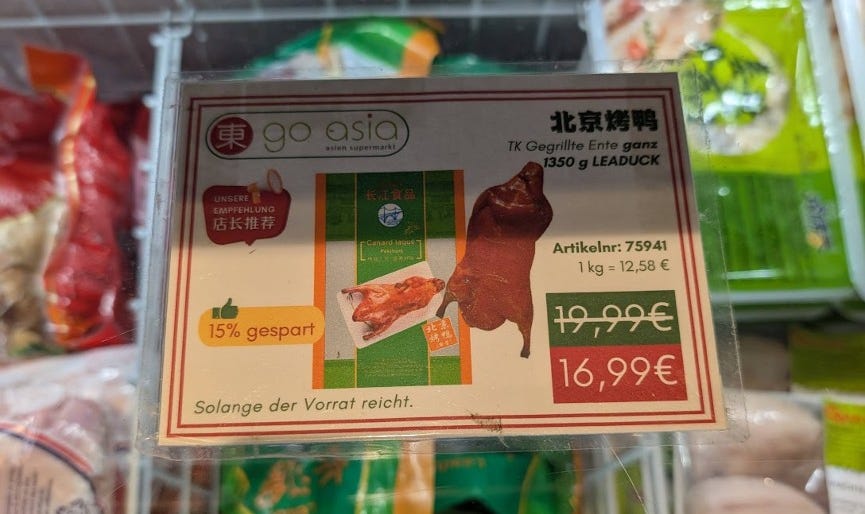
A limited survey of retail outlets in Berlin suggests that Chinese duck products are not uniformly priced below European products at the consumer level. At Go Asia, the largest Asian supermarket in Germany with more than 70 stores across the country, a 1.35-kilogram frozen prepared whole roast duck imported from China was priced at €19.99, or about €14.81 per kilogram, before being discounted to €16.99, or €12.59 per kilogram. A boneless frozen roast duck from China was priced at €9.99 for 500 to 575 grams, equivalent to €17.37–€19.98 per kilogram.
By comparison, European-origin duck products observed at a Kaufland supermarket ranged from €8 to €18.72 per kilogram, depending on the product type, origin, degree of processing and package size.
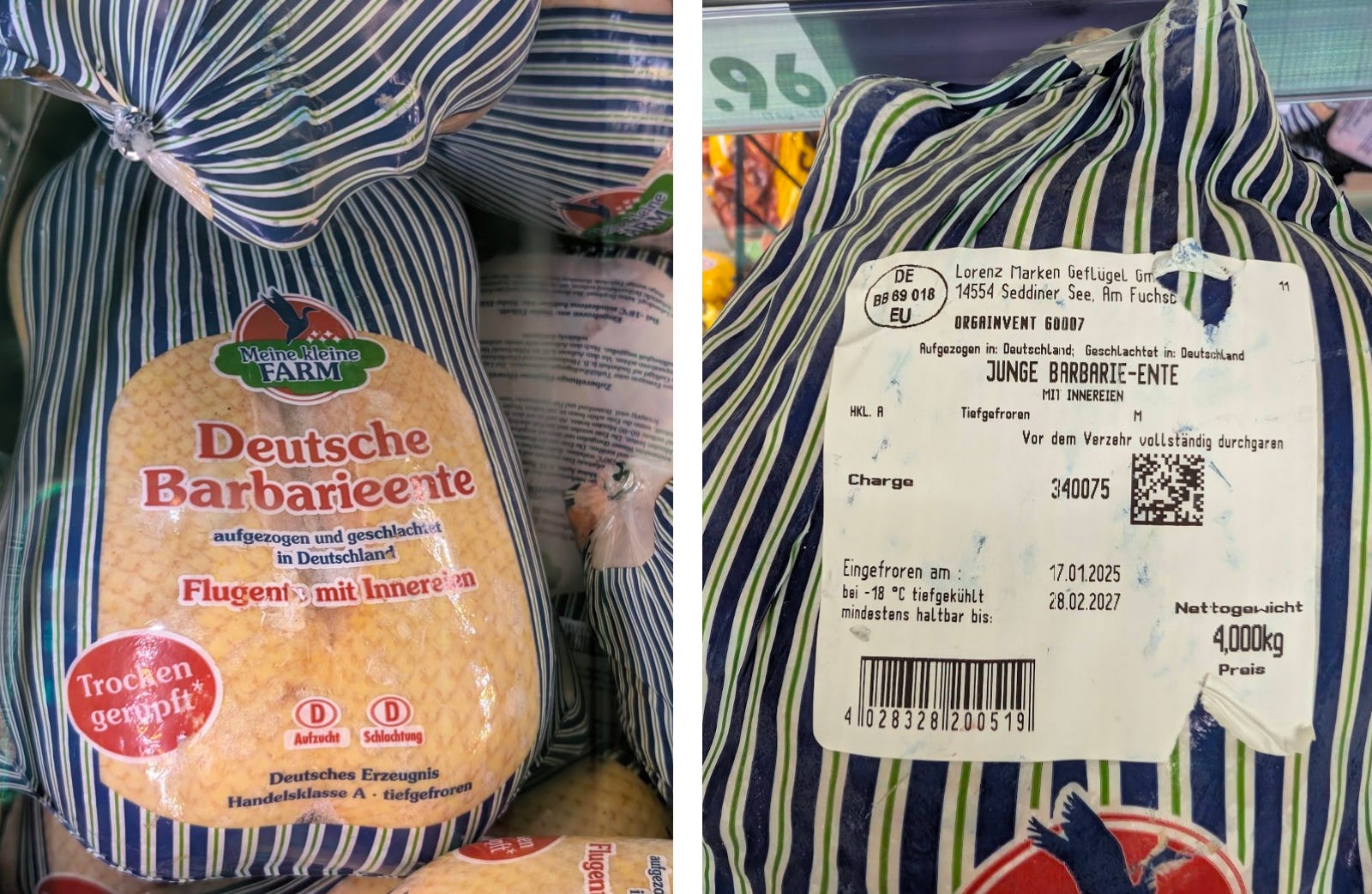
At the very least, this limited, randomly collected retail sample shows that the Chinese duck products observed were not being sold at exceptionally low prices.
Even if Chinese duck products were found to be generally cheaper than comparable European products, that alone would not constitute dumping. By the EU's own definition,
Anti-dumping measures counter dumping practices occurring when non-EU manufacturers sell their goods in the EU below the normal value (usually the sales price) on their domestic market.
Chinese producers note that their exports are NOT priced below normal value when this is calculated on the basis of their actual domestic prices and costs.
Industry representatives have also questioned the possible use of Brazilian duck-industry data to determine the normal value of Chinese duck meat. Feed expenses, labor costs, production scale and consumption patterns differ substantially between China and Brazil. These differences raise legitimate questions about whether Brazilian data provide an appropriate and comparable benchmark.
This methodological dispute extends beyond the choice of Brazil. China has long maintained that, after the relevant provision of Section 15 of its WTO accession protocol expired in December 2016, there was no longer a legal basis for continuing to treat Chinese prices and costs differently merely because of the country's economic system.
The EU subsequently moved away from formally treating China under a "non-market economy" designation and introduced a country-neutral methodology based on the existence of "significant distortions." Under this approach, the European Commission may disregard reported domestic prices and costs, in this case, China's, if it concludes that they have been affected by substantial government intervention. It may then construct normal value using international benchmarks or costs from a representative third country.
The new methodology is not legally identical to the former surrogate-country system. In principle, it requires the Commission to identify distortions affecting particular prices, sectors or production factors. Nevertheless, when Chinese companies' actual costs are broadly rejected and replaced with external benchmarks, the practical effect can be much the same. From China’s perspective, the change in terminology has therefore not removed the discriminatory effects of the previous approach.
If the Commission believes that Chinese duck-production costs are distorted, it should identify which costs are affected -- such as feed, financing, land, energy or labor -- and demonstrate how the alleged intervention has influenced the companies under investigation. General observations about China's economic system should not replace product-specific and company-specific evidence.
This brings to mind a previous China-EU dispute over poultry meat. The EU signed up a quota assignment treaty with Brazil and Thailand on poultry meat products in 2012, which harmed the interests of Chinese poultry meat exporters. In 2017, a WTO panel upheld China's complaint that the EU had failed to take China's rapidly growing exports into account when allocating tariff-rate quotas for two categories of processed poultry products, including duck meat.
II. How China's Duck Supply Chain Works
China has built an integrated industrial chain spanning breeding stock, feed production, farming, slaughtering, processing and distribution. Clustered duck industries in provinces such as Shandong, Jiangsu and Sichuan have operated at world-leading efficiency levels.
Li Shixiang, deputy director of the animal husbandry development center of Changle County, located in Weifang City of east China's Shandong Province, said that China's livestock industry has been rapidly upgrading toward standardized, large-scale and intelligent production.
"Changle has so far built four benchmark smart duck farms. These facilities are equipped with automated feeding, watering, environmental control, manure removal and Internet of Things technologies. Intelligent farming has significantly improved production efficiency," Li said.
Another factor at work is the "every-part-counts" approach featuring China's poultry industry. Not a single part of the duck goes to waste in China, each finding its own market. Breast meat becomes roast duck; feet, wings and necks are turned into popular braised snacks; feathers are processed into down filling for winter jackets; the blood is made into tofu -like blood curd; and even the carcass is boiled for soup or ground into animal feed additives.
All of these have significantly lifted the overall returns, contributing to the price edge of China’s cooked duck breast exports.
The duck industry is a snapshot of the broader transformation reshaping China’s agricultural sector. As many European media outlets have observed, Chinese producers have become increasingly competitive across a range of agrifood categories—including foie gras, caviar, and truffles—which were once considered premium European specialties. Their success follows a strikingly similar formula: leveraging technological innovation, scaling up production, and streamlining supply chains to turn what were once luxury delicacies into affordable products for ordinary consumers.
III. Opportunities for China-EU Agricultural Cooperation
The probe comes at an unusual moment: the EU is close to granting protected geographical status to "Pekin duck," which would bar non-Chinese producers from using the name.
Observers noted that as Pekin duck is an iconic Chinese product, the EU's probe bears strong symbolic significance.
Fang Jiongsheng, a professor from the School of Political Science and Public Administration at Shandong University, said EU industries face challenges from sky-high energy costs, to underinvestment and regulatory burdens. This industrial malaise has been taking a toll on Europe's broader economy, its labor markets and household livelihoods.
"Shrouded in the tariff threats of Trump's second presidency, the EU sees its trade-defense toolbox as thin. It is gripped by profound anxiety, and now seeks to tighten its trade restrictions so as to survive in a turbulent global trading system," Fang said.
For a long time, mutual benefit has defined China-EU economic and trade ties. Being each other's second-largest trading partners, the two sides boast highly complementary economies. Agricultural and food trade is a major area of practical China-EU cooperation.
The two sides have also made an agreement on geographical indications, which has brought hundreds of iconic products, such as French Champagne and China’s Anxi Tieguanyin tea, under mutual recognition and protection, ushering in a "golden era" for branded agricultural trade.
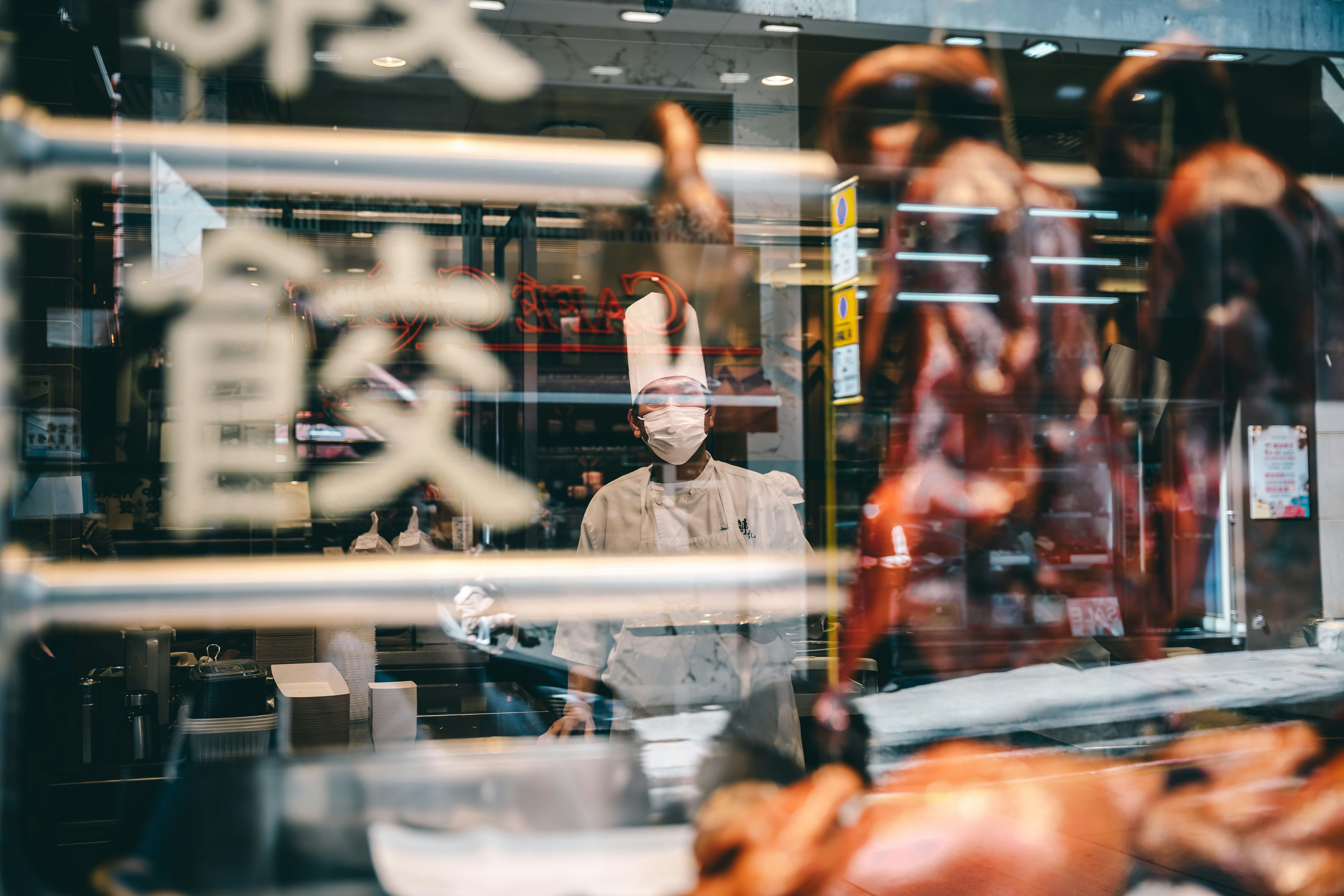
A humble Pekin duck should not become a symbol of division, but a reminder that cooperation remains the recipe for mutual prosperity.
(Additional reporting by Li Aoqiu in Shandong, China, and Li Chao in Berlin, Germany.)