

China has been trying to make itself more open to foreign talent and visitors in recent years. But not everyone at home is comfortable with that. Last year, Beijing introduced a K visa to attract young foreign science and technology professionals across the globe. The move, however, was met with considerable resistance online.
With China's economy under pressure, critics questioned why the country should bring in foreign talent when its own graduates were having trouble finding work, warning that doing so could intensify competition for jobs. Some of the backlash also took on nationalist, and at times openly xenophobic, overtones, with Indians emerging as one of the most visible targets.
Similar sentiment resurfaced this summer. On Chinese social media, posts began claiming that large numbers of Indian tourists were "flooding into China," while others highlighted cases of alleged misconduct and accused Indians of "taking up" China's resources. Scattered incidents, along with unverified or exaggerated claims, were increasingly folded into a much broader narrative about Indians as a group.
It was against this backdrop that The Paper 澎湃新闻, a leading Shanghai-based digital news outlet, published a commentary pushing back against the growing hostility. The piece urged readers not to commit the basic logical fallacy of judging an entire country by the behavior of a few individuals. It also warned against xenophobia and click-driven nationalism, while calling on Chinese society to remain open, confident and inclusive in its engagement with the outside world.
The commentary was published on July 2 on The Paper’s official WeChat account. Below is my full English translation.
如何看待近期关于印度的一些讨论?
How Should We View the Recent Discussions About India?
Recently, posts claiming that "Indian tourists are flooding into China" and highlighting "uncivilized behavior by some Indians in China" have been circulating online from time to time. Some have gone further, arguing that "China's visa policy toward India is flawed" or that "Indians are taking up China's resources," stirring considerable public anger. How should we view this? Here are a few thoughts.
This latest wave of online debate began with complaints about "uncivilized behavior by some Indian tourists." If some Indians visiting China behave inappropriately, they should of course be criticized. China has a tradition of treating visitors as guests, but once here, visitors are expected to abide by China's laws and regulations. If boundaries are crossed, individuals should be dealt with according to the law, regardless of their nationality. There is absolutely no question about this.
The problem arises, however, when we allow the actions of a few individuals to negate an entire country and fuel xenophobia. We cannot completely shut our doors to India simply because of a small minority. Furthermore, it is unacceptable to unfairly pin all negative incidents on Indian people just because the topic generates online traffic and attention.
When considering how China should get along with India, we need to look at the bigger picture.
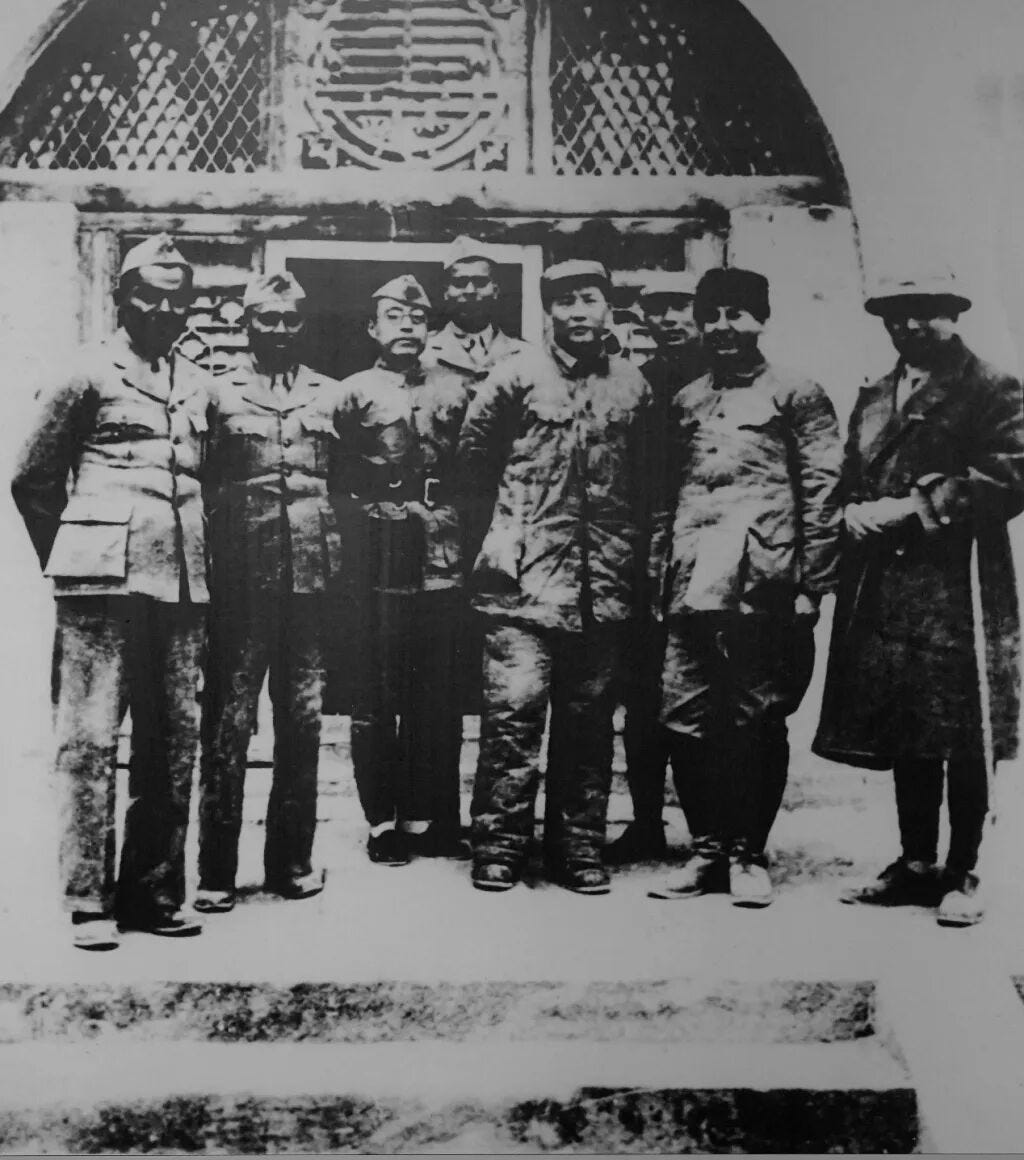
Historically, China and India are both ancient civilizations with a history of cultural exchange spanning over two millennia. From Buddhist monk Xuanzang's sixteen-year pilgrimage to India, from which he brought back 657 Sanskrit Buddhist scriptures, to Rabindranath Tagore's visit to China and his profound friendship with Chinese poet Xu Zhimo, and then to Dr. Dwarkanath Kotnis sacrificing his precious life to support the Chinese people's resistance against Japanese aggression—these stories of people-to-people ties constitute the true fundamentals of China-India relations.
In practical terms, China and India are immovable neighbors. Together, their populations account for more than one-third of the world's total. As both countries strive toward modernization, peaceful coexistence and win-win cooperation are inevitable imperatives.
It is undeniable that differences exist between China and India, but both nations possess the wisdom to manage them. Recently, the border situation has noticeably de-escalated, which is a positive development. Both sides have also recognized that the boundary question does not represent the entirety of China-India relations. It must be placed in its proper perspective to prevent isolated disputes from jeopardizing the broader relationship.
In recent years, Chinese and Indian leaders have met in Kazan and Tianjin. Since then, bilateral relations have continued to improve, with practical cooperation strengthening. According to official Indian statistics, bilateral trade in goods reached US$151.1 billion in the 2025-26 fiscal year, making China India’s largest trading partner. This shows how deeply intertwined the two economies have become. Naturally, the smooth flow of hundreds of billions of dollars in goods cannot be achieved without the facilitation of personnel exchanges.

Beginning in 2025, direct flights between China and India were also gradually restored. With more direct flights, it is only natural that more people are traveling between the two countries than before, and certainly more than during the pandemic years. Moreover, more than 80 percent of the Chinese visas issued to Indian nationals are for business and trade purposes, by far the largest category. Those traveling purely for tourism actually make up only a small minority.

At a broader level, the accelerated rise of the Global South in the current international landscape means that the significance of China-India relations extends far beyond the scope of simple bilateral ties. Particularly as the global governance system undergoes profound restructuring, from the BRICS mechanism and the Shanghai Cooperation Organisation (SCO) to climate negotiations and WTO reforms—the Global South would struggle to project a unified voice without China-India collaboration.
Furthermore, India is the host of this year's BRICS Summit. China has stated its support for India in fulfilling its duties as the BRICS chair to jointly promote the development and expansion of the BRICS mechanism. All this shows that facilitating travel between the two countries may appear on the surface to be merely a matter of easing visa and entry procedures, but it essentially signifies the reconnection of the two major engines of the Global South.
Returning to the visa issue, China has introduced a series of measures in recent years to make visas and travel more convenient. These measures are not aimed at any particular country, but at the world as a whole. To date, China has concluded mutual visa-exemption agreements with 160 countries, and extended unilateral visa-free policies to 50 countries.
They bring not only increased international tourism revenue but also enhanced commercial cooperation and an improved reputation for our business environment. These are tangible national dividends that will ultimately benefit ordinary Chinese people as well.
By opening its doors to the world, China demonstrates the magnanimity captured in the traditional saying that "those nearby are pleased, and those from afar are drawn to come." This reflects the broad vision of a major country, one that prioritizes long-term "win-win" outcomes over temporary "reciprocity."
That is why discussions about the supposed "lack of reciprocity in China-India visa policies" should also be approached rationally. It is true that India tightened visa issuance for Chinese nationals in previous years. Although it has now resumed issuing business and tourist visas, there remains a noticeable gap compared with China's visa policies.
While China should urge India to demonstrate sincerity and take concrete action, it is also important to recognize that India's policies are undergoing dynamic adjustments. Infinitely escalating the visa issue or turning it into an outlet for emotional venting will likely only backfire, squeezing the space for the improvement and development of bilateral relations.
Once the noise dies down, we should return to reason. Over the past several years, the suspension of exchanges between China and India has indeed contributed to a growing information deficit and even a trust deficit. Some people like to post all manner of sensational everyday scenes from India and other South Asian countries online, while amplifying alleged "misbehavior" by Indians in China. This has left many Chinese people with a fragmented, label-driven and stereotyped understanding of India.
Such content may appear to be "patriotic expression," but in reality it often promotes confrontation and xenophobia in pursuit of clicks and attention. At its core, it exploits patriotic sentiment and national feeling. It not only pollutes a healthy online environment, but is also inconsistent with the open and self-confident mindset expected of a major country.
The underlying character of Chinese civilization has always been one of embracing diversity with openness and tolerance. We should maintain the mindset of citizens of a great nation and display the grace and civility befitting a nation known for its tradition of hospitality and good manners.
Stop using Tigore or any historical figures. India is China’s enemy and there should be zero kindness. Not panic. But no kindness.